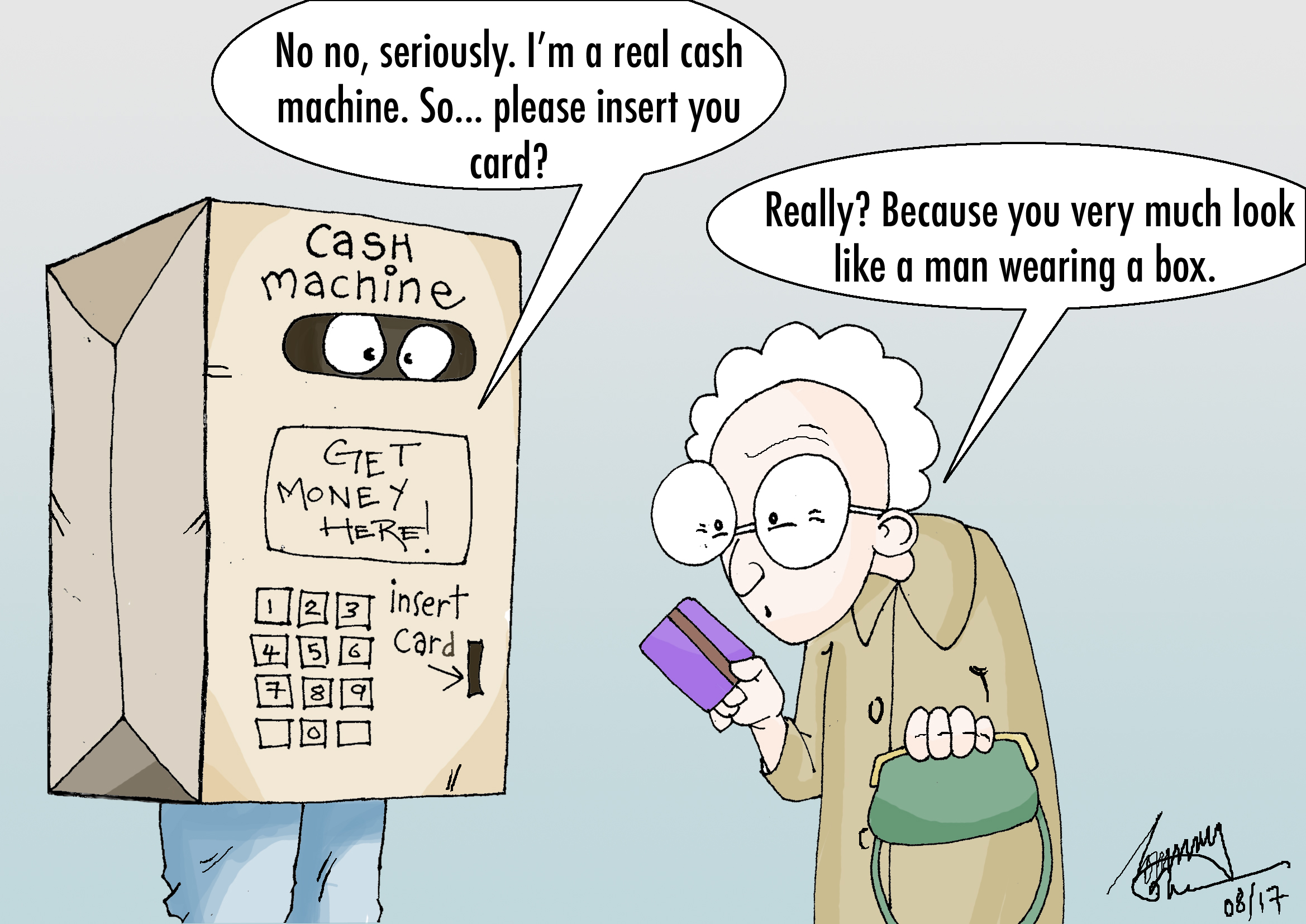
Yes, we need more Homes with Care !

My last blog looked at the demand for more Care Homes.    With the exception of specialist homes for dementia, psychiatric support and small group homes for learning difficulties, I would not agree we need more residential Care Homes.     In my view they create dependency and only offer an institutional lifestyle.

I do accept we need more Housing with Care, to meet the growing need to better support frail older people to continue to live independently.    The Newcastle University study suggested an additional 71,000 older people will need support in the next 10 years.     I suspect the figure will be much larger even than that!

My previous blog suggested that this would need in the order of £15 billion of capital investment to develop around 300 new retirement villages.     That level of new investment by Government is usually reserved for aircraft carriers or ridiculous railways.      Currently all the Nation’s  available capital will be needed to compensate the European Union for Brexit.      So the likelihood of finding investment for older people from the State seems rather remote.

The good news is, older people themselves  have a huge amount of assets locked up in the homes they own.     The options they have for getting the money out of their homes are unfortunately not very good value.     Equity release products are still expensive and come with all sorts of limitations.     Downsizing from a larger family home into retirement housing is probably a better option, but unfortunately most retirement housing offers little more than sheltered housing and emergency pullcords.

If we are to genuinely transform retirement housing to make it an attractive proposition for a large number of people, then we need a much bolder approach which goes beyond retirement housing and offers a much more attractive lifestyle in later life.

If the Government isn’t going to be able to provide the capital, then older people will have to take control of their own resources and use them creatively to buy a new life in older age.

My blogs next week will begin to outline how that can be done.


Posted in RETIREMENT HOUSING | 4 Comments

Do we need more Care Homes ?

A recent report by Newcastle University looked at the forecast levels of frailty in the older population and reached the conclusion that there is a need for 71,000 new care home places in the next 10 years.

I don’t doubt that their figures are correct.  It is just their conclusion that is wrong !

As the population ages the number of older, older people requiring some degree of support is certainly set to increase.   The more critical questions are :-

  • ” Where do they want to receive the care ?”
  • ” Who do they want to be cared for by ?”
  • ” How can they or their family pay for it ?”

The Newcastle study didn’t seek to answer these questions.   They are the £64,000 questions and therein lies the problem.

I will attempt to move the discussion along:-

Firstly, most people would like to be looked after at home.   This is relatively expensive and quality control is difficult.    However, there are certainly psychological benefits from being in your own familiar environment.   Since the State has largely totally withdrawn from this area, you have to be fairly wealthy to afford this solution.

Secondly, they want help from a stable (not ever-changing) and trained support team.   People they know and trust and people who know them as an individual not just a set of tasks.     For many people this may be little more than domestic help initially.    Later some will need more hands on care at times during the day.  They would also benefit from a regular review of their support and health needs by a nurse ideally on a monthly/quarterly basis.    Preventative  well-being checks have proven value.

Thirdly, paying for this kind of care at home has been under-valued by the expectation that health care is free for those that need it.     It never has been free, we have all paid for it in taxes, but we have not paid enough.     No one foresaw the big increase in longevity, nor the improvements in medical care that have kept us alive for longer, albeit with the frailties of old age.     The good news for many older people is, they are living in an asset that has over their lives accumulated in value.      Now they must use the value of their house to secure their future care and support needs.

What I have just outlined in housing and support terms is a retirement village.     But to deliver 71,000 new homes  would amount to around  300 retirement villages, at a capital cost in the order of £15 billion.

I will figure out how to do it in my next blog 😀

Posted in Residential Care, RETIREMENT HOUSING | 3 Comments

Care Home Confidence ?

At a time when lots of Care Home companies are on the verge of collapse and many homes have already closed, one company is moving in the opposite direction.      HC- One is company that grew out of the ashes of Southern Cross.  (You can see my posts on the Southern Cross storey by clicking on it in the Tag Cloud)

HC-One was set up  by Chi Patel, a doctor who moved into merchant banking.     Not an obvious career path, but one which led him to later switch to developing and managing nursing and residential care homes.     Now his  most recent incarnation has bid to takeover BUPA’s clutch of former Southern Cross homes, at a reported cost of up to £450 million for 150 homes.     This will make HC-One the largest residential care provider in the U.K. with 22,000 beds.

This, in a market full of gloom.    Squeezed Local Authority funding for Social Services, a jump in staff wages on the way and a vendor in BUPA  that has reached the opposite conclusion about its Care Homes.    Generally thought to be ” low quality”, they have been trying to sell them for more than a year.

So is Chi Patel a fool or just foolhardy ?

Well he has made himself a fortune out of running Care Homes, so I don’t think he is a fool.      But he is taking a big risk, probably with other people’s money.

The things in his favour are :-

  • the demographics of the older population and their increasing frailty won’t go away;
  • NHS hospitals are being swamped with older people who can’t be discharged;
  • later stage dementia cannot easily be coped with at home, but neither is hospitalisation a solution;
  • capital funding should be able to be secured against the homes, at relatively low rates compared to the past;
  • many residents will have homes that can be eventually used to fund their care, which would suit future Governments.

He is betting on older people’s lives, but I wouldn’t bet against him.    In the aftermath of the Southern Cross demise there were many lessons learned :-

  • the Regulaters can precipitate a collapse, but they can’t prevent it;
  • lenders have no easy exit routes, once they are in, they are in for the long haul;
  • the residents may be in for a bumpy ride if things start to fail, but they are also locked in, probably literally.

Even though I don’t favour Care Homes as answer, at least he is trying to do something.


Posted in Nursing Homes, Residential Care | 2 Comments

Discontinuing Continuing Care

Not a lot of people know that the NHS has a responsibility to provide Continuing Care.    It’s not surprising because the whole issue is shrouded in confusion and complexity.    I will try to unravel the issues in this blog.

Basically if you have a continuing need for health care from a clinician, the NHS should provide it FREE.    But therein lies the problem, because the NHS is short of cash and has been for some considerable time.    The issue is about people who are chronically ill and have a long-term condition which requires the regular attention of a clinician, usually a doctor but it could be another clinical specialist such as a physiotherapist.

That continued involvement, particularly if it involves a hospital stay, can be very expensive.    Hence the confusion and complexity.     My first experience of the issue was in running nursing homes in the 1980’s and 1990’s.  Some of our residents with serious health conditions, were paid for in full by the NHS.      This was usually an alternative to them staying in hospital.

Then in 1993 everything changed when Social Services became responsible for assessing peoples’ eligibility for admission to nursing and residential care homes.     Along with that responsiblity came the liability for providing public funds for people with limited resources.   The conundrum was that there were still some individuals who were paid for entirely by the NHS because of their continuing health care needs.

Individual Health Authorities and Social Services Departments intepreted the boundaries of this type of care differently, which led to accusations that the NHS was not providing a universal service for people with the same condition.     The other big anomaly was the treatment of patients with dementia where previously many dementia patients were looked after by the NHS in long-stay wards.  Progressively those wards were closed and the patients moved into nursing homes.       This shunting of costs from the NHS to Social Services led to endless disputes and delays in transferring people out of hospital.

Then came the Coughlan case where a woman who had previously been funded by the NHS, was refused further financial support on the basis that there was no further treatment that the NHS could give her.  She contested that view in the Appeai Court and won, which opened the door to an ongoing argument about “Continuing Care” which exists right up to today.

In researching this blog, I looked up the Government Assessment Form for Long-Term Health Conditions, which was only eventually published in November in 2012.     It’s 18 pages long and full of loaded questions which can only easily be answered by qualified staff, even though it is intended to inform patients of their rights.

The ongoing arguments have spawned a host of legal firms specialising in advising on patients’ rights to long-term care.     Equally, on the NHS side of the argument, there are private health care consultancies whose aim is to restrict the number of people entitled to claim NHS financial support.    This whole issue has developed into a multi-million pound industry.

All because successive Governments have not had the courage to face up to the problem.    The reality is, particularly with dementia, the NHS cannot afford the cost of caring for the increasing numbers of people with a serious health issue to which there is no cure.

Posted in N.H.S. | 5 Comments

Care Home Calamity

“40% of Care homes are not fit for purpose”

screams the front page of the Daily Mail on August 7th 2017

No news there then.     In fact I am surprised the figure is so low.  Most care homes are not fit for purpose and never have been.     Few people move into them voluntarily.      Most go there because there is nowhere else to go —– or because they are put there by relatives who can no longer cope.

Care Homes for the elderly have never been ‘homes’, they are warehouses for older people. From the 1980’s they ceased to be operated by well-meaning carers and became money-making machines for home owners and later, venture capital investors.

Initially this private sector market was welcomed by Central Government as a way of coping with growing numbers of frail older people, without having to provide public capital for Local Authorities or Housing Associations.    Only when excessive profits were being made did they start to regulate the poor standards of care being provided.    Better space requirements, single rooms and en suite toilets were belatedly introduced.     Training standards for care staff were demanded but not effectively delivered, because levels of pay stayed low and staff turnover was high.   Now forty years on the Government has proposed to improve wages, but risks reducing profit margins to a level which will make homes less attractive to investors.

These latest headlines in the Daily Mail are commenting on the fact that more and more Care Homes are failing to meet even basic standards of care.    The RSPCA looks after dogs better than we look after many older people in care.

Residential Care Homes were a policy that was never wanted by older people, but it has taken successive Governments of all political persuasions forty years to realise that this is a

DEAD END !

Now the big question is what are they going to do about it ?

  • The immediate answer is NOTHING.
  • The reality is that Care Homes can’t be closed because there is no alternative in the short-term.
  • The ever-increasing number of  frail older people makes it unlikely even in the  next decade or more.
  • One radical approach might be to NATIONALISE THEM.
  • Default on the unreasonable loan debts, prosecute the failing home owners and transfer the homes to a new SOCIAL CARE CORPORATION.
  • You could then introduce staff training programmes with formal qualifications linked to significantly increased pay.
  • The higher revenue costs could be financed by requiring residents who can afford it, to pay higher fees from the sale of their houses.

All of these ideas have been discussed over the years but none of them have been taken up. Because of politicians lack of honesty, older people and their relatives have been led to believe that either social care is free if they have limited resources, or at least they can keep their own homes if they are a home owner.  This has been “an elephant in the room” for decades, but there will be no solution without addressing this issue.

Posted in Residential Care | 1 Comment

Maybe NOT Snowshill Manor at Kilsby !

Following on from my last blog about Snowshill Manor, I’ve had a discussion with Mo and she’s not too keen on the idea of moving into the garden sheds.  I am now having second thoughts about collecting even more clutter at our house.    Maybe George and Walt are right after all.     Better to chuck it rather than keep it.

Mr Charles Paget Ward at Snowshill Manor was on a mission to preserve things for posterity, but that is not my mission.    I might do it if I thought that by  accumulating lots of clutter, that one day it all might turn into valuable antiques.     Then perhaps I could consider it an investment, but looking at the things we have that are over 50 years old  and are still worth nothing, I am not so sure it is a very good bet.    Besides, what will I do with all that money unless I live until I am 150.

Although my odd sock collection is very unique and if ties come back into fashion I will also be well placed.

Nope.      Chuck it sounds like a better option.

There will be a copy of Walt Hopkins and George Simons’ book — “Seven Ways to Lighten Your Life Before You Kick the Bucket” — for the best ideas on de-cluttering.

Posted in SMILES | Tagged | 1 Comment

Maybe Snowshill Manor at Kilsby ?

Following on from my earlier blog about my recent visit to Snowshill Manor, I have had a thought :-

What if I were to do a Snowshill Manor approach to de-cluttering at our home in Kilsby ?

We would not have to buy more stuff, just rearrange all the clutter into collections in each of the rooms in our house.      The previously troubling ‘clutter’ could thereafter be referred to as ‘precious artefacts’.

  • The small bedroom that used to be Tom’s could be renamed the Pants and Vests Fashion Collection.  My extensive Christmas annual gifts all pegged out on rotary clothes lines and clothes horses.    The long Johns  might have to hang on one of those retracting poles that lifts up to the ceiling.    My Calvin Kleins could be at the forefront, or should that be Y-front.    Later, I would be able to buy some string vests to add to the collection.   I am sure this would become a most popular display to visit, when we eventually donate the house to the National Trust.
  • The main lounge could be turned into the Cushion and Teddy Bear Collection. We might just about be able to get all the cushions in one room.  Then the teddy bears could bounce around on them all day.  We could even occasionally hire out the lounge as a playpen for children’s birthday parties.  That would be fun.
  • The study could be our new Museum of Modern Art Gallery.  It would contain all of my uncle’s miniature wooden boxes, which are genuinely works of art.  All of my own unique wood turned sculptures which are waiting to be preserved for the nation. Then we come to all of Tom’s childhood drawings which are currently in a plastic box under his bed.   He assures me that it’s just a matter of time before they are worth a fortune.  Last, but certainly not least, we could include Mo’s ceramic sculptures and tiles and pheasants and pigs and dogs and cockerels and angels.  She will soon have a Noah’s Ark full.
  • The kitchen could be taken over as a Whisky and Wine Cellar .  It could house my vast collection of Malt Whisky’s and our racks of red and white wine.  We might as well put in all the other bottles around the house, providing of course we don’t get mixed up with all the bottles of cleaning fluid and medication.
  • The front hall could become the Junk Mail Room.    We wouldn’t need to open the post, we could leave it to pile up under the letter box for years.  No need to answer it or throw it away.  Better stop the newspaper deliveries though.

The man from Snowshill Manor – Mr Charles Paget Wade, eventually had to move out of his manor house into an adjoining barn and outbuildings because his collecting outgrew his accommodation.    Like him, Mo and I could move into the old coal shed and live on the garden furniture that is stored in there.    The shed next door has a copper boiler which Mo could use to do the laundry and we have several old cast-iron irons which she could use to iron all my shirts.   Not too far down the garden path is the old privy and I should be able to find a tin bath on the Daventry tip.

This might be a very good way of more efficiently using our house to house all our clutter —– oops I mean —- precious artefacts.    Living in the garden shed would be a bit of a sacrifice, especially in the winter, but it may be a price we have to pay for our place in history.

I’ll write to the National Trust tomorrow!

Posted in SMILES | Tagged | 3 Comments

Snowshill Manor Clutter

I went to Snowshill Manor in Gloucestershire recently and it gave me a whole new perspective on clutter.     The guy who owned it originally, Mr Charles Paget Wade, was an architect who liked collecting things.      All sorts of things, anything and everything.

It made me wonder if I have been going in totally the wrong direction with all this de- cluttering, perhaps Walt and George should have written a book called ” Seek it, Heap it and Keep it.”  (You can see my earlier blogs on de-cluttering by clicking on “CLUTTER” in the TAG CLOUD).

Mr Wade amassed a great collection of bicycles, swords, children’s toys, boxes, tins, fabrics, Chinese artefacts (although I didn’t know what they were) …….   and models of ships, cobblers foot lasts,  spectacles, kitchen pots, ladders,  silver goblets, glasses and pans …….   and wheelchairs, suits of armour, soap, beds, looms, samurai warriors, dolls houses …….  and books and telescopes and locks and coins and stones and sticks and jars and  model engines …….  and globes,  leather boots, ladies dresses.  I have probably missed just a few hundred things.  In one sense the house was full of clutter but because they were all things from the past, they were also curiosities.

The displays were head-spinningly confusing and not at all unravelled by any useful labels or explanations.  Hidden in the half-light of deliberately dark displays.    If there was any order to Mr Ward’s collecting, it was that there was no order!

It was GREAT !

Evidently Mr Wade wanted visitors to his collection to have the joy of discovery and this was behind his reasoning for keeping the collections poorly illuminated.  I don’t quite buy this logic because I found it more frustrating than illuminating.  I would suggest to the National Trust that they give every visitor a small torch when they enter the building.

He must have had a ball ………. and loads of money ………. and lots of time………and a very tolerant wife !       He wasn’t cluttering he was collecting for posterity.    He made a virtue out of hoarding.       Not a minimalist, he was more your gold-plated maximalist!

I wonder if I should get all my thrown-away clutter back from Daventry rubbish tip ?

There will be a copy of Walt Hopkins and George Simons’ book — “Seven Ways to Lighten Your Life Before You Kick the Bucket” — for the best ideas on de-cluttering.

Perhaps I should send a copy of Walt and George’s book to Mr Charles Paget Wade posthumously?

Posted in SMILES | Tagged | 4 Comments

Memory Card Readers — Post Script

In the middle of writing my previous blog about card readers, my iPad flashed up a message that the battery was getting low.  No problem.  It happens most days but with my newly acquired geeky skills, to recharge it I simply plug in a USB plug into my iPad.  It’s a good job I know that Universal Serial Buses plug into iPads 🙂

But.  It didn’t work :-(.  No fuses to mend, I unplugged it and plugged it in again.  I’ve seen professional geeks do this.  Although I don’t know why.  It still didn’t work! 😦 :-(.

I switched off my iPad and tried again.  TWICE!  But no luck.  My battery was draining away before my eyes and there seemed to be nothing I can do about it. 😦 😦 :-(.

Then I had an idea ——– Mo has an iPad.  I will borrow her USB plug.  After agreeing not to take it out of her sight, she let me use it.  Only problem was, it didn’t fit.  Mo’s older iPad had a different type of USB plus to mine 😦 😦 😦 😦 .

Maybe my iPad is broken forever 😦 😦 😦 😦 :-(.

Maybe I have to buy a new iPad 😦 😦 😦 😦 😦 😦

Just before I gave up, I plugged it in again one final time.  And it worked 🙂

Frustrating or what !

Tagged | 2 Comments

Memory Card Readers

I can’t imagine why anyone would want a card reader.   I can read my cards all by myself.   Perhaps they get a lot more fan mail than I do, or receive hundreds of Christmas cards which they don’t have time to read.   But also when it comes to it, I don’t even know what a card reader is.   This is all about disappearing money again.     (See my earlier post “I like money” dated 20th July 2017)

My interest in them was raised when I read about a lady who had been sent a card reader in the post, supposedly from her bank.   After a friendly telephone conversation with someone who said they were from her bank, she trustingly, but foolishly gave them her bank account details.   The next day she found out all her money had been removed from her account!

So I looked up card readers on Wikipedia, which is the font of all essential information these days.     That is where I walk into a world of new-speak.

The Wikipedia simple definition of a card reader is:

“A memory card reader is a device typically having a USB interface, for accessing the data on a memory card such as “COMPACT FLASH” (CF), SECURE DIGITAL (SD) or MULTIMEDIA CARD (MMC).  Most readers offer write capability and the card, together with the card reader, can then function as a pen drive.”

That was the simple explanation!

  • If you want to delve into it a bit more, you need to know what a USB is.  USB stands for Universal Serial Bus.  The only problem is you can’t use your bus pass to travel on it.
  • Also, what about CF, SD and MMC.  They all do the same thing, more or less.  They remember things.  Like bus timetables I suppose.
  • Some also offer writing capabilities and are called Pen Drives.  So they must be like fountain pens, although it’s best not to fill them up with Quink.

No wonder Grannies and Grandpas are being left behind.  Most of this new-speak are abbreviated language has only been around since the year 2000 and every year afterwards some new name is introduced, just to confuse you even more.

Little surprise then that Grannies and Grandpas get scammed!

Posted in Grey Products | Tagged | 3 Comments