“The ‘Benefits’ of Assisted Suicide”

Much has been written about relaxing the law on euthanasia since the publication of Lord Falconer’s report proposing a change of the law on assisted suicide.

The report advocates allowing assisted suicide of terminally ill people, obviously with their considered consent and with certain safeguards – two doctors, a diagnosis of terminal illness within one year, the patient having the mental capacity to make the decision, a two-week cooling off period.  These are stringent limits if they are applied.  The argument in the case of relieving suffering and enabling someone to have a pain-free end to their life, is a strong and reasonable one.

My blogs on this subject have been rather more sceptical because I am fearful of the pressure there will be over time to loosen the safeguards.   (See the TAG CLOUD and click on “The Slippery Slope”).

For the moment, let’s be open-minded and in a tongue and cheek way, let’s imagine we wanted to hasten the passing of a lot of old people.

The benefits would be:-

  • A great many older people would be able to avoid a long drawn out, undignified and sometimes painful death.     🙂
  • Many elderly carers would be relieved from putting themselves under great strain, often at risk to their own health.     🙂
  • Families would be able to receive legacies rather than having their inheritance disappear in care costs.      :-!
  • The taxman would benefit from higher levels of revenue in Inheritance Tax.     😦
  • Bed-blocking in the NHS would significantly reduce, especially if more people could be conveniently diagnosed with terminal illness at an early stage.     😦   😦
  • Social Services costs would reduce dramatically as currently most of their money is spent on chronically ill elderly people.     😦
  • Loneliness, isolation and depression amongst elderly people could be reduced if older people were shown an alternative to them being such a burden on society.      😦 😦 😦

If we are looking to save a lot of money, then a more “positive” approach to assisted suicide has many things to recommend it.    It will, of course, all add to the pressure on older people to succumb to the “right decision”.     Subliminal coercion is a pernicious disease.    Nobody really has to make a decision, it just happens.

Which is precisely why we should not get on “The Slippery Slope” in the first place.
 

Posted in Assisted Suicide | Tagged | 2 Comments

“Cowardly Inaction”

There are now almost daily reports in the press about the failures of our social care system for older people.  It is no longer a disaster waiting to happen, it is a catastrophe unfolding before our eyes:-

  • Report after report on the inadequacies of long-term care in the NHS which borders on willful neglect.
  • The financial collapse of the Southern Cross Residential Care Company, which is probably only the start of a bigger implosion of highly leveraged (bankrupt) private care organisations.
  • Inadequately resourced Social Services having to restrict their support to only the most desperate of cases ——and then only after a deliberately long and drawn out assessment process.
  • The almost complete removal of attention from care in the community.  Leaving vulnerable older people in their own homes with a virtually unregulated domiciliary care service.

I could go on ——-and join the Christmas concern about loneliness and isolation; — or the winter-approaching brest-beating anguished cries about the cold weather and high energy costs; —–or the deliberate erosion of pensions by inflation; —- or the collapse in value of savings with zero interest growth.

But what is the point —- nobody is listening.   Society doesn’t care — at least until your own relatives bring the problem closer to home —- and then it is too late.

This is not a winge at the beginning of a New Year.  It goes way beyond that   –    it’s            O U T R A G E  at the way we treat the older generation.  Nor is it a new phenomenon – it has been the emerging and now prevailing attitude of society for a good many years, as we have increasingly focussed on ourselves.  The changing demographics of an ever older population are something we would rather not think about, so we bury our collective heads in the sand.

Our political leaders are a reflection of our own short-sighted indulgence and know they won’t be voted back in by making us face up to our underfunded futures.  So they express concern but do nothing – witness the Southern Cross debacle (for earlier posts, click on  “Southern Cross” in the TAG CLOUD).   They feign serious intent by commissioning Andrew Dilnot to report on care funding and then ignore the recommendations completely.  The Dilnot Report was a constructive attempt to chart a politically acceptable way forward.  It failed to gain support because it’s £1.7 billion price tag allowed the Government to claim it was too expensive to implement in the current economic crisis.  If anything, Dilnot should have been bolder and made all but the poorest pay for their own care, which might have enabled the politicians to accept the recommendations and blame Dilnot for the unpalatable outcome.

What is missing is a total lack of political leadership and a complete failure to tell the simple and plain truth.  Our increased longevity, which is a blessing for the majority of older people, means that we have not saved enough for later life, particularly if we become frail in our final years.  It’s nobody’s fault, it is just reality and not facing up to it leaves several generations of elderly people in limbo.  While elderly services collapse all around them.

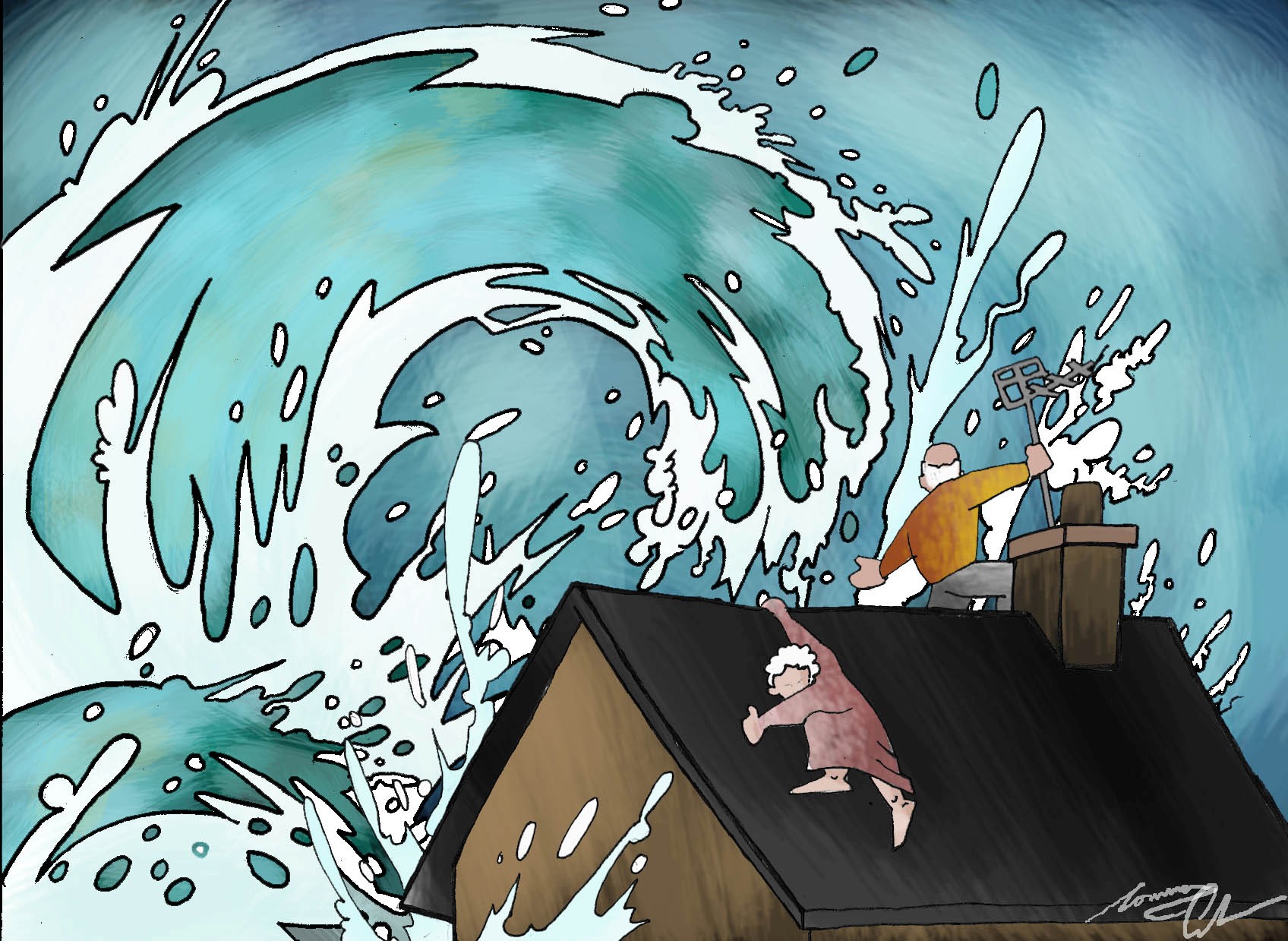
Most elderly people cling to their house like a life raft in a stormy sea rather than downsizing or releasing equity to provide for a better life.  Desperately hanging onto a life raft is not the best way to live out your retirement but the alternatives are not that good either.  A place in Spain until you become frail, —- a bedroom in a Southern Cross home,  —- dubious advice from sharp-suite financial advisors,  —- exploitation by door knocking salesmen with everything from hearing aids to new front drives.

When you need medical care, your GP, with go-away pills, is your first option.  Thereafter you’re in a queue for assessment – Social Service denial – accident – emergency admission -and if you’re lucky a bed – where they will give you MRSA –  and no food or water !

Still, the Politicians with their extra houses, will no doubt  avoid the worst of the deluge and manage to retire to calmer seas.


Posted in Care Funding, ELDERLY UK POLICY | Tagged , | 1 Comment

“Dignified Death”

Within days of writing a sceptical piece on Euthanasia (see “Dying to Meet You” dated 5th January), I read a thought-provoking article in the Daily Mail on the 8th December written by Geraldine McClelland and published after her assisted suicide at the Dignitas Clinic in Switzerland.

Her personal experience, clear thought and sincere concern for others in her situation just cannot be ignored.

The significant factors in Miss McClelland’s case were:-

  • She had a clear diagnosis of a terminal illness
  • Her lung cancer caused serious breathing problems
  • She was mentally alert and had given much thought to seeking assisted suicide
  • She did not want to endure the physical decline that lay ahead of her

This is a powerful rationale for allowing someone to be helped to die with proper medical support and safeguards.

It would have also allowed her to die at home and have freed the relatives from sharing the burden and uncertainty of assisting her.

The key questions is – can a change in the law be framed precisely enough to only allow assisted suicide in circumstances like Miss McClelland’s?

This is never going to be a simple or an easy decision but Geraldine McClelland has powerfully and posthumously put down a headstone for some change.


Posted in Assisted Suicide | Tagged , , | 4 Comments

“Seafood on the Menu” 2

One of my very first blogs was about research designed to encourage people in hospital to eat more SEAWEED…….. which didn’t seem like too good an idea at the time.  (See blog in the archive dated 1 May 2010).

Now nearly two years later and with the involvement of Micheline starred restauranteur, Heston Blumenthal, the results of the Reading University research are reported as “fantastic”.

There are suggestions that these appetising ingredients could be used to improve broths and stews throughout the NHS.  No doubt it’s just a matter of time before more exotic dishes like “Shark’s Fin Soup” get added to the menu.

Shark 2

The super chef has some other interesting ideas:-

  • “Change the lighting” – presumably so patients can see what they are eating
  • “Change the colour” – although no blood-red rare beef
  • “Put some smell into the room” – in most geriatric wards they seem to do that already
  • “Inject a bit of fun” – a rather unfortunate choice of verb

Can the Department of Health seriously be paying for this novel and nonsensical research?

Oh, and what other important thing:-

I wonder if anyone has pointed out to Heston that NO-ONE BOTHERS TO FEED THE ELDERLY IN THE NHS.

Posted in HEALTH, SMILES | Tagged | 2 Comments

“Dying to meet you”

I have written several times about my apprehension with regard to the growing pressure in this country to ease the rules on assisted suicide.  (See earlier posts by clicking on “The Slippery Slope” in the Tag Cloud).

Much is made of the Dutch experience, where Euthanasia has been legal since 2002.  There are obviously occasions where this way of ending a life may be appropriate, and the Dutch have “safeguarded” this by ensuring that two doctors are required to authorise a lethal injection.

Now comes a worrying next step.     Mobile Euthanasia teams who will visit you at home.  It could seem like a compassionate service since most people would prefer to die at home.  The Dutch Medical Association backs the idea because it acknowledges that “some lonely people could qualify if they have unbearable and lasting suffering”.

Each step along this path can be justified by reasonable argument, but where will it end.

Who is the doctor that will ride on this grim reaper hand cart ?

How long will it be before the service is provided by the local Funeral Directors assisted by an NVQ trained locum doctor ?

They could be preceded by ambulance chasing solicitors who could execute your last will and testament before you are executed on a  no death – no fee basis.

I know there is virtue in assisted suicide with all the right counselling and support, and with certain regulation and safeguards.  But regulation has not served the living elderly well in our hospitals, where you would think people would be more than adequately protected.

Frail and lonely older people in their own homes would be much more vulnerable to outside pressures.  Relatives wishing to be relieved of caring duties, or with their eyes on the prize of a legacy;  busy doctors who don’t have time to counsel,  or just the elderly themselves believing they are becoming too much of a burden.


Posted in Assisted Suicide | Tagged , | 4 Comments

“Southern Cross – Post Mortem”

For most of this year I have been writing about the Southern Cross residential care provider and its painful and slow demise.  See all the earlier posts in the TAG CLOUD by clicking on “Southern Cross”.

The pain was felt most acutely by the 31,000 elderly and frail residents who were left worrying about their security.  The slowness of the inevitable closure of the company was caused by the reluctance of all the key players to share in the pain and their callous disregard for the feeling of the residents.

The Southern Cross Management Team had a brief but vainglorious idea of attracting a £100million investor, but no such fool was found.  In a deathnell move they then unilaterally slashed the rents by 30%, but must have known that this was a last and suicidal action.

It must be said that in their brief life they had rising star status whilst they became the vehicle for demolishing the public sector provision and replacing it with new private sector buildings.  The accommodation was generally better but the care model was driven by financial return, not quality of life for residents.

In sharp contrast to the worries experienced by the residents during this difficult time, the senior management team were more than adequately rewarded for the mess they created.  Two previous Chief Executives left and sold their shares which were worth over £10million each.  I guess that must have cushioned the blow of unemployment.

At least Jamie Buchan, the Chief Executive for the last two years had the decency to forego his £495,000 annual salary, which he would have been paid as compensation for losing his job! 😦

  • The landlords and their bankers and vulture capitalists will have had their fingers badly burned by the experience.  They will be much more cautious about investing in this sector in future.  Those who traded revenue return in exchange for equity will have learned some uncomfortable lessons.  It is hard to see how this sector will attract new investment in years ahead, in spite of the huge growth forecast in the numbers of frail elderly people.  A new funding and provider model needs to be found.
  • The Care Quality Commission proved unable to find any constructive role in this situation.   They became a bystander, an impotant regulator and were completely useless in their key function of safeguarding vulnerable adults.
  • The Government (the Department of Health), successfully managed to keep their heads down and avoid any of the mud sticking to them.  Not exactly the leadership role they should be taking!  The problem of underfunded and poor quality residential care has not gone away.  There are many more providers still in a precarious financial position.

I have put forward a number of strategic alternative ways forward in my earlier blogs.  The Government needs to rethink the whole future of NHS and social care provision, otherwise we are heading for a disaster in care of the frail elderly.

  If we are not already there.

Posted in Residential Care | Tagged | 2 Comments

“Post Script”

I can’t remember now what prompted me to start writing about the postal service, other than the fact that Royal Mail remains a lifeline of contact for many elderly people who have not and never will, master e-mail.

(See earlier posts by clicking on “SMILE POST” in the TAG CLOUD)

It seems that on this occasion I was ahead of the newspapers.  On 3rd December, there was an excellent centre page essay in the Daily Mail by Dominic Sandbrook and this will be followed by a series of lunchtime broadcasts on Radio 4 entitled “The Peoples’ Post”.  Should be well worth listening to.

I am grateful to Mr Sandbrook for the following bits of post history:-

  • A public postal service started in 1635
  • In 1680 the London Penny Post was introduced
  • By the late 1700’s, William Pitt, the Chancellor of the Exchequer, agreed to the use of mail coaches.  Scarlet coated guards driving stagecoaches at 10 miles an hour!  Seems like a good branding idea for Postman Pat buggies:-).  I wonder if that is where red post boxes came from?
  • In 1840 Rowland Hill came up with “stamps” so that senders could pre-pay their letters.  I didn’t realise that before that, you paid for your letters when you received them.  That system today would certainly put an end to junk mail 🙂
  • In 1861 William Gladstone introduced the post office savings bank.  Village sub-post offices sprang up all over Britain.  A service that goes way beyond a mail delivery and is the lifeline of many small rural communities
  • In the First World War, 12½ million letters were sent to Flanders every week After the war the Post Office became a leading employer of disabled veterans
  • By World War II the Royal Mail was the biggest employer in the land with ½ million employees
  • The advent of e-mail signalled a major shift – between 2005 and 2009 the volume of letters fell from 84 million a day to 75 million

I am grateful to Dominic Sandbrook for outlining the interesting way in which the development of the postal service and the improvement in communication changed British social history and helped make us one nation, benefitting from the knowledge and experiences of each other.  We are now in an era where the internet has the potential to do that globally.  So it is a sad twist of fate that e-mail threatens the very future of the postman on our doorstep.

Mr Sandbrook’s article ends on a rather forlorn note about foreseeing the continued decline of the Royal Mail.  But need it be this way?  Why not re-build on the experience of hundreds of years of proud history?

Put postmen or postwomen Pats back in scarlet uniforms; give them low-carbon emission buggies or better still an even more environmentally friendly horse and cart.  Support them with a volunteer army of elderly postal assistants and start a wholly new enhanced delivery service providing milk, fresh bread, organically and locally grown fruit and veg and of course POST.  Add to this a hop on and off bus service and a mobile crèche.

It’s a daft idea but it might just work.

I GUESS THAT’S WHAT THEY SAID ABOUT THE PENNY POST IN 1680

  • P.S.

As I was writing this blog on holiday in Florida, an item came on the news saying that the universal postal service in America was considering dropping from a next day delivery to a two-day service.  Maybe this will be the next cutback in the UK

Posted in SMILES | Tagged | 5 Comments

“I like to be in America” 2

Eating out in America is the thing everybody does.  Food is cheap, service is good and it all comes fast with fries.  There are restaurants on every corner with homespun names like Wendy’s, Denny’s, Bob Evans, Perkins and Arby’s.

Then there are the folksy country and western ones, where if you don’t have a Stetson and cowboy boots, you can buy them when you get in the queue.  You have to queue even if there is no-one else in the restaurant and there are loads of empty chairs and tables.  It is obligatory to be “meeted and greeted”.

Today we went to the “Cracker Barrel Old Country Store” for some “good country cookin’ for travellers and neighbours alike”.  It’s one of a chain of restaurants which were founded in Tennessee as long ago as 1969, which I think is before cars and televisions were invented.  The rockin’ chair on the front cover of the menu – and for sale on the outside porch – tells you straight away this is where you get to sample Grandma’s home cookin’.

When we get to the front of the queue, we are greeted by Grandma herself who smiles, takes two menus and shuffles off head down past the unlit country fireplace.  I guess Grandpa is out in the backyard choppin’ logs right now!  Meanwhile, Grandma deftly two steps between the occupied and vacant tables to “a quiet spot by the window” overlookin’ the rockin’ chair porch.

Before we even look at the menu, the waitress arrives to ask if we would like a drink.  I’ll swear she is one of the Walton family, maybe Elizabeth or Erin or was it Sue Ellen – or was that Dallas?  The usual questions – coffee, tea, juice —— plus fifteen supplemental question depending what you choose.  If it’s coffee, this is no Starbucks, so you don’t get cappuccino, espresso or latte – just regular, decaf or iced.  Since in my mind regular is more to do with petrol (gas), I settle for tea of the iced variety, because brewin’ hot tea is not a Tennessee speciality.

I look around for the Walton boys, but John Boy, Jason and Jim Bob must be out fishin’ for catfish, which the menu says Grandma cooks with cornmeal and seasonin’.

Now comes the big challenge.  Choosin’ from the 64 things in Grandma’s kitchen, most of which I have never had before and half of which I don’t even understand, even after Elizabeth’s explanation.

I pass on the “USDA Choice Chuck Roast” which has been pot roasted for 14 hours.  I figure it might be a bit overdone by now —- and anyway I don’t want to get into trouble for stealin’ the District Attorney’s lunch (assumin’ that’s what DA means?)

I pass on the “Chicken Fried Chicken” because I am sure the sawmill gravy will taste like sawdust.  I also passed on the “Smothered Grilled Chicken” – I just could not bear the thought of Grandma’s smotherin’ those chickens.

Finally, putting Grandma’s killin’ methods out of my mind, I settle for the “Chicken ‘n’ Dumplins Platter, plus three country sides”.  I chose Breaded Fried Okra, Pinto Beans and Turnip Greens just to experience true Tennessee country eatin’.  The Turnip Greens were unusual – like spinach without the leaves.  I guess the caterpillars must have got to them before Grandma did.

When the meal came it sure was fillin’.  Grandma’s Dumplins could be used to glue together broken rockin’ chairs  or seal the draughts in the porch windows.  I didn’t tell her that because she didn’t look like the sort of Grandma you would want to argue with.  No room for a puddin’, in fact no puddin’s on the menu, so I guess I’m not the only neighbour goin’ away full up.

On the way out we were “parted and departed” with a “thank you for eatin’ with us”.  I took a moment to visit with Grandma only to find she wasn’t the owner – “I just work here”.  She is 80 years young, beautifully made up and her hair is tied back with a ribbon.  Immaculate as if she was going to church on Sunday except for the apron.  She told me she works here most days but doesn’t do the waitressin’ – “the young ‘uns do that”.  She drives to work  — and on one day when her car didn’t start, she walked — but the manager said if it happened again she should ring and someone would pick her up.  In a car or maybe a buggy I assume.

On the days she doesn’t work at the country restaurant, she volunteers at the local hospital.

She may not own the place but she is the perfect ambassador for Tennessee Country Cookin’.  She embodies everything that is get up and go about America.


Posted in SMILES | Tagged | 2 Comments

“I like to be in America”

This blog was written while on a holiday in America and it is interesting to observe the differences between the UK and the USA.  In some ways they are ahead of us and in some ways behind.  Neither is automatically good or bad.

One thing I like is they still have imperial measures – they haven’t given in to the incomprehensibility of metric.  A foot is still a foot, roughly the size of your feet so you can measure most things by putting one foot after the other; or for longer distances, a large stride is a yard, so you can count your paces to calculate distances outside.  Although I never did figure out a rod, pole or perch, I still think they must be more to do with fishing.

They use miles too, but then again so do we.  The European Court of Justice has not yet caught up with our road sign-writers.

The weather forecasters still speak Farenheit so at least I know that when it is 70°or more, it is going to be hot.  In the UK I still haven’t a clue what the temperature is going to be even after watching the weather forecast.

Filling up the car is a bit more confusing, because for some reason they call petrol “gas”, which it isn’t!   On the good side, they still use gallons, but to complicate things if you want to pay cash, you have to pay in advance, which requires you to guesstimate how many gallons you need.

Weight wise they calculate everything in pounds, they don’t seem to have got the hang of stones.  So people weigh in at 140 pounds if they are 10 stones.  I never got around to finding out about ounces.

One thing they are different on is the currency.  Dollars are simple enough to understand until you come to pay for anything – then the notes are all the same size and colour – just to get you confused again.   On top of that, it’s only when you get to the till that they add on the sales tax. So everything costs a bit more than you think.

You buy potatoes in pounds and petrol in gallons, but why did they never learn to drive on the left   ???????????????


Posted in SMILES | Tagged | 4 Comments

“Vulnerable Grey Market”

It is over a year ago that I last wrote about some of my concerns about the selling of mobility equipment to vulnerable older people.  (See

There is vast potential for this market to be preyed upon by unscrupulous salesmen.

Now it appears that at the very same time that I was writing the blog, Derbyshire Trading Standards were investigating the miss-selling of mobility scooters after a host of complaints about  REO Marketing Limited.

The company sold scooters, stair lifts, beds and wheelchairs over a wide area of England.

Their aggressive sales techniques included:-

  • Long sales visits to people’s’ homes;
  • Exploiting health problems;
  • Falsely claiming to carry out surveys as an excuse for sales visits;
  • Offering discounts for immediate orders placed

The two Directors of the company were jailed for 3 and 4 years each, but after pleading guilty they will, no doubt, be out in half that time.  I am sure that does not reflect the loss and distress they caused to many of their elderly customers.  I believe this example is just the tip of a very big iceberg of exploitation of older people in their own homes.

As the grey market expands, there will be many more examples like this in the future.  Elderly people who can’t get out to shop, don’t have the skills to use the internet and have no close relatives to advise them – they are very vulnerable to this type of exploitation.

Trading Standards are only ever able to lock the stable door after the event.  We need properly “kite marked” and trusted organisations.

ELDERLY  BUYER   BEWARE !

A quick search of Google using “exploiting the elderly in the UK” threw up three million results !

Products highlighted included:-

  • Energy sales
  • Home insurance
  • Retirement housing
  • Will writing
  • Financial services
  • Doorstep sales
  • Double glazing

Footnote:  Between a third and half of all cases of elder abuse cases in America involve financial exploitation.

3 Comments