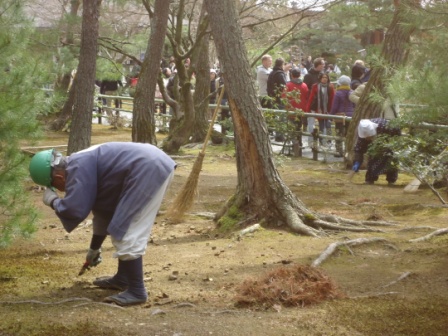
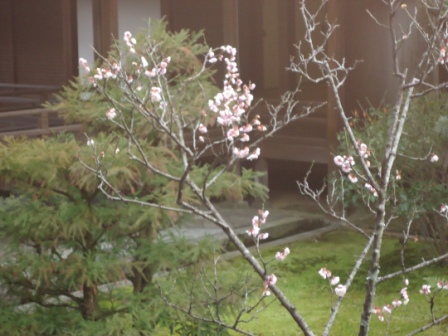
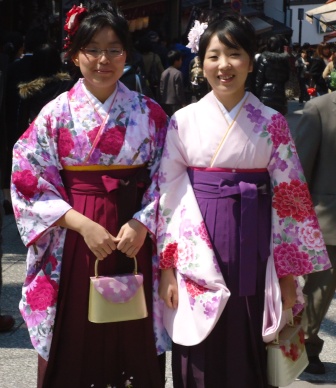
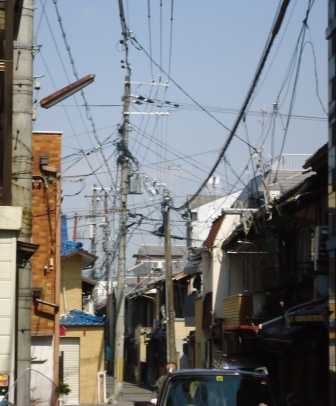
Japan — More First Impressions

This is one of a series of blogs which describe my trip to Japan in April 2012.  To see further blogs in the series, click on “Japan Odyssey” in the Tag Cloud.

Travel from Narita Airport, 40 miles to Tokyo centre by limosine.  Except it is not a limosine, it’s a coach — no horses — just the posh bus variety.   Still it has a uniformed driver in white gloves and an assistant to load your luggage.   The journey takes about an hour, mainly on a motorway with high walls and fences on each side, so not much to see.

Observing the vehicles on the motorway, they are nearly all Japanese.  Quite a contrast with the UK, where most cars are foreign made.  The number plates seem odd, as they only have four digets — you would think they would need at least seven like the UK, given the zillions of cars made by Toyota and Nissan.

Eventually we arrive at the coach drop off point, which proves conclusively that it is no limmo, as we now have to get a taxi to our hotel.   So we drag our suitcases to the nearest taxi rank, which is inconveniently located on the opposite side of a busy dual carrigeway. There we are met by another man in a uniform and white gloves, who organises us into a queue.

When we reach the front of the queue, our taxi driver pulls up, gets out of the car to load our cases — and Number One Son starts talking to him in  Japanese !  I am already tired and jetlagged, now I am completely befuddled.  Tom has been learning to speak Japanese during the last 12 months and waited until this moment to surprise me.  BRILLIANT.

Smartly dressed taxi driver in an informal uniform — black trousers, white shirt, black waistcote,white gloves.  Not at all like the casualness of UK cabbies.  His car doors opened and closed automatically.  The interior of the cab was sparklingly clean and rather strangly draped in lace — like grannies antimacassers on the sofa.

                                                               A  strange  start.

Posted in SMILES | Tagged | Leave a comment

“Tokyo – First Impressions”

This is one of a series of blogs which describe my trip to Japan in April 2012.  To see further blogs in the series, click on “Japan Odyssey” in the Tag Cloud.

Tired after an 11-hour flight, and a sleepless-night journey over the North Pole.

Quick and easy passage through customs – 5 minutes for finger printing and a photograph – no fuss, no suspicion, a polite smile from the Customs Officer.  (what a contrast with America ever since 9/11 – where now you are made to feel guilty and unwelcome before you enter the country – that dispicable act of terrorism has put a nation on the defensive in a way that is not at all American).

Instant baggage reclaim, followed by a cursory baggage check.   Just questions, no search (although Number-one Son had prior instructions from me to take off his Rayban dark glasses and Michael Jackson fingerless gloves!)   Then on to meet and greet a smartly dressed Mr …?….  (missed the name – I was not paying courteous 100% attention).

First step is to rent a phone – my old Nokia doesn’t work in Japan.   Two very helpful assistants speak good enough English to explain how the phone works  (which English people back home fail to do – is it my fault that I wasn’t born with a mobile phone stuck in my ear?)   When I take a deep intake of breath at the £5 a minute charge to phone home, both  shop assistants and Mr …?….  politely suggest I go and check out one of the other half dozen phone shops.   Not having intended to complain in the first place I do a quick 180° turn and sign on the dotted line.    I’ll bet ET didn’t have these problems.  🙂

Next step is the Japan rail card.   We must convert our pre-paid voucher into  JR Cards (Japan Railways) and get tickets and seat allocations for all our planned journeys.

The first thing that was different was that Mr ….?….  left our bags on the trolley outside the JR office – unattended – what implicit faith in the honesty of the Japanese.   I had been told stories before about the lack of crime in Japan, but both Tom and I kept looking over our shoulders to see if the bags were still there – they were !

Now back to the rail tickets and Mr JR office man  –  no stetson hat included.  Mr …?…. explained to Mr JR our full 5-day rail pass itinerary minute by minute, day by day, station by station.    Mr JR handwrote it all down with two pens taped together – one black and one red.    The black one for his notes of Mr ….?…..’s instructions, the red one later for a flourish of ticks to show that everything was checked.   Poka-Yoke  — mistake proofing on daily display.   ( Tom thought I was kidding when I used this term,whichI learned from Sid Joynson, but it was evident everywhere we went.)    Then each journey’s batch of notes were stapled together with another sweeping gesture.

Now comes the automated bit, surprisingly late in the process for this most high-tec of countries !   Mr. JR goes over to the ticket machine that must control the whole of Japanese Railways.   After a few minutes of data entry and printer wurrrrrring, he returns with a fist full of tickets.

His next step is to complete the JR RAIL PASS  –  the golden key to free transport the length and bredth of Japanese Railways.  All done by hand and checked with us again. Then journey by journey, ticket by ticket,  Mr.JR rehearses all our steps —- train by train,   coach by coach,   seat by seat,   station by station,   minute by minute.   Mr. …?…. interjected to say that trains are all on time ” one minute late – NO TRAIN “.  I sense they think that we might not be all that punctual.  We are on holiday after all.

The tickets were then placed in separate envelopes for each journey and handed to us with both hands and a bow.  The final sign-off flourish was done with an old- fashioned rubber date stamp and an ink pad.   A throw back to bygone years, in this land of advanced technology.    STAMP,  STAMP, STAMP, STAMP,  like a 21 gun salute to signal the issue of another JR RAIL PASS.

  As we leave MR. JR tells us —  at the station to present our JR pass to a real man in a ticket boothe and not to use the automatic machines. “Men are much better than machines – machines are not as good as men”  he says with a smile.

Anywhere else this twenty minute meticulous and repetitative approach would have come across as mindless beaurocracy.  In Narita Airport, it left you with an impression of incredible customer care !

                                         Thank  you Mr. JR   and Mr. Yoshida.

Posted in SMILES | Tagged | Leave a comment

“Japan Odyssey”

This is one of a series of blogs which describe my trip to Japan in April 2012.  To see further blogs in the series, click on “Japan Odyssey” in the Tag Cloud.

An Introduction

My interest in Japan began 17 years ago in 1995, when I first came across a book called “Sid’s Heroes”.   At the time I was hungrily devouring management books, searching for better ways to lead The ExtraCare Charitable Trust.   I read the book from cover to cover in one weekend  –  I could not put it down!   Within weeks I booked to go on a 5 day training course run by Yorkshireman Sid Joynson on Japanese management techniques.   It began a  friendship with Sid that lasts to this day.

Sid’s teaching greatly influenced the way I went on to manage ExtraCare.   In our formative years at ExtraCare, Sid ran many training courses for ExtraCare to pass onto hundreds of staff the quality improvement techniques of Kaizen and Taozen.   They see the frontline staff and residents themselves as the “experts” and give them tools to improve every aspect of  service delivery.   Goal setting and performance measurement became essential management processes in the Trust.

That chance finding of a book on a shelf is what ultimately enabled The ExtraCare Charitable Trust to lead a transformation in the way housing and care for elderly people is built and managed in the UK.

A THOUSAND THANKS SID

On my retirement in 2010, I was delighted to be  given the present of a trip to Japan.   Over the following  weeks I will publish a thread of blogs describing my experiences during a 10-day trip with my son Tom made in March 2012.  They will be illustrated with photos I took and with some of Tom’s sketches.

Posted in SMILES | Tagged | Leave a comment

Tommy Graham’s Blogtoons on Packaging

This slideshow requires JavaScript.

Since the GrumbleSmiles blog was started, we have been illustrating some of the posts with cartoons.  This is the third post in building a gallery of all the blogtoons.

I’ve written a series of posts on my struggles with packaging which seemed to have inspired some of Tom’s best cartoons.  You can find the blogs in the TAG CLOUD by clicking on Packaging.

1 Comment

“Princethorpe Court 5”

For earlier stories on this subject, click on   “PRINCETHORPE COURT STORY”   in the TAG CLOUD.

Now we come to the final and most important chapter of the story.   All the effort, time and money would count for nothing if we had not achieved  “Better Lives for Older People”.

Anne Miller bought into the concept of promoting residents’ independence and choice completely.   In no time at all she involved them in all decisions about how Princethorpe Court was managed.

The Residents

Princethorpe Court was designed with activity in mind, so the communal areas were a platform for enhancing your lifestyle.

The restaurant was not a fast food outlet, it was a place you could come each day and socialise.   Everyone had a kitchen in their flat where they or the staff could prepare breakfast or tea, but lunchtime was a popular ‘communal event’ with the majority of residents.  Couples tended to be more self-sufficient, but the majority of residents lived on their own, so lunch was an opportunity for a natter.

There was a hairdressing room which was another popular place for a chat and a sure way of looking your best and lifting your spirits.  The communal laundry was another good place for catching up on all the latest gossip.

Dotted around the scheme, one in each street, were four small sitting rooms.   With Anne Miller’s encouragement, these were taken over by the residents and gradually established their own individual identity.   One as a library full of donated books and jigsaws, one was a spiritual room for quiet contemplation.  Others were used for knitting,   card making,   darts,   quizzes,   poetry reading,   costume making,   exercise  — the list became endless.   Many of these activities were organised and run by the residents themselves.

Anne saw every resident as a potential volunteer.   It was her way of ensuring everyone’s talents and abilities were recognised and utilised for the communal benefit.   After our initial concern about the size of the scheme, we often continued to discuss whether the scheme was too big – there were 48 flats but around 60 residents altogether.  The Social Service view was that anything over 35 flats would become institutional.   Anne’s perspective was that as long as each resident had a ‘role’, they would not get ‘lost’ in the size of the scheme.   Her idea of a ‘role’ was beyond any formal definition of a volunteer — Nora was a very quiet lady who liked to stay in her flat most of the time and just look out of her lounge window, which overlooked the car park — she always knew who had visited the scheme each day and became the scheme’s self-appointed security guard.

The residents at Princethorpe Court would not mind me saying they were “unremarkable”, they were no different to the residents in any of our later extracare schemes.   They had the usual range of frailties that you would expect in an age group that ranged from 60 to 100.  Their average age was late 70’s.   Most were women (80%), mostly widowed before they moved in, almost all came from the local area.   About a quarter had mobility issues and used a wheelchair.

At the same time, the staff ensured that all the residents were treated as individuals, and as their life stories and accomplishments became known, they were made to feel unique.   In that sense they were all “remarkable”.

Here are four people just to illustrate the point:-

TOM was a quiet man, a keen gardener.   He took over the extensive greenhouse and grew salad crops for the restaurant.   His tomatoes were his pride and joy.   Over the years he won medals and certificates galore.   A glass cabinet in the entrance hall of the scheme houses a big silver cup which was awarded to Princethorpe Court at ExtraCare’s first “Garden in Bloom” competition.   In the years to follow we realised that rewarding outstanding talent with small prizes was a way of reinforcing the message that residents had great skill and could still achieve a lot in later life.

JACK AND MABEL looked life in the face and overcame any difficulties they had with a smile.   At well over 70, they regularly flew to Canada to visit their children and grandchildren.   They were the life and soul of any party, in fact I first met Jack when he was bashing himself over the head with a tin tray and singing an old music hall song.   Playing the spoons was another favourite of his.

Jack fell in the empty bath overnight when he had got out of bed to go to the toilet.  He couldn’t get back out and Mabel could not hear him shouting for help, so he spent the rest of the night sleeping in the bath.  Then he got a lecture from Mabel in the morning for being so clumsy.  By the way, Jack had a tin leg, which he wasn’t wearing at the time.

In fact it was his tin leg that brought them together.   In Coventry during the war, they were both running to get into an air raid shelter.   Jack was slow because of his tin leg and when he got to the top of the stairs down into the shelter, he tripped and tumbled down the steps and landed on Mabel.   That’s how they first met – they were married for over fifty years – so Jack said he must have fallen for Mabel in a big way !

JOY KING moved into Princethorpe Court when it opened and still lives there today – over 20 years later.   I first met Joy when we played in a Christmas pantomime together.   She was the Fairy Queen — I think I was the bad guy.   I later found that Joy had come from a theatrical background.   Her father ran a travelling repertory theatre and Joy had to look after her baby sister while her mother and father were performing twice a day in plays.   They lived an itinerant life moving from one theatrical digs to another.   It was a hard life and Joy had a poor education because they never were in one school for more than a few weeks.

Joy joined in all the activities at Princethorpe and one of her proudest days was when she was awarded a degree from the University of ExtraCare for having completed a computer course.

There are hundreds of stories like these which just goes to show that  “Everyone has a Story to Tell”.   This was the title of a book we published to celebrate the lives of our residents after the first five years of ExtraCare.

The hard evidence to show that this model works is only becoming clear nearly 30 years after Princethorpe Court was conceived :-

  • Residents who move into residential care on average only live four more years – in ExtraCare housing the average length of stay is 14 years.
  • The average age of ExtraCare residents is between 75 and 80.  When asked how old they feel, most residents say they feel between 10 and 20 years younger than they actually are.
Posted in RETIREMENT HOUSING | Tagged | Leave a comment

Tommy Graham’s Blogtoons on Pills

This slideshow requires JavaScript.

Since the GrumbleSmiles blog was started, we have been illustrating some of the posts with cartoons.  This is the fourth post in building a gallery of all the blogtoons.

Elderly people and their pills seem to go hand in hand.  So not surprisingly I’ve written a series of blogs on this subject.  Click on Pills in the TAG CLOUD to see the posts.  All the pills blogtoons have a super heroine – Pilly Gallore and her superhero GP Astroglax.


1 Comment

“Dignity Be Damned ” 4

This blog really started two years ago and was revived by the report from the “Commission on Improving Dignity in Care of Older People”.  (Click on “Dignity be Damned” in the TAG CLOUD).

The report was co-authorised by the Local Government Association, the NHS Confederation and AGE UK.  It is well argued and makes a lot of common sense recommendations.

Few would argue with their aspiration to provide better care for the elderly.  However, I am not sure they have fulfilled their stated ambition to “identify the underlying causes of these persistent failings”.  I have commented on what I think should be a more strategic response on my previous blog on this subject.

Meanwhile, here are my comments on their 48 recommendations:-  (Click on the following link www.nhsconfed.org/Documents/Delivering%20Dignity.pdf  if you want to read the full report).

  1. Deliver care at home in the community
    • Absolutely, but you will have to get GPs out and about first, and build shop window style health centres
  2. Make independence at admission and discharge a key measure
    • Good idea – why not pay a bonus for health improvement
  3. Ban patronising language
    • Yes but it’s hardly a top priority so let’s not get all P.C. about it
  4. Comprehensive geriatric assessment
    • It is wishful thinking in these express service NHS days
  5. Nutritional needs
    • A critical failing that will only be solved with more staff, volunteers and relatives
  6. Families, friends and carers
    • Agreed and see above
  7. ‘This is me record’
    • Nice idea so long as it is not turned into a blizzard of paper
  8. Feedback
    • Needs to be monitored by a panel of independent elderly people with a direct reporting line to health boards
  9. Staff take personal responsibility
    • A platitude
  10. Practiced based development
    • Should lead to a new NVQ/Nurse for the elderly qualification
  11. Recruit compassionate staff
    • Another platitude.  Most staff are compassionate, it is the system that needs changing
  12. Dementia training
    • This is essential, there should be dementia nurses at ward sister level on all elderly wards
  13. Devolved leadership
    • This will never happen inside the NHS.  It is a command and control model and probably should stay that way for short-term acute care
  14. Board leadership
    • It is called “walking the floor” but right now they could well get lynched if they ventured onto elderly wards
  15. Ward leadership
    • Will only happen if you reduce paperwork, give them enough staff and empower them to discipline poor performance
  16. Patient/family feedback
    • Who can disagree
  17. Staff reflection time
    • Ditto
  18. Professional duty of care
    • Motherhood and apple pie
  19. Protection of vulnerable adults
    • A toothless, ineffective process that has nothing to do with leadership
  20. Discharge from hospital
    • Should be controlled by community based staff, otherwise the rush to empty beds takes priority
  21. Care home values
    • Not at all clear what this is about
  22. Care Quality Forum
    • If the Nursing Quality Forum has not worked for older people, why would another forum for care work?
  23. A rating scheme for care homes
    • CQC has only just abandoned one
  24. My home life
    • A good process that should be used more widely
  25. Care plans
    • This is already mandatory but too often its use is limited to basic care tasks by pressure of time
  26. Buildings fit for purpose
    • There needs to be massive capital investment to build new accommodation and thereby eliminate old out-of-date residential care homes
  27. Family and friends, carers as partners
    • Of course
  28. Volunteers in care homes
    • Residents themselves are the most valuable and reliable volunteers
  29. More use of technology
    • Yes in principle, but it all needs to be more “elder-friendly”.  SKYPE could open a window way beyond contact with relatives, so could web cams and CCTV
  30. 360° staff appraisal
    • If it is done constructively
  31. Personal responsibility
    • Motherhood and apple pie again
  32. Access to medical care
    • Of course but it only works if doctors will come out of their surgeries
  33. End of life care
    • Agreed
  34. Board role
    • See answer 14
  35. Non Executive Directors
    • Agreed.  It should be routine and regular, not just ceremonial
  36. Invest in training
    • 5% of staff time should be spent on training
  37. Residents’ charter
    • Rarely worth the paper it is printed on
  38. Feedback
    • See answer 8 and also consider suggestion schemes, resident forums and comprehensive annual surveys of residents, relatives, volunteers and staff.  The results and improvement plans should be published.
  39. NHS Commissioning
    • Cost drives their decisions.  I have little confidence they can put a price on dignity
  40. Ditto
  41. NICE
    • All hot air
  42. More fine words
  43. Local advocacy groups
    • A good idea in principle but toothless in practice
  44. Health Watch
    • Community health councils did not work so what will change this time
  45. Universities and professional bodies
    • They already have this responsibility but are ineffective at guaranteeing good performance or compassion
  46. Regulation
    • This has singularly failed to deliver better care and I have long argued that the DoH should refocus CQC’s remit to focus on best practice and training for improvement rather than ineffective policing.
  47. Healthcare Assistant
    • I think there should be a new qualification of second level, mainly practice base ‘nurse for the elderly’, as already operated in Holland.
  48. Care Quality Commission
    • See point 45.  They should also conduct regular customer satisfaction surveys with residents and their relatives

As I said at the beginning, there is nothing much to disagree with here.  It is mainly good practice that is already implemented in the best care homes and hospitals.  The key question is why is it not done everywhere and that will not be answered by greater exhortation.

Who was it who said “two priorities are no priority at all”?  48 recommendations may be a direction of travel but they are a long way from a road map.

The second stage of the Commission’s work needs to start further back at the root causes of the problem.

Posted in HEALTH, N.H.S. | Tagged | 4 Comments

“Princethorpe Court 4”

For earlier stories on this subject, click on   “PRINCETHORPE COURT STORY”   in the TAG CLOUD.

The Staff Support Team

From the very outset of developing our new concept, it was not just about bricks and mortar, it was about creating a more fulfilling life for residents.   A life that was able to reach beyond the tasks of daily living  and lift residents above their concerns about increasing frailty.   That said, it was also about maintaining and promoting their independence, by empowering them to build on their valuable skills and considerable life experience.

In other housing and care models, the care element creates dependence and communal living can reinforce the negative images of getting old.   We wanted to reverse that thinking and create positive opportunities for ageing, with support to overcome increasing frailty.

To do this we needed a special staff team, who aspired to do much more than offer comfort and care.   Our first Princethorpe Court Manager was an inspired and inspirational appointment.   Sister Anne Miller was a Franciscan Nun ,with a background of working in the third world.   She did not have the obvious recent experience in care management, we had set out to look for.   I was one of the interview panel and I have to admit before I met her I was very apprehensive.   My Welsh Chapel upbringing made me very nervous about having an overly pious scheme.   I think I expected Anne to come to the interview in a habit and be rather timorous.   I could not have been more wrong.  There was no habit, just a cross on a necklace and timid she was not !   She was very self-assured.   Obviously compassionate about the elderly and quite a feisty lady.   She even argued with me, which was a dangerous step in a job interview, but her conviction ( not the CRB type 🙂 ) made a lasting impression on me.   I still was not 100% sure, but Liz Taylor argued very strongly in favour of Anne, and that swung the day.

We never had reason to regret the decision.  Anne proved to be an exceptional manager who helped improve our vision beyond measure.   She built a strong staff team around her and helped them to understand the difference between the care background most of them had come from, and the supportive environment we wished to create.   We didn’t rush in and do things for people, we wanted to help and encourage them to do things for themselves.   It is about restoring confidence to people.   This takes time and patience, which can easily be squeezed out of a hard pressed staff schedule.   The result is that care hastily delivered can often lead to greater dependency.   This lesson has certainly been lost in the modern-day express style speedy boarding NHS.   It was also seldom seen in minimum staff levelled residential care, where high staff turnover and frequent use of agency staff meant there was little time to really get to know residents’ individual needs.

At Princethorpe Court, Anne’s team developed support plans which embraced the whole of a residents’ life, not just their immediate care needs.   Later this became known as a “Book of Life” and was a written and photographic record of a resident’s past life and future ambitions.

It was testament to Anne Miller’s mentoring skills that her two senior staff, Mary Saint and Ginny Larkin, both went on to become managers of their own schemes in the ExtraCare Charitable Trust.   Many other staff also were promoted to managerial and team leader positions in the following years and transferred the Princethorpe culture to other schemes.

MORE TO COME

Posted in RETIREMENT HOUSING | Tagged | Leave a comment

“More Easy Money”

In my last blog on this subject (click on “Easy Money” in the TAG CLOUD), I was endeavouring to repay my part of the national debt, by securing some newly printed Quantitative Easing money.   To be prudent, which is something we all learned from Gordon Brown, I decided to ask for more than I needed.  Just like all the banks did.

Now I turn to the problem of how I might wisely invest the surplus £960,000 that I would have after the rigorous economic stress testing and one-eye-open, all-you-can-learn-in-a-minute, due diligence.

Perhaps I should start by listening to those helpful, totally independent, banking financial advisors.  They have all sorts of wonderous tax-free, low-risk, high-return, investment plans.  They point out that they may start off with high risks and low returns, but could …… (and they emphasise “COULD” to protect their independence and integrity)…..so could, but probably will ……. (unless there is a financial calamity which is unlikely)….. so will then, have an almost guaranteed high return….by 2020 or sooner.   That’s where the “kick out” clause comes in.   The one where you get kicked out before the investment plan becomes too generous.

Finally, there is the 40-page contract which it took their 400 lawyers 4 years to draw up in order to guarantee their independence, integrity and incomprehensibility.   All you have to do is sign and hand over your hard-earned Quantitative Easings.   Sadly, as my 40 no-win, no-fee lawyers weren’t around to advise me, and I could not understand a word of what had been said.  Even though I accepted their advice was independent, I decided not to pursue this avenue to financial success.

So in the meantime, after I have helped pay off the National debt, I maybe should pour some of my newly printed, newly found wealth into the black hole of borrowings, otherwise known as the British economy. My new found friend, Mr Mervyn King, says that he has been doing it for a while now and its just a matter of time before things come right for Britain.  So below is a cartoon of Mr King and myself discussing our shredded economy.

After all, I am nearly a quantitative eased millionaire so it would be a shame to fritter it all away.

Posted in ELDERLY MARKET, SMILES | Tagged | Leave a comment

“Dignity Be Damned ” 3

Click on this topic in the TAG CLOUD for the earlier blogs on this subject.

The title of this blog was a response two years ago to the Government’s focus on “dignity”.  No-one could possibly disagree that elderly people are entitled to respect and dignity. There is however, a real danger that a focus on this issue will provide the Government with a smoke screen, to obscure much more fundamental problems which the NHS faces with care of the elderly.  Hence my title “Dignity Be Damned”.

The “Delivering Dignity” report reads as though everyone on the Commission Group took it in turns to make a recommendation for improving dignity.  Given it is only a draft report, you could be forgiven for thinking there is nothing wrong with that.  All the recommendations have merit.  Although simply asserting that best practice should be carried out everywhere, fails to address the starting premise of the authors, of trying to understand why things are failing so badly at present.  Without knowing what the problems are, you will never find the right solutions. 

I think it is possible to judge from the report’s paragraph headings, that they see a failing in leadership at Board and Management levels.   Reading between the lines, you can also assume from the weight of words and recommendations, that they feel there is a lack of compassion from front line staff. 

On both counts I think they are in danger of treating the symptoms and not the cause.   I believe that the vast majority of managers and staff in the NHS and residential care have every intention of delivering good care to older people.   It is not an easy area to work in and staff would not stay if they were not fully committed.   I say that, having worked for over 20 years in the ExtraCare Charitable Trust, as a Managing Director who was frequently on the front line with many thousands of care home and former NHS staff.  Most of the Commission’s recommendations are in line with the working practices of ExtraCare Charitable Trust, so  it goes without saying, I am a strong advocate of the proposals.

However, before they hone the details of their recommendations, they must first strategically address the fundamentals.

Over the last two years I have been writing about this issue on my GrumbleSmiles blog and I am sorry I missed the opportunity to submit my comments as evidence to the Commission.  However, I did get the opportunity to speak to Dianne Jeffrey,  after her speach on the report, at the Age UK Life Conference.

The fundamental issue is that the NHS is being overwhelmed by the changing demographics of the elderly population.  The NHS was never designed or resourced to deal with the complex and chronic conditions of so many elderly people.  Fast track acute hospitals are geared for rapid throughput and are the wrong place to attend to long-term care.   This situation is further compounded by the overlay of dementia present in so many elderly people. 

To cope with this tsunami situation, we need nothing short of radical re-engineering of the service, albeit done in an organised transition.   My recommendations  to the Commission are:-

1.  Resources should be transferred out of the NHS into a new “SENIOR HEALTHCARE ENTERPRISE“.  (Similar to the formation of the Housing Corporation, whose funding enabled the expansion of Housing Associations and facilitated the transformation of social housing provision in the latter quarter of the twentieth century.)  This organisation would be responsible for commissioning capital and revenue funded projects in the community, to as far as possible look after the health and social care needs of elderly people in their own homes.  They would also commission a network of HEALTH IMPROVEMENT CENTRES (see my blog on “New Vision of Later Life 2”) which would support community work with specialist clinicians and offer hotel style rehabilitation and respite care.  These would be the hub for telecare and telehealth and also be the coordinating base for domiciliary care.  Resources should be moved from Social Services so that we end up with a fully integrated health and social care system.

This would allow the NHS to concentrate on acute, short-term interventions.

2.  We should develop a new qualification of second level “NURSES FOR THE ELDERLY“.  They would lead all care services for older people.   In addition, all carers should be NVQ Level 2 Qualified in Care including dementia.

3.  In all residential care provision, webcams and Skype should be available to all elderly clients, so that they can open up a visual communication channel to relatives and advocates who can remotely monitor the service they are receiving.  This service could be further developed to include telecare and telehealth (this is an enhancement of the Commission’s recommendation 29).

I’m not suggesting this re-engineering be done quickly.   A rapid change would be too big a shock to the existing system and would likely meet major opposition from interest groups who would prefer to maintain the current situation.   I would start with a pilot programme underpinned with new funds provided by the Senior Healthcare Executive.   Soft loans and grants would be offered to promote innovative services provided by best practice organisations from the public, voluntary and private sectors.   Building on success would allow the gradual expansion and transfer of elderly services away from the acute sector of the NHS and into a re-invigorated and integrated health and social care service.

These ideas are discussed in greater length in my GrumbleSmiles blog in the thread on “New Vision of Later Life”.

Posted in HEALTH, N.H.S. | Tagged | 2 Comments