My feet have been on my mind for some time, so to speak. In fact ever since I first blogged about my poorly foot. (Click in the ARCHIVE 10 June 2012, or in the TAG CLOUD on “POORLY FEET”).
Now every time I see anything in the press about feet, it catches my eye. I am compelled to read it. Not that feet dominate the headlines. So I was particularly drawn to a full-page advert in a national newspaper. There must be a lot of money in feet. Perhaps there really is an epidemic in “poorly foot syndrome”.
At the top of the page the headline said “say goodbye to horrible, hard, cracked unsightly feet”. I have to say I didn’t think of my feet that way until I read this advert. Now I know my foot problem may be worse than I first thought. Goodness knows plantar fasciitis is bad enough and I’m not fully over that yet.
Now it appears I need an electronic Pedi-Smooth plus 3 spare blades plus 12 emery buffing pads plus 2 interchangeable heads, which is a bit more sophisticated that the nail clippers I already have. I have obviously been sadly neglecting my feet – no wonder I have poorly feet.
The comprehensive colour illustrated advert is full of useful information. The advertising agency have struggled hard to identify all the virtues of the “Pedi-Smooth”:-
- “Incredible baby soft look and feel that everybody loves” – that’s some 60 year turnaround from “horrible, hard, cracked unsightly feet”.
- “Salon results in your own home” – I guess that means people will be queuing at your front door.
- “Complete with two interchangeable heads” – now that will be useful when you want to go out and not be recognised, robbing a bank for instance.
- “A storage compartment to collect dead skin so you can use it anywhere” – just where do you use dead skin? Still it is good to know you can shave your feet anywhere – on the bus, in a queue at the supermarket or even in a restaurant while you’re waiting for the next course.
Just £19.95 plus £3.99 P & P (p.s. batteries are not included – and we are not going to tell you what type to get). 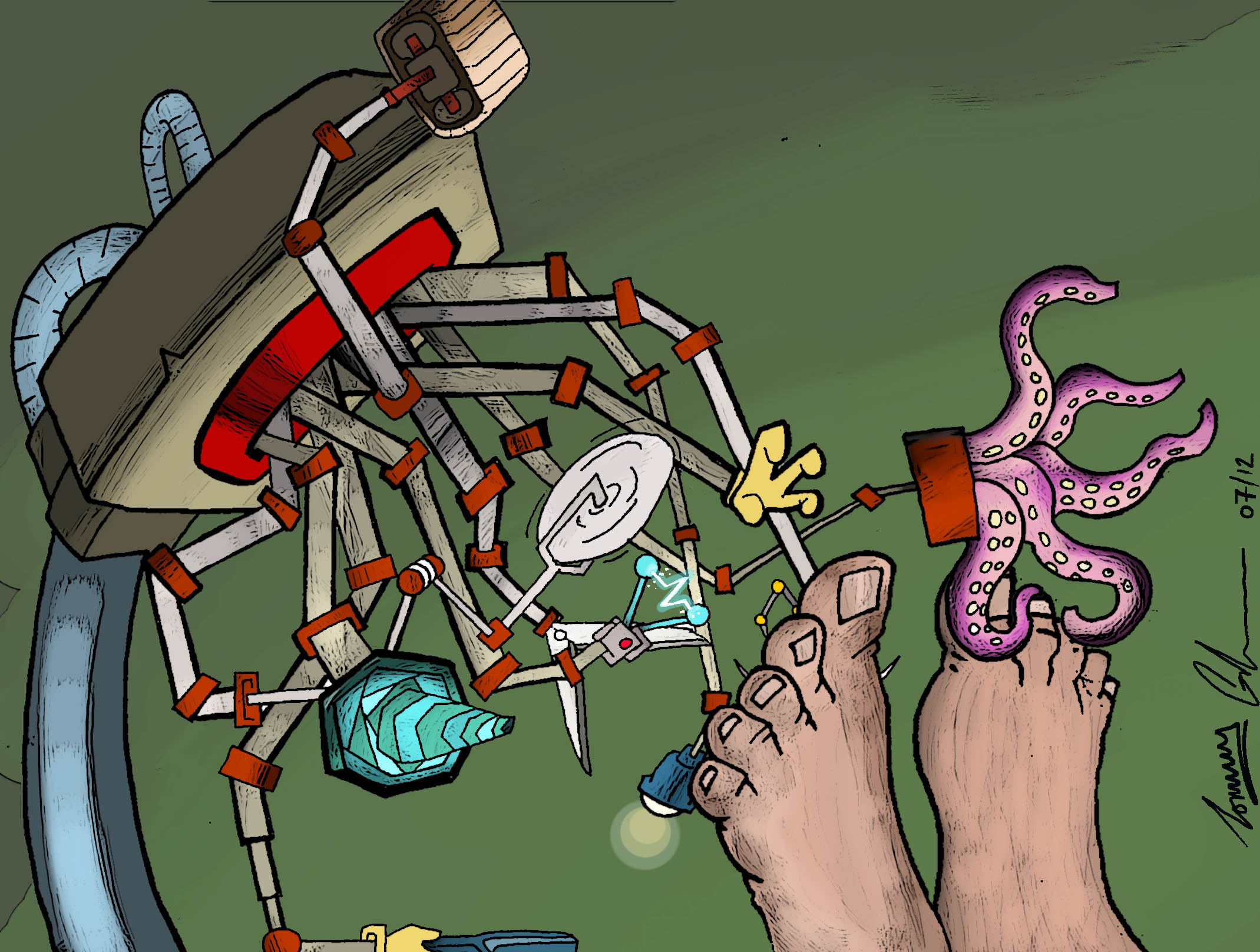
In small footprint:
(P.p.s. if you’re not totally satisfied, return goods within 14 days for a full refund).
(P.p.p.s. Please allow 14 days for delivery) that’s catch 22 ! By the time you get them it is too late to send them back.