“Dignity Be Damned 2”

TWO YEARS AGO I wrote a blog called “Dignity be Damned” in response to a report extolling the virtues of a then new initiative.   (See it by clicking on the ARCHIVE April 2010).

The trumpeted campaign was led by the Elderly People’s Champion – Michael “here-today-gone-tomorrow” Parkinson.  He called for people to sign up as Dignity Champions and raise the standard of care of the elderly.  The new approach was so instantly successful that Mr Parkinson was able to move on — without any dignity.  He obviously saw the way the market was changing, so now you can see him regularly on TV adverts, championing funeral plans !

Since then there have been numerous reports chronicling the appalling care the elderly receive in the NHS and in residential care.  (See my earlier blogs by clicking on “Neglect Shames Britain” in the TAG CLOUD).

Third world malnutrition and dehydration; willful bedsore neglect; cruel failure to give pain relief and constant misdiagnosis of dementia are everyday occurrences in the NHS.  This needs ruthless elimination !

Somehow the new “Commission on Improving Dignity in Care of Older People” with a large pair of rose-tinted glasses managed to look beyond all of this and completely miss the main issue – MONEY.

I will comment in my next blog on their recommendations.

There is nothing much to argue with in the report, indeed its 30-pages and 48 recommendations are difficult to disagree with.  The problem is that 48 sticking plasters won’t heal a dying patient.  What is needed is major surgery.

The NHS is bereft of leadership at all levels starting at the disempowered paper-not-patient ward sister level.  Rising through the myriad of meddling, muddle-targeted health authority managers; right up to the head in the clouds, never responsible, dithering, withering politicians.

On the social care side of the divide, Social Services are too often focused on political correctness and human rights, while the elderly sit and wait.   Meanwhile residential care operators are starved of resources and have an uninspired vision of a better life for older people.   The Southern Cross example of corporate greed does not suggest that more money in their pockets would be used to improve the situation.

Sadly, although the commission report received front page headlines “Britain is failing the Elderly” in the Daily Telegraph, its serious point was lost in grasping the shallowness of the “dignity” message.   This newspaper article, along with others that followed, were misdirected into condemning on how elderly people are addressed as “DEAR” or “CHUCK”.

I’d have to say that if you were starving me to death in hospital and hadn’t given me a drink in 24 hours.   Then call me anything you like just —-

GIVE ME A DRINK AND FEED ME !

P.s. I will comment on the recommendations next week.
Posted in HEALTH, N.H.S. | Tagged | 3 Comments

“Princethorpe Court” 2

For the first story on this subject, look up “PRINCETHORPE COURT STORY” in the TAG CLOUD.

Looking back, there were four key elements to the story and although they only clearly emerge with hindsight, they are perhaps the essential ingredients to many breakthrough projects.  Whether we knew it or not at the time, it was a breakthrough that was required.

The Project Team

The first key was the group of people involved in the project at the outset.  The leader and most significant player was Bill Martin, the Chief Executive of Coventry Churches Housing Association.  Bill was never satisfied with the status quo and always wanted to improve everything around him.  He encouraged, and at times, drove his team to do the same.  Second best was never good enough.  Boundaries, rules and regulations were there to be stretched.  What was good enough for everybody else was never a yardstick to be copied.  I’ll bet as a kid in winter, Bill was the one who always wanted to be the first to walk in fresh snow.  He was the hardest, most demanding boss I ever worked for and also the very best.  He remains a good friend to this day.

The second central player was the CCHA Housing Director, Stewart Fergusson.  Stewart was the son of an East End bookies runner with all the cheek, and 100-word-a-minute patter that you find on market trader stalls.  Stewart’s abilities went way beyond the market place.  He had a history degree from Cambridge University and an intellect capable of challenging any issue.  He was supported by one of his Team Leaders, Liz Taylor, who had a qualified background in housing management and considerable experience of managing sheltered housing schemes.  Both Stewart and Liz had a wholistic approach which looked beyond the immediate housing needs of the elderly and was concerned about the pressure that increasing frailty could bring.

My role at the time was as CCHA’s Development Director and I was charged with getting the design project off the ground and successfully constructed.  Whilst I did much of the pushing and shoving, I was more than ably assisted by my right hand man – Andy Hillier, who has worked alongside me for thirty years and is a master of project co-ordination and specification.

Whilst many others made strong contributions later in the process, it was this small group who initially developed the concept of what we then called Very Sheltered Housing.

On the outside of the team, we were fortunate to have Tom White as the Director of Social Services in Coventry.  Tom was very positive about the concept from the outset, even though he could see that in the long-term this housing and care provision would undermine the City’s much older stock of “old people’s homes”.  His support was vital because the referrals for care came from Social Services, at a time when many social workers felt that frail residents could not be looked after in housing and needed to move to residential care.

We were on the edge of legislation and regulation on several fronts and constantly had to argue our case for this new model.  The Housing Corporation felt we were over-sizing the communal facilities and straying into providing care, which was not the role of Housing Associations.  We had quite a few skirmishes with them but they did eventually capital- fund the project.    The planners and building regulators could not make up their minds whether this was housing or health care provision and were constantly trying to put us in an “institutional” box.  We didn’t give in and were adamant that this was housing, not residential care.   The health care regulators reluctantly left us alone because we were only providing domiciliary care.   This was outside their remit in those days.

You can see why the combined skills of the initial development team were so essential to the early negotiation of the project.  It very much challenged the conventional wisdom that frailer old people could not cope or be coped with in housing.

Thirty years on and extracare housing is a well liked and accepted model of housing and care provision.

MORE TO FOLLOW

Posted in RETIREMENT HOUSING | Tagged | 1 Comment

“Southern Dis-Comfort”

It was only a few weeks ago that I was writing what I hoped might be the final chapter in the story of the plight of Southern Cross’s 130,000 elderly residents (click on “Southern Cross” in the TAG CLOUD).    Goodness knows those residents have been through enough worry and uncertainty about their future.    After being completely disowned by the Government and ignored by the CQC, who is supposed to safeguard their vulnerability, they were finally passed back to their over-mortgaged landlords.

The biggest one of them is Four Seasons, whose majority shareholder is the dodgy-these-days Royal Bank of Scotland, with a 40% stake.  Not far behind in ownership is the Qatar Investment Authority.  Both companies are known for their love of older people – at least as a commodity.

Four Seasons, with 500 properties and with 25,000 residents, is now the UK’s largest nursing home operator.  It has the minor problem of repaying £780 million in loan debt by September.   Nothing to concern the Government or CQC about there then !

Not to worry, hope is on the horizon.  A very nice group of people in America, who are very, very interested in old people, are quietly buying up some of Four Seasons loans. It is a strange idea, buying up loans from other people.  Only sharpe-suited financiers and body-guarded East End loan sharks really understand the not so subtle finger-breaking techniques of debt collection.  I guess they must have seen the real potential in the UK elderly market, having watched Southern Cross go bust.

These ever-to-be or never-to-be trusted investors are Kohlberg, Kravis, Roberts (KKR).  In the 1990’s they were so liked that a book was written about their hostile takeover of RJR Nabisco entitled “Barbarians at the Gate”.  It’s all about greed,  asset stripping, redundancies and  company break-ups.  No doubt the Government and CQC will consider them ideal partners to look after our frailest older people.

Posted in Nursing Homes | Tagged | 1 Comment

“Easy Money”

It is a rare sunny day in winter, so I woke up with a happy disposition.  It could have been dashed quite quickly – as soon as I opened the newspaper to find that for the first time ever Britain now owes £1 trillion – that’s £1,000,000,000.  Worse still, my share of it is apparently £40,000 – oh dear!  Just when I am about to become a pensioner, I am up to my neck in debt  😦

Still, it’s a nice day and I am determined not to let it beat me.  I am sure I can learn a lot from that nice man, Mervyn King – the Governor of the Bank of England.  Evidently when you owe lots of money, the right thing to do is borrow some more :-).   Mr King has already helped loads of people by giving away £325 billion which he calls”Quantitative Easing”.

 So I am going to go straight down to the bank and ask for some Quantitative Easing money to pay off my share of the national debt.  I will probably have to wait a while, while they print the money, and I don’t want to get into debt again, so I think I will ask for £1 million just to be on the safe side.  I would hate to have to keep coming back, cap in hand to ask for more.  Only Governments can do that, because they can never get their figures right first time.

When I become a Quantatively Eased millionaire, I am going to need a financial plan.  It is  a bit confusing ——  being so wealthy  🙂 and owing so much money at the same time :-(.  Still, the bank has lots of independent advisors who will help you to invest your money with them.   Of course there is a ‘small’ commission fee and they are sorry they don’t pay any interest at the moment, but all that is fully explained in the 90-page specially small-printed, gobbly-gook, impossible to understand contract that you get with every investment.   Quantitative Easing money is quite difficult to understand ,but it must be ok because everybody is doing it and you get a cast iron guarantee that all investments can go up —– or down!

CONFUSED YET?        CLARIFICATION WELCOME AT FOOT OF BLOG

Posted in ELDERLY MARKET, SMILES | Tagged | 3 Comments

“The Princethorpe Court Story”

Thirty years ago I was lucky enough to be in at the beginning of a remarkable project, which helped start a change in how housing and care for older people was perceived in the UK.  It’s physical expression was a retirement housing scheme called “Princethorpe Court”, which is still going strong today in a housing neighbourhood of Coventry.

The Background

It is important to understand the context in which this new form of provision was conceived, because many of the issues we faced then are still just as relevant today.  Furthermore, a lot of the lessons we learned on our journey have still to be learned by many current policy makers and providers.

In the 1970’s and 1980’s sheltered housing had become an established form of retirement housing and it endures as a very effective first move into retirement accommodation for the majority of elderly people who have to or choose to move out of their family homes.  Major specialist housing associations lead the way in developing this type of accommodation – Anchor, Hanover and Royal British Legion (now Housing 21).   McCarthy and Stone was the only significant house builder to develop this provision in the private sector.  Both were later copied by many other housing associations and house builders as the increasing size of the elderly population became more obvious. 

 There was a significant schism between the two types of providers.  Housing associations were heavily subsidised with capital grants from the Government via the Housing Corporation, which enabled them to provide low-cost rented accommodation.  The house builders didn’t have access to Government grants and therefore focussed entirely on housing for sale.

The key limitation of both types of accommodation was the need for care beyond emergency alarms.  Once care was needed it was assumed people would move through a series of types of housing as their health became deteriorated :-

Category 1    –     Sheltered Housing – Individual bungalows or flats sometimes with a communal lounge ;

Category 2     –     Sheltered Housing –  as above but linked by internal corridors and with slightly more communal accomodation ;

Category 3     –     Residential Care Homes ( or Local Authority Old Peoples Homes )

Category 4     –     Nursing Homes

Category 5     –    N H S Geriatric Hospitals

These types of provision were born out of the boundaries of Government Departments and their funding responsibilities.  They were a rough and ready solution to ending a lifetime.  The concept that elderly people could move easily from one category to the next in later life ignored the reality that moving home is a very traumatic experience.  What’s more the prospects of increasing frailty, more and more dependency, and less and less control over your life, were certainly not designed to offer a great outlook in later life.

More often than not, any move was forced upon people through increasing frailty, or driven by the concerns of relatives or Social Services.  Some elderly people  made a proactive decision to move to sheltered housing so that they could feel safer and more secure.  Virtually no-one moved to residential care or old people’s homes with enthusiasm – a small, single or shared bedroom, a shared toilet and a chair in the communal lounge were just not that appealing.   Absolutely no-one moved into a nursing home out of choice.   It was a decision made by professionals.   The ony way you moved onto geriatric wards was straight from an ambulance into a hospital bed, —–usually never to emerge again.

The social policy driver of all this provision was safety and security – the second lowest step on Maslow’s hierarchy of needs.   There was no lofty ambition to offer new opportunities to older people in retirement, just a desire to find more economic housing and care for those who could no longer cope on their own.   In the early 1980’s, a small Midlands based Housing Association – Coventry Churches Housing Association  (later called CCHA,  then Touchstone and finally Midland Heart), set out on a path that would go on to influence more recently developed retirement housing throughout the United Kingdom.

That is where the story of Princethorpe Court really begins.

SEE NEXT WEEK’S THRILLING EPISODE

Posted in RETIREMENT HOUSING | Tagged | 1 Comment

“Legal Eagles or Vultures”

Only a few weeks ago I was blogging about the increasing incidence of pressure sores in the NHS and how it is leading to more legal action.   (click on the ARCHIVE dated 12 February 2012 – “UNTOLD PRESSURE” ).

Now in a little publicised report by the Public Accounts Committee, boringly called “Whole of Government Accounts”, we have a more complete picture:-

  • 8,500 new claims of clinical negligence were made in 2010/11,
  • This is a 30% increase on the previous years,
  • Around £1 billion is paid out each year,
  • The NHS has to set aside £15.7 billion in claims which may be awarded against it in future years.

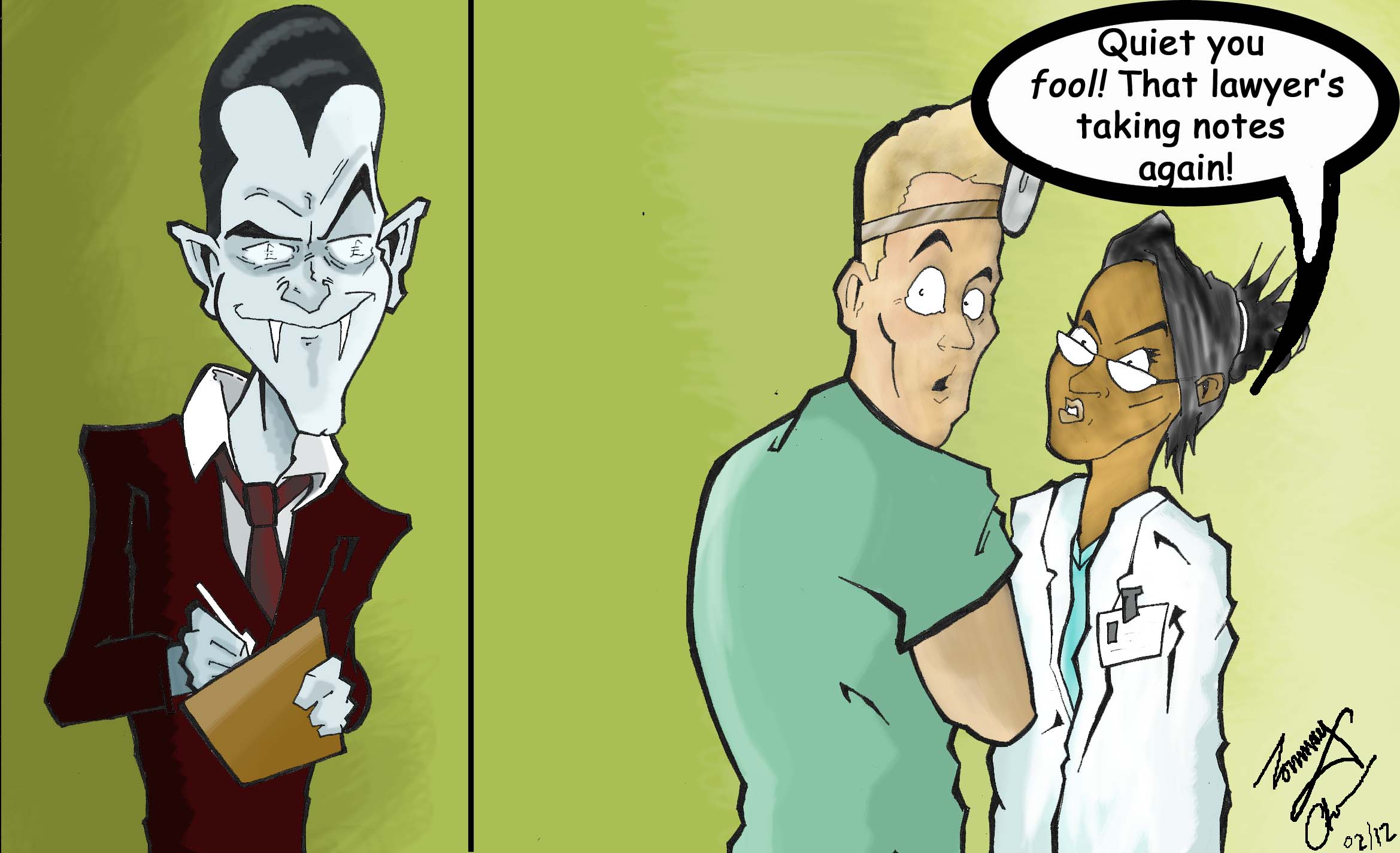
One of the significant reasons for the rise in claims is “claims farming” by our “no win, no fee” lawyer friends.   You have to question whether this will lead to improved care ?

                           I STRONGLY SUSPECT NOT !

  • Doctors will become more cautious,
  • More tests will be done, further delaying treatment,
  • Difficult cases will be referred to far-away specialist hospitals,
  • There will be evermore paperwork,
  • A culture of fear and blame will grow throughout the NHS,
  • Mistakes will be hidden under the carpet.

This increasingly litigious approach to health care will erode the confidence of doctors and their patients.          You go into hospital to be cured, not to come out damaged, with a compensation cheque in your hand.

Lawyers should be legal eagles – the champions of justice, but there is no virtue in legal vultures who feed off the carrion of the NHS.    One third of all compensation settlements go to lawyers in fees!

I wonder where lawyers will be able to go to get treated when they are ill?

Posted in N.H.S. | 3 Comments

“Never Been 21 or 65”

When I was young, the big age to become was 21.  It was an anchor point  in life, a bridge between childhood and adulthood.  21st birthdays were when you became a “grown up”.  Time for a big celebration —– a PARTY.  You were to be given the key of the door.  Although it was never very clear what door and I don’t think I ever got a key.

Part of the problem was that I had already left home and gone off to university before I was 21.  The other issue was that around the age of my 19th birthday, somebody changed the goal posts and 18 became the new “age of consent”.  Nobody told me what I could or should consent to, but whatever it was,   I’d missed the opportunity !    😦

So the next big birthday to look forward to is 65 when I get to retire and become a “pensioner”.  Only the Government has gone and moved those goal posts AGAIN !

This time I cheated the system and retired early when I was still only a relative youngster at 63.  I knew I must be old though, because Network Rail gave me a SENIOR rail card.  I also now get cheaper entry to art exhibitions, zoo’s and some cinemas, because almost without knowing it and certainly without any party, I have become a “concessionary”.  I am guessing that it has something  to do with my Human Right to be equal to women ?

I think it also means I have to stand outside hotels with a top hat now that I am “concessionaire”,  still I have always liked dressing up in smart uniforms.  Or is that a “commissionaire” ?  I’ll give it a go outside the Dorchester and see how I get on.

So that must be what they meant by getting the key of the door !

The other good pensioner news is that I now get free prescriptions.  So I plan to visit my GP and get a new pill every week.  I’ll be swimming in pills soon.  Then I will know I really am a pensioner at last.

The not so good news is that the Government says 70 is the new 65 and if we all continue to get older, 75 could become the new 70.

So one way or another, I don’t think I’ll ever get to be a fully fledged pensioner.

Posted in SMILES | 3 Comments

Tommy Graham’s Blogtoons on Fruit Juice

Since the GrumbleSmiles blog was started, we have been illustrating some of the posts with cartoons.  This post is the start of building a gallery of all the blogtoons.

I’ve written a series of posts on the virtues of fruit juice of just about every different variety and here are the cartoons that accompanied them.  You can find the blogs in the TAG CLOUD under the heading of “FRUITFUL RESEARCH”. 

FRUITFUL RESEARCH

This slideshow requires JavaScript.

Posted in ABOUT GRUMBLESMILES | Tagged | 1 Comment

“Living in the Past”

A rather curious idea is being proposed in Switzerland in response to the increasing number of people with dementia.  A developer is planning to build a retro village in 1950’s style architecture and then staff it with carers disguised as gardeners, hairdressers and shop assistants.  The residents will be free to roam around, albeit under subtle undercover supervision.  The village will have a cinema (presumably showing old films) and shops (hopefully selling familiar old-fashioned fare not past its sell by date).  It says there will be other facilities, so how about:-

  • A TV with no remote control and just 2 or 3 channels;
  • A twin tub washing machine with no digital programmes
  • A coal or log fire instead of central heating;
  • And real money – no plastic credit cards and no credit.

Goodness knows we need all the innovation we can get to help deal with the tidal wave of dementia that is engulfing our health services.  But, I am not sure this isn’t an overly simplistic interpretation of reminiscence therapy.  Certainly it is true that it helps people to feel secure if they are in familiar surroundings which is why moving people into residential care homes is still not an ideal solution.

I wish them well, and if it works, great.

Finding out about the past lives of residents is certainly one key to tailoring a support programme for dementia sufferers but it is not the whole story. ( For more on this see my earlier post  by clicking on the TAG Cloud ” New Vision of Later Life ” – 3- Enriched Dementia Support. ) 

The title of this blog was lost in my head somewhere.  When I Googled it I found it was the title of a song by Jethro Tull.  Part of the lyrics are:-

“Outside their lives go faster,
Oh, we won’t give in,
We’ll keep living in the past.”

A member of the group, Ian Anderson, wrote these somewhat prophetic words in 1969 and they sat in my head until now.  Being reminded of them brought back happy memories of seeing Jethro Tull in my time at university in Sheffield in the 1970’s.

Remarkable serendipity – when I looked to the very next item on my Google search it was written exactly 40 years later by Dr G A Anderson.  An article in Psychology Today entitled “Why it is important to stop living in the past”.  In his words “nostalgia is bitter-sweet”.

Posted in Dementia | 1 Comment

“Untold Pressure”

An excellent article by Kate Wighton in The Daily Mail on 31st January 2012, highlighted the incidence of pressure sores in the NHS.

Without any sense of irony, it was included in the section of the paper under the banner “GOOD HEALTH“.  Nonetheless it is a first class piece of investigative journalism and deserved to receive much more attention.

Most of the factual information was dragged out of NHS hospitals using the Freedom of Information Act.  Even then some hospitals didn’t reply at all, and others claimed they did not collect the information or only had detail of the worst sores.  This is a dreadful indictment of hospital managers, their Boards and their Regulators.  In some cases it must be a deliberate attempt to hide poor performance and willful neglect.

That is why it is a pity that a paper that makes so much noise about championing its “Dignity of the Elderly” campaign, placed this article on its Inside Health pages instead of the front page.

First of all let me repeat some of the key figures in the report:-

  • 412,000 NHS patients have bedsores annually.
  • 27,000 patients died with bedsores or infected wounds in 2010.
  • This is estimated to cost £2 billion per year.

The elderly are particularly at risk because of poor circulation and limited mobility.  Bedsores can develop in as little as 4 hours, but then take weeks or months of nursing care to heal.

The Daily Mail published detailed figures from individual hospital trusts which suggests that upto 2% of patients acquire bedsores.  I must say I am surprised these figures are as low as that, given the constant stream of stories of malnutrition, dehydration and poor care that emanate from the NHS.

My own experience in the past of running nursing homes in the ExtraCare Charitable Trust, was that bedsores were given the highest attention by the nursing staff.  The figures were very low but even so were reported every month to the whole director team.  Our Operations Director, who was a former and formidable hospital matron, would personally take to task any nursing home manager whose residents acquired a pressure sore while in our care.  Almost all of our residents who suffered from pressure sores were discharged from hospital with them.  This was at a time when we looked after around 1,000 nursing home residents.

The Department of Health has belatedly announced that pressure sores will be included in a list of patient outcome measures – which is good news – but then with typically crass ineptitude goes on to suggest that hospitals will lose some of their budget if they fail to meet pressure ulcer targets.  This upside-down big stick management style will only lead to the figures being further under reported.  The hospitals with the biggest problems need help, not less money.

The common sense solution, which has been much talked about, but not effectively implemented, is to get empowered matrons out of their offices, away from paperwork and acting as nurse leaders on the wards.

A GrumbleSmiles tongue in cheek alternative would be to give free desk space on every hospital ward to no win no fee solicitors who specialise in medical negligence.

If the Department of Health just passed over a large part of the NHS budget to solicitors, I know they would be more than happy to regularly visit hospital wards and interview patients.  Perhaps they could join the doctors’ rounds and collect the data as they go along.  Then to speed up the compensation claims, patients could be given a payment for all the hospital acquired infections and pressure sores, as they are discharged.

Tagged | 1 Comment