“Active Ageing”

Britain’s chief medical officers issued new guidance on exercise this month.  It was a straight forward and encouraging report because it emphasised that moderate exercise was good for you.  No need to be working up a sweat in the gym :-), providing you do it frequently – short 10 minute walks, ironing, housework, shopping and even just standing up can all help.

The report underlines the fact that “older people should try to be active every day” and goes on to say “being active has enormous health and well-being benefits.  It protects against many of the biggest causes of early death like heart disease and strokes, and can promote good mental health”.

In the ExtraCare Charitable Trust retirement housing projects, there are many ways of keeping active:-

– The obvious – exercise classes,  armchair aerobics,  tai chi,  swimming;

– The vigorous – work out in the gym to a fitness programme on exercise machines;

– The leisurely – walking,  dancing,  gardening,  fishing,  archery,  bowls;

– The adventurous – the annual ‘Brolly Walk’, cycling from Land’s End to John O’Groats (in the gym);

– The occasionally spectacular – walking with wolves, completing the three peaks challenge, swimming with dolphins in Mexico and walking the Great Wall of China;

Meanwhile, the same Department of Health that issued these new guidelines is also responsible for funding thousands of older people in residential care, who are left sitting in chairs all day and never go outside at all.  Its appointed regulator, the Care Quality Commission, happlessly watches on, blissfully ignorant of any need to promote active lifestyles for older people.

Posted in HEALTH, Residential Care | Tagged , , | 7 Comments

“Cast Adrift 2”

End of July 2011 and I have just returned from a cruise up the West Coast of Norway on board the latest ship in the Cunard fleet – the new Queen Elizabeth.  A massive ship – 10 decks high – taller by far than all the buildings and all the ships in all the ports she visits.  So you have an inbuilt sense of superiority wherever you arrive.

It must have been much the same experience for the adventurous sailors of centuries past, whose ships were bigger and stranger than anything the people of far off lands had ever seen.

The Queen Elizabeth has echoes of the past by being beautifully decorated throughout in the 1930’s Art Deco style.  An era reminiscent of luxury and Hollywood films for the rich and famous.

Leaving Southampton to cruise across the North Sea with a shipful of retired ramblers relaxing in the lap of luxury.  A floating cacooned community of sixty, seventy and eighty year-olds sailing on their solitary seas.  Cut off from their youth and momentarily comfortably cradled in their wealth.

A year ago I wrote about a trip across the Atlantic – see “Cast Adrift” dated 29th July 2010.  That time all we saw was the sea, which led me to question the value of endless days at sea.  I have certainly no desire to be a lone sailor.  I am no Frances Chichester or Ellen McArthur.

The cruising life is different, it’s an opportunity for total self-indulgence.  A chance to do what you like, when you like.  Time is your own.  Read when you like.  Stare out of the window when you like – there is nothing to see but sea – so all you see is a reflection of your own thoughts.  Puzzle yourself with crosswords, quizzes, Sudoku or jigsaws as you please.  Grab a scrap of paper and capture a thought.

Eating is an essential part of the cruising lifestyle.  Anytime is meal time.  Eat in one or all of the many restaurants; eat for breakfast,  lunch,  high tea and dinner; eat in the bar,  eat in the all-day buffet,  eat canapes at the reception parties and when you get back to your cabin order room service and eat all over again.  It is as if we haven’t ever eaten before or never will again.

One of the other things to do is to meet great new people.  Every one says “hello” to everyone.  The staff are obviously trained to do it, but every stranger you pass on the corridor, in the lift and on deck does it too.  It is a habit we have lost in the rush hours of a busy working week, but here on board it is a habit regained that lifts the day.

If we learned from this we could probably transform our hospitals into happier places.  Customer care and politeness costs nothing but a smile.

In one brief encounter, I met a lovely lady from Louisiana.  It was her Southern Belle accent that first caught my attention.  She looked well into her eighties and was travelling alone – bright as a button.  She told me that since her husband died several years ago, she had decided to travel some.  She had started by driving herself all around the United States visiting all the national parks.  Her longest driving trip was to Alaska and took 31 days!  She said that her son had worried about her safety, especially when she wanted to go to Mexico but she told him “what the heck, at my age I need to do it now”.  Now she was doing Europe starting with this cruise to Norway.

What a lady, what a lesson.  You’re never too old for an adventure.  She is certainly not adrift, she knows exactly where she is going and what she is doing.  So too are all the other senior sailors.  They are having the time of their later lives in this retirement village at sea.

Posted in SMILES | 2 Comments

“Short Sighted Cuts”

Visual impairment affects more than half of older people and I am not talking about the many people who need glasses to improve their eyesight.  I am talking about the point where deteriorating vision begins to limit your daily life.  In annual surveys I used to do of older residents in retirement housing, around 50% of people said they had problems with their sight which led to everyday difficulties with getting around, reading, watching television.  Even more limiting are issues like preparing food; or not being able to read labels when shopping; and of course driving.

Visual impairement, along with hearing impairment, are the relatively simple medical conditions which, left unattended, can lead to loneliness and isolation.  Then further down the ageing slippery slope to depression and pills, or falls and fractures.

That is why the findings of a recent report by the Royal National Institute for the Blind, are so worrying.  The study of cataract surgery carried out in the NHS found that over half the Primary Care Trusts were restricting access to simple eye surgery because of their need to save money.

It is issues like this which so graphically demonstrate the NHS’s blatant disregard for the quality of life for older people.  Preventative health care takes a back seat as soon as money is required to be saved.  Yet by saving less than £1,000 on cataract correction on one eye, the same NHS acute hospital may later on have no option but to spend much more on a fractured hip of the same elderly person who has fallen as a result of their poor sight.

Cataract surgery is the most common operation carried out in the NHS with 400,000 being done each year.  The RNIB study found that 53% of PCT’s are cutting back on these procedures.

Posted in HEALTH | Tagged | 5 Comments

“Coffee cures wrinkles”

Ever in the search to stay looking young, older women are always willing to try new ways to banish wrinkles!

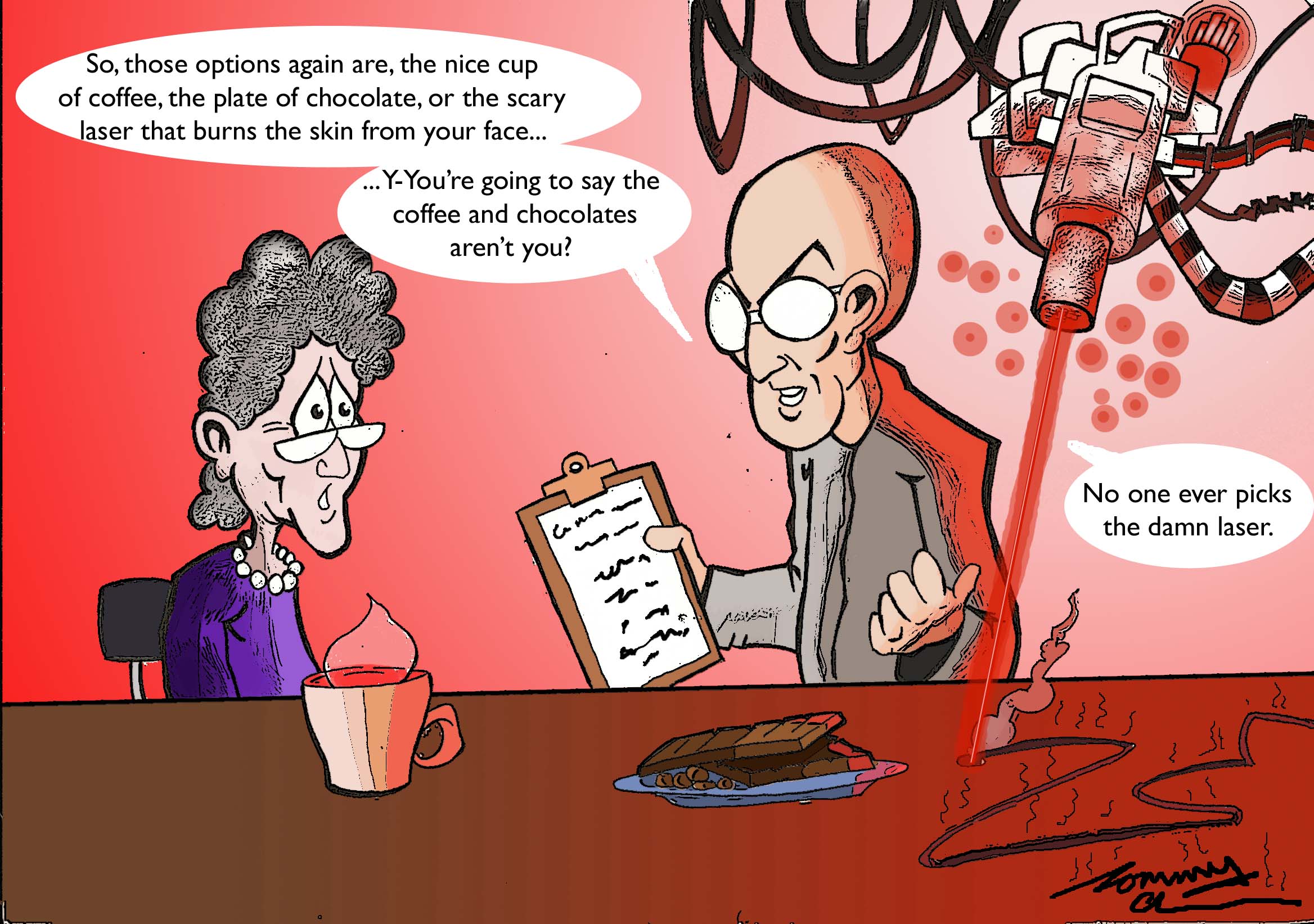
Way back in May 2010, I first wrote about rather scary laser treatment which burns the skin off your face!  The blog was called “Wrinkly Smiles”.  Then rather more happily, I blogged about research that seemed to suggest that eating chocolates were the answer.  This was on the 29 May 2011 called “Dream Chocolates”.

Now a new caffeine based product from America is laying claim to getting rid of wrinkles and puffiness under the eyes by using an”Eye Roller”, whatever that is!  When first launched on the Boots website, it sold out in 2 hours!


Posted in SMILES | Tagged , | 1 Comment

“Southern Cross Cards Collapse”

Since the last hand of cards were played in this most callous of games (click on Southern Cross in the TAG CLOUD to see previous posts on this subject), the players have all been re-assessing their hands before placing their bets and playing their next cards.

In the last round, Southern Cross Management played their only card and bid to reduce rents by 30%.  The bankers and landlords reluctantly failed to agree.  Then in the next round of betting, SCM had no more chips to play and were forced to throw in their cards.

250 homes will be taken back and managed by their owners (Four Seasons and Bondcare Group being two of them).  No doubt they will have to swallow the 30% loss of revenue income to do this.

The residents in the remaining 500 homes will still be left dangling in the air, while their landlords desperately search for new operators.  The bankers and vulture capitalists inevitably had to accept lower rents, they just did not want to come to terms with the changed situation and they were and still are prepared to sacrifice residents’ feelings of insecurity while they deliberate on what to do next.

Meanwhile the two other players, CQC and the Government, are still in the game, whether they like it or not.

CQC act like a ghost in the background as if they have no responsibility for the situation, in spite of the fact that firstly they have a duty to assess the financial viability of care home operators and secondly by their own admission they have major concerns about the quality of care being delivered in many Southern Cross homes.  It’s high time they stood up and acted in the residents’ interests!

The Government (Department of Health) is sitting with most chips to play but is still playing a blind hand with no idea of the outcome of the game.  They started the game many years ago by encouraging the residential care sector to expand rapidly to meet the increasing number of frail older people who needed care.  Then, after the market responded in the guise of Southern Cross and many others, the Government didn’t like the overall cost and commenced squeezing the Local Authorities to keep fees down.  This process started long before the recent credit crunch but was certainly made much worse by the banks and vulture capitalists seeing the elderly care market as a gravy train.

It is time for the Government to stop playing a blind bet with old people’s lives.  They need to declare their hand by getting into the game and taking control of an effectively bankrupt Southern Cross.  The issue goes much wider than this, there are many other residential care operators equally perilously positioned, and Local Authorities social care bugets  and  elderly peoples’ Health Services are no betterplaced in both financial and quality terms.

It’s time for a radical reform of health and care services for older people.  It’s not a card game, it’s a life and death issue for the 31,000 residents in Southern Cross homes, for the hundreds of thousands more in residential care and the millions of older people in the UK who worry about their future as their health declines.


Posted in Care Funding, Residential Care | Tagged | 2 Comments

“A Questionable Bonus” – 2

Back in April this year I wrote a blog which questioned an idea being considered by Health Minister – Paul Burstow.  Perhaps he should have been reading it, because recent research seems to support what I was saying.

About a quarter of GPs’ total salary is linked to bonuses for achieving certain targets like measuring blood pressure and cholesterol levels.  Sure enough the measurements increased and the GPs got their extra salary (£1billion in total every year !)  The unintended consequence was that in medical conditions that were not so easily measured – arthritis, dementia, back pain, depression – quality was significantly worse.  At that time there were no bonus payments for these ailments, so it is hardly surprising that less attention was paid to them.

To make matters worse, researchers at Nottingham University, who studied the high blood pressure measurements, found “little evidence” of effectiveness of pay for performance targets.

Posted in HEALTH | Tagged , | 2 Comments

“Dilnot Commission”

My last blog on this subject was entitled “If The Cap Fits” published on 11th June 2011.  The Dilnot Report “Fairer Care Funding” was published on 4th July 2011.

I have deliberately waited a while before commenting on what should lead to the biggest change in social care funding for decades.  It remains to be seen whether the politicians will be bold enough to grasp the £2 billion nettle.  So far the first politicians’ responses have been very guarded and non-committal from all political parties.  They have been much more vociferous about the moral outrage of phone hacking and the appalling leadership of 80-year old Rupert Murdoch.

Our political leaders, including Andrew Lansley, the Health Secretary, have been almost silent on an issue which is far more relevant to the thousands of octogenarians on his doorstep.

Andrew Dilnot was given a highly complicated issue and one which the politicians had argued long about in the run up to the last election.  I heard him speak in the early days of  gathering evidence for his enquiry and he struck me as a very logical and clear thinker.  His training as an economist ideally places him in a position to address the central issue, which is “how care is to be funded in the future?”

So what are his recommendations:-

  • The first and most important issue is to put a cap on what people have to pay for residential care.  Although initially leaked / trailed as £50,000, this is now proposed as £35,000:- 

On the positive ……..this is a low ceiling to care costs which should encourage the insurance industry to step into the market quickly and at reasonable premiums;

Not so positive side ………it only applies to critical and substantial cases and does not include accommodation costs.

  • The means test ceiling has been very significantly extended to offer some support to elderly people with up to £100,000 in savings:-

On the positive side ………this provides state help to many more relatively poor older people;

Not so positive ………it adds complexity and many more people into the social service assessment process.

  • Accommodation costs are separated out from care costs and must be paid by the elderly person, although they will be capped at £10,000 per year:-

On the positive side ……..this enables a clear comparison with staying at home or moving to extracare housing.

Not so positive ……… presumably means tested pensioners will have to make a separate claim to the Local Authority for welfare benefit support.

  • Attendance allowance is kept and will still not be means tested, but it will be ‘re-branded’:-

On the positive side ………..this is a clear recognition of the value of this relatively small allowance, which enables people to stay at home longer.

Not so positive ………..re-branding is undoubtedly a code for limiting the personal discretion on how the allowance is used.  To save money, it might have been better to means test it.

  • Top-ups will be allowed, thereby opening the door to people to purchase better quality if they or their relatives can afford it:-

On the positive side ……. this will bring more money into the sector, though this has been going on for sometime with CQC and Local Authorities, often turning a blind eye.

Not so positive …….. home owners might be tempted to reduce their service to residents who can’t afford the top-up fees.

  • Portability will be allowed which will enable people to choose to move to other areas of the country:-

On the positive side ……..this should mean Local Authorities can no longer dictate where you have to live.

Not so positive ……..this is a marginal issue since most people wish to remain close to where they lived before.

Overall, I believe Dilnot has come up with a very good set of proposals in answer to the question he was set.  The £2 billion price tag will inevitably lead to much political debate before anything is done.  The assumptions about the level of the cap, the extension of the means test and the retention of attendance allowance will all, no doubt, be hotly discussed.  Quite probably it will suit the politicians on both sides to stretch this out until upto or even after the next election.  Prevarication only disadvantages the elderly themselves.

Dilnot has created a platform for the insurance industry to build long-term care insurance products which are vital to enable elderly people to have some certainty about future care costs.  The proposals also limit the States’ cost to only paying for the most critical cases and then only after the elderly have paid for most of their own care at home, as well as the first eighteen months or so in residential care (unless they insure themselves).  This is a good cost-sharing solution which has the potential to remove much of the financial uncertainty for older people.



Posted in HEALTH, Residential Care | Tagged | 9 Comments

“My Garden Age”

My Grandfather was a professional gardener, who worked for a garden enthusiast and writer – Avery Tipping.  Together they renovated several manor house gardens in the Chepstow area of Monmouthshire.  At one time there were over 40 gardeners working for my Grandfather and their garden renovations included digging out large lakes constructing stone walled terraces and re-establishing extensive kitchen gardens, rose gardens, perenial flower beds and planting many trees.  Mr Tipping was the Gardening Correspondent for the News Chronicle and many of his gardens were featured in the Illustrated London News.

I only knew my Grandfather after he had retired and although he had a spectacular garden of his own, I did not spend long talking to him about his life.  I wish I had, because I am sure there was much he could have taught me.  Luckily he did pass onto me a love of gardening.

As I sit in my garden at the end of June, I am left pondering what he would have told me and how much can my garden tell me now about growing old.

It’s late June and the bursting buds of May and their floriferous fanfare in early June are now past.  There is a time for every season and May is surely the crescendo of spring.  My Grandfather gave my Mother the middle name of “May” – I am sure it must have been his favourite month given to his first daughter.

Lesson  —-  Cherish the time you share with your Grandparents, it’s too late to ask questions later.  That’s a lesson for Grandparents too.  You have much to pass on – family values, fond memories, living history and a wealth of understanding.  Better and more sociable than any computer game.

By late June the first flush of roses are over but individual blooms are still there to cherish.

Lesson  —-  Everyone’s an individual waiting to bloom, they all should be appreciated for what they are.  It’s not their age you should see, just the colour of their unique life.     Old age is a time to sparkle and shine,  that image paints memories in your mind for much longer than a lifetime.

The foxgloves are bent over slightly, but still beautiful in their country cottage memories.  The delphiniums at their very best – standing proudly upright to attention, like guardsmen – Royal in their blues.  The lupins in their yellow, white and pink dresses – ladies out in their Sunday best.

Lesson  —  Sundays, high days and holidays are always a time for dressing up.  It reminds you and everyone else of who you are.  I was always laughed at for getting dressed up at every opportunity.  Top hat and tails for a day at the races; straw hats and blazers for garden shows; union jacks and jazzy waistcoats for promenade concerts at Symphony Hall and fancy dress at every opportunity – a cowboy on an umbrella walk in the park; Bill or Ben for a garden quiz; King Henry VIII for a banquet; a white suited sailor to go dancing. 

Dressing down is not half as much fun, and many old people followed suit in dressing up and were younger for the day.

It’s good to have horizons.  Now I’m looking forward to all the memories and lessons in the garden in the months ahead.

Posted in SMILES | Tagged | 7 Comments

“Dangerous Road”

I have cautiously written about assisted suicide and euthanasia only twice before, on 22 March 2010 – “Lucy died today” and then again on 6 May 2011 – ” A Die-Lemma”.   It is not a subject of rights and wrongs, so much as one with endless shades of grey.  Our ageing population is increasingly being described as a problem, euthanasia is an issue not far from the surface, but seldom spoken about.

Holland has a much more open discussion about assisted suicide and more liberal laws (though not necessarily better ) on euthanasia.  Advocates of the laws suggest euthanasia is a suitable way of dealing with dementia and avoiding suffering —– and expensive health care.

The supposed safeguard is that to “qualify” for euthanasia you must convince two doctors that you are suffering unbearably and that you are making an informed choice.                 An informed choice when you are demented must be difficult to say the least.

Last year in Holland 2,700 people chose to die this way – 21 of them with dementia.  It’s surprising that only 21 of the people who chose to die had dementia, because out of 2,700 people, most of whom you could reasonably assume would be elderly, at least 500 of them would probably be expected to develop dementia.  The implication of this is presumably very few of the 2,700 made a living will expressing their desire to die and only made their final decision when they became frail.     I wonder if these are the right circumstances to make such a decision ?

The economic burden is society’s or the family’s, not a forgetful elderly resident.  How long will it be before the pressure of getting old with dementia makes many more people reach for the same “final solution”.

Why not extend the argument on economic grounds to include many more chronic illnesses that affect older people?  That would certainly save a lot on National Health Service costs.

Why two doctors ?  Why not just one – how about Dr Harold Shipman – he certainly had plenty of prior experience and a clear motivation ? 

Why not leave it to care assistants as suggested by North Essex PCT ?  How long will it be before Beverly Allot is given a pardon and invited to carry on her idea of caring ?


Posted in Assisted Suicide, ELDERLY UK POLICY | 2 Comments

“Pill – Kill or Cure”

I first wrote about the excessive amount of pills we all have in our homes way back on the 7th September 2010.

The “Pills for Everything” blog talked about the cure-all drug dependency culture we have developed thanks to the no-charge NHS.  Yes I know we now have prescription charges, and of course we have all paid through our taxes.  Nonetheless we continue to have “free at the point of delivery” expectations.  We also seem to have an implicit belief that pills work – greatly encouraged by “go away” doctors and “come here” pharmaceutical companies.

A reminder of the facts:-

  • 912 million prescriptions in 2007
  • £10billion spent on medicine
  • 10% of the NHS budget

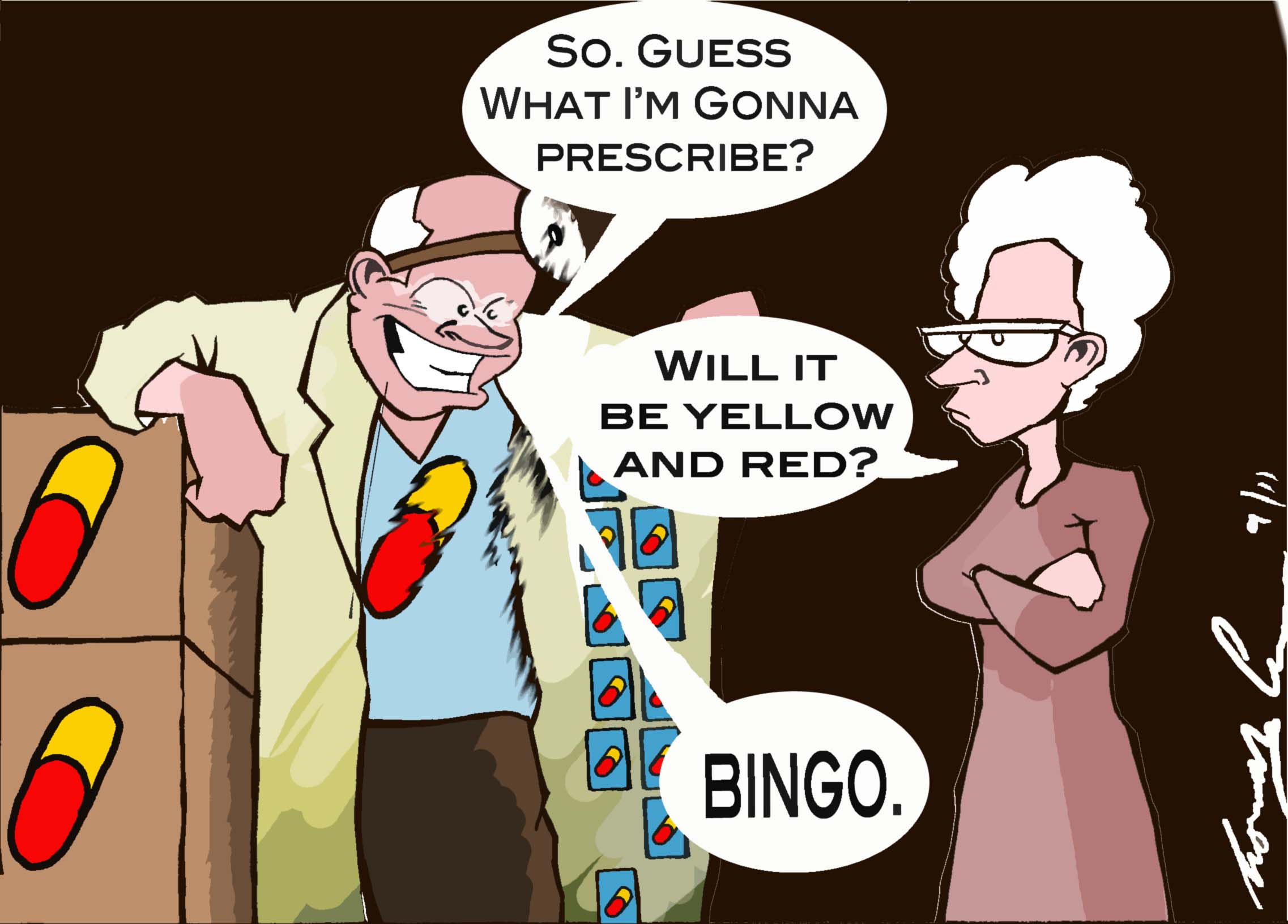
In a rather more tongue in cheek blog – on 19th December 2010 I told the story of “Pilly Galore”.  A typical elderly person with a whole range of ailments from the serious to the insecure.  Secure only in the trust she has in her demigod GP – Astro Glax.

Some more facts:-

  • Every year millions of people are given unnecessary or inappropriate drugs
  • It is estimated £400m of drugs are wasted annually
  • Multiple prescription drugs often have side effects in older people
  • Up to 30% of all hospital admissions in the elderly are caused by inappropriate prescribing

Now comes the sting in the tail.  Recent evidence produced by researchers at Universities of East Anglia and Kent, published in the American Geriatric Society Journal, suggests that combining certain types of drugs is linked to a higher risk of dying or mental decline. Up to half of all elderly people in the UK are taking one or other of the drugs.  In some cases the combination of drugs were found to treble an elderly patients’ chance of dying within two years.

It is not my intention to give medical advice nor am I saying that individual drugs are ineffective or should not be taken.  You should consult your doctor before stopping taking any medication.

However, my point is that many elderly people are like Pilly Galore.  Taking a cocktail of drugs – some which may have been prescribed years ago and never since reviewed, and others which may have just been obtained over the counter without the GP’s knowledge.

For many years I was privileged to be involved with elderly people admitted to nursing homes, most of them recently discharged from hospital.  One of the first and most positive things our nurses did was to recommend to residents’ GPs that they stop prescribing much of the medication residents were receiving.

Taking people off unnecessary drugs like sedatives and antidepressants, often made remarkable improvements to the quality of people’s lives.  You have to wonder whether many of the drugs elderly people were given were more in the interests of carers than the elderly themselves.  A pill is a subtle form of restraint, now it seems a cocktail of pills may be your drink in the last chance saloon 😦 .

The Government, Care QualityCommission and the medical profession should step in and ensure that all elderly people have a medication review in the next six months.  It would save money and lives!

Posted in HEALTH | Tagged , , | 1 Comment