“New Vision of Later Life” – 3 – Enriched Dementia Support

What future for residential care?  Years ago I stood on a conference platform and suggested   ” no future at all ”  but this outdated form of provision has hung on, bolstered by the growth in the frail elderly population and the lack of suitable alternatives.  It is also the warehouse of choice for social service funded residents with dementia.  Not a good option, but an out of sight, out of mind one.

Sadly, dementia affects many of the people who are forced to move into residential homes.  Only in extreme circumstances can it be right to consign someone with dementia to a life lived with lots of other residents who also have dementia.      The confused leading the confused!

For the time being, and probably for a long time to come, the sheer size of the residential care sector and the continued growth of the frail elderly population makes this type of provision essential.  To make the best of it, requires a much more highly skilled and better paid workforce.

Set against the backdrop of the precarious Southern Cross example (click on the Archive and see my blogs dated 29 June 2011 and 5 July 2011), this is not a good place to start.  Nor is the Southern Cross situation an isolated case.  Many other residential care operators are heavily indebted and have been forced to put profit before quality.    When quality fails, occupancy falls and profit margins evaporate.

A rescue for this sector can only be engineered with a greater injection of funds.  In the short-term this can only come from the public sector.  Since there is no new Government money allocated to Social Services, new resources must come from a reallocation of NHS funds.  This will be difficult to manage and will be a hard-fought transformation, but in the end it is probably the only way of keeping the residential care sector alive.

                                    So what is the vision?

It seems sensible to start with dementia, since these patients are least able to be coped with satisfactorily within the NHS.

The first issue must be to improve diagnosis, since many elderly people who are confused, do not necessarily have a long-term condition of dementia.   However, left without proper diagonosis they may well end up in a dementia home.   The problem is that the fear of dementia is so great, that at the first sign of forgetfulness, elderly people are easily branded as senile.    In turn this can lead to late diagnosis, as residents and relatives fail to confront the situation for fear of being ‘put into a home’.    In fact their confusion and memory loss may be due to depression or something as easily treated as a urinary infection.    Mis-diagnosis or no diagnosis at all, just assumption, can start you on the slippery slope of marginalisation, isolation, and incarceration.

Once an elderly person has a confirmed diagnosis of dementia, they need a personalised care environment and individualised, rather than institutional support.   This suggests either smaller homes or sub-divided larger homes with a house group format.  Maintaining people’s individuality is a key to a happier life, even with deteriorating mental health.   It is possible for someone with dementia to lead a contented life, provided their support is tailored to their own personal needs, but to do this needs almost constant and skillfully observed attention and care.   That is why spouses are able to cope for so long providing care in the home.   They can read and interpret the early signs of distress and deliver an appropriate response.   They also provide familiarity and continuity in an environment which is slowly fragmenting for the confused partner.

In my New Later Life Vision for dementia, much more support would be given to carers.  They are a life line for their loved one – a last vestige of normality.

The dementing older person doesn’t just need wrap-around care, they need stimulation and interest in their lives just the same as anyone else.   The boredom of a residential care lounge, with residents sitting in a circle around the edge of the room, or mindlessly watching television, only exacerbates confusion.

The New Vision of Later Life for people with dementia:-

Initially, there would be much more support for carers and a greater emphasis on enabling the sufferer to remain at home.   This would also encourage people at the first signs of forgetfulness to come forward and seek help.   The first stage of better support would be a more extended observation and assessment of the condition to eliminate the possibility of mis-diagnosis.   Thereafter care at home would include frequent pop-in visits and escorted trips out to a social club, village hall or pub at least once a week.   This is designed to give respite to carers as well as to the dementia sufferer.   Several respite away breaks would also be planned each year to give relief from the slow decline into a lost world.   All this will only be afforded by greater funding of preventative care, starting with using Attendance Allowance specifically this purpose.

For people living on their own and for couples, eventually, a move to residential care may be an inevitable outcome.   To make it much more desirable, the new later life residential home will offer care and support based exclusively on the former life of the resident, not for them to live in the past, but to be surrounded by familiar things – beyond family photos – their own furniture and lifetime accumulated possessions.   Equally important, someone who understands the significance of all these memories and can plan a unique support plan around them.   The staff themselves would be specially trained in dealing with dementia, over and above the basic care skills.   In the ExtraCare Charitable Trust, after a three year study by Bradford University, we developed a new post of “Locksmith” whose job it was to design an individual Enriched Opportunity Programme for residents with dementia.    The “Locksmith” title symbolised the need to unlock the memories of a forgotten life and recreate familiar clues in a new life.

A number of specially skilled and trained volunteers would be needed to support this model of care.   They would be drawn from family members and people who had previous experience as carers for those with dementia.

An active challenging life planned together in this way can provide a much more positive outcome to living with dementia.

Posted in Dementia, HEALTH | Tagged , | 4 Comments

“Nutty Professors!”

At the end of June, a report was published by the Royal College of Psychiatrists, entitled “Our Invisible Addicts”.  Judging by the ridicule it has received in the press, it must be a contender for “daftest research of the year”.  It’s central conclusion is that older men should be restricted to consuming no more than 1.5 units of alcohol a day – a pint of weak beer or a small glass of wine or a single glass of spirits.  For women over 65 their recommendation is even less – just 1 unit a day – which must mean they should never finish a drink?

This expert panel of addiction specialists ludicrously go on to suggest that GPs should screen all over 65’s for alcohol and drug misuse.  If they lived in the real world they would know that most older people cannot afford to drink every day.  Even those that do go to the pub more frequently often end up making a pint or a glass of wine last for hours.  As far as drug addiction is concerned, it’s certainly not illegal drugs they should be worried about.  Their biggest concern should be the medical profession themselves, and the pill-popping habits they have encouraged all of us to adopt.

This sweepingly callous, insensitive and inappropriate conclusion has meant that some genuine issues raised in the study may well be overlooked.  The report does point out that a third of all people who do have drink problems, develop them in later life.  It goes on to say that this is often because of bereavement, boredom, loneliness and depression.  These issues really do need addressing, though not with drugs or alcohol.

Friends and activity are far better support than pills and potions.  How about a drink at the local 🙂

Posted in HEALTH | Tagged | 4 Comments

“New Vision of Later Life” – 2 – Health Improvement Centres

My second image of later life looks at the other end of the health care system.  The acute sector of the NHS looks after us very well throughout our childhood and our working adult life.  At its heart, the doctors and nurses do a good job of getting us better when we really need them, which is why they have been held in such high regard since the NHS was formed on the 5 July 1948 (63 years ago today!).

So what has gone wrong for the elderly? :-

  • The numbers of elderly people are increasing faster than NHS resources.
  • More things can be done to keep people alive for longer – e.g. hip replacement, recovery from heart conditions, etc.
  • The elderly are living longer so acquire more chronic conditions – e.g. arthritis, diabetes, etc.
  • Their condition is often complex and needs input from more than one specialist.
  • They take longer to recover so don’t fit easily with the new fast track NHS; rather they end up being seen as bedblockers.
  • Finally dementia/confusion is a feature of many older people’s condition which adds significantly to the caring work load.

Elderly people are a problem for NHS hospitals from start to finish and we should recognise that and adjust the approach to acute care of the elderly.  Acute hospitals still need to be there for acute conditions and surgical interventions, but many elderly admissions are for preliminary assessment which would be better done in less extensive and technological diagnostic environment, with less specialist consultants.  A bit like a cottage hospital but to give it a new name, lets call it a “Health Improvement Centre”.  Many elderly people may then never need to move on acute hospital care.  Equally after acute treatment, elderly people could be moved to this less expensive provision to be allowed to recover more slowly than young patients.  So what does this new facility look like?

Well the first thing is it’s not a hospital at all.  It is a virtual care environment where you stay where you are and the doctors and nurses come to you.  Equipped with more sophisticated diagnostic tools and backed up by properly trained specialist nurses for the elderly.  Available in your own home for a time limited period and paid for by your private health insurance.  Yes it is more expensive than at  present but its better quality.  The health outcomes will need to be proven to be better and recovery times will also need to improve.  The good news is that there is far less risk of cross infection (MRSA, Norovirus and C.Difficile).  There is also better opportunity for family support.

People who cannot stay in their own home may need a short stay at the Health Improvement Centre for initial observation and assessment.   Equally after recovery from acute treatment in hospital, they may need to convalesce or receive high quality rehabilitation in the Health Improvement Centre.  This would obviously cost rather more that care in your own home and should be funded out of a re-allocated NHS budget.

Posted in HEALTH | Tagged , | 9 Comments

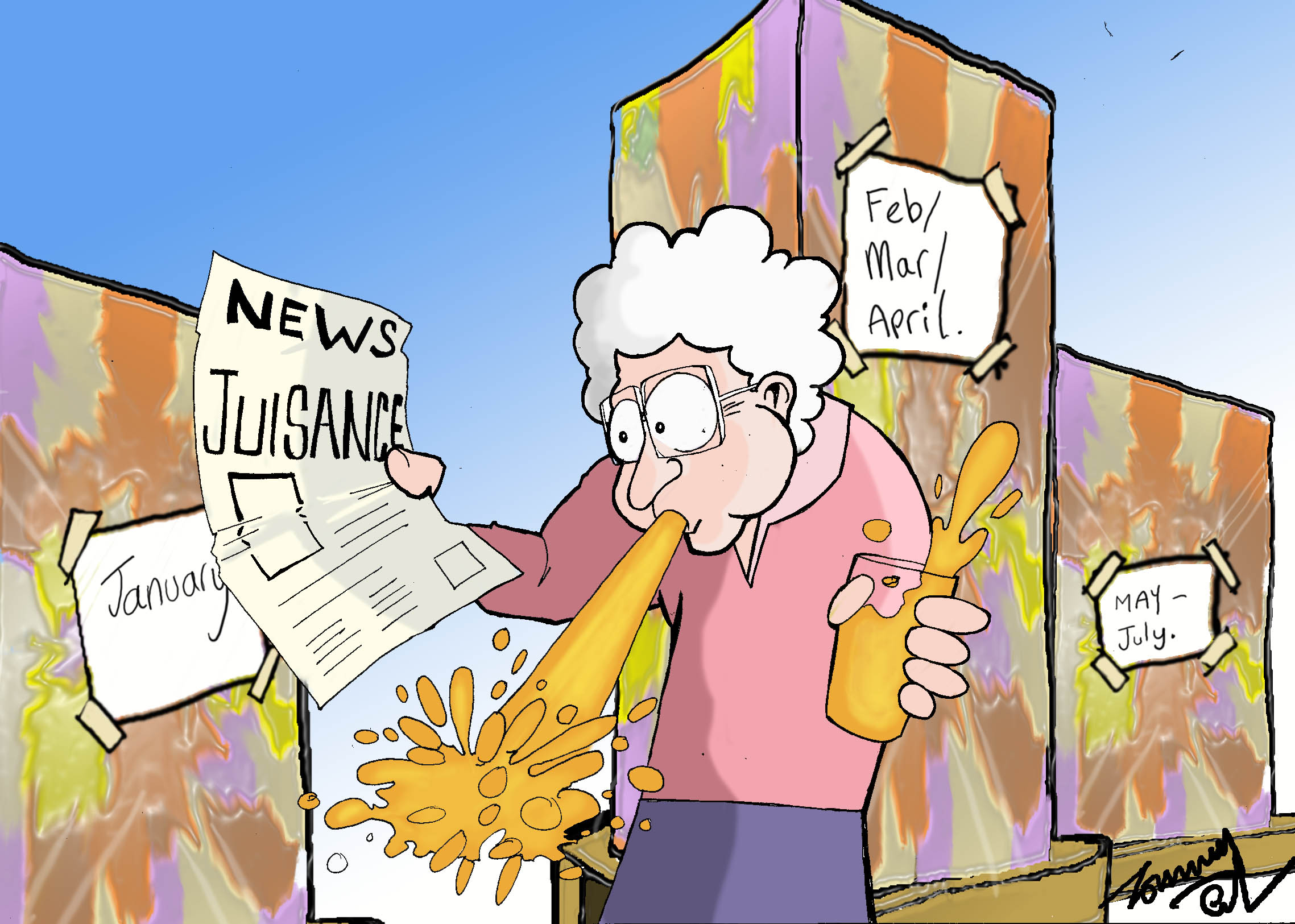
“Fruit Juice Hopes Squashed”

Just when I thought I had found the secret to eternal life, my hopes have been shattered.

My earlier posts on “Fruitful Research” (9, 23, 30 January; 15 May; 26 June 2011) seemed to suggest that a glass or two (or six) of fruit juice a day could cure everything from berry-berry to housemaid’s knee.

Scary headlines on the front page of the Daily Express recently (10 June 2011) pointed out the “hidden dangers in fruit juice”.  It must be serious because the announcement was heralded as if it was a new outbreak of small pox.  Just think of all those poor readers of the Daily Express reading this over breakfast.  They may well have had a heart attack there and then, or at least rushed off to the A & E to have their stomachs pumped.

Strange then that this dramatic health warning didn’t end up in any other newspapers, nor was it on “News at Ten”.  I suppose earthquakes, volcanic eruptions and even Wayne Rooney’s new hair-line are rather more important.

Evidently, new research at Bangor University has discovered that regular consumption of sweet drinks can dull your sensitivity to them.  This can lead to an even greater craving for sugary drinks, then you’re on the slippery slope to Type 2 Diabetes.

Not surprisingly, a spokesman for the British Soft Drinks Association, disagreed.

Fancy there being an Association I might even join.  I wonder if they have a magazine?  Maybe they organise trips around the world exploring for rare and exotic fruit?

I have only just managed to find a supply of cowberries and I am still searching for chokeberries.


Posted in SMILES | Tagged , | 1 Comment

“New Vision of Later Life” 1

I have written a lot about the neglect of older people in the NHS, in residential care homes and in their own homes.  My blogs have been stimulated by the many reports over the last twelve months of malnutrition and dehydration in our hospitals; poor quality care and downright neglect in both hospitals and residential care homes.  Recently another report by the Equal Opportunities and Human Rights Commission confirms that care of the elderly in their own homes is abysmal too.

It’s depressing, shaming and overwhelming.  Where do we begin to put it right?  Especially at a time when the Government tells us there is no more money.

Firstly, let’s start by accepting that it’s all our fault and all our responsibility.  Care of the elderly starts with us.

When we are really young, we should cherish our grandparents – they are a font of knowledge, wisdom and experience, if we only take the time to listen.  They are free life experience. Mentoring consultants whose successes and mistakes we can learn from and grow.  For those who no longer have grandparents, there are plenty of older people alone out there we can adopt.  A little support offered – a lift to the doctors, assistance with shopping or just a chat over the garden gate, are the first steps of a more engaged society.

We have to also start with ourselves, because delegation or abnegation of responsibility to the State / Government clearly doesn’t work well and is destined to only get worse if we carry on as we are.  Particularly given the numbers of older, older people is set to grow exponentially in the next twenty years.

As we reach working age we need to start saving much more for our own old age, now that we know we can expect to live much longer in retirement.  Maybe 30-40% of our income needs to be squirreled away for our later life years.  OK, some of that may be used to buy a family house, provided that later on we accept that downsizing to a smaller home or even renting in retirement is a necessary means to liquidate our savings to pay for care and support if and when we need it.

None of us know how healthy we will be in later life.  The working age implication of this is that we need to insure ourselves, particularly to cover the cost of long-term care.  We also need to take a more preventative approach to our own health.  There are established and accepted links between issues like smoking and cancer, obesity and diabetes which we could heed and save ourselves a lot of pain and expense in later life.  The prompt to take notice might be the cost of long-term care if in future we can no longer rely on the State.  Long term care insurance companies could take a more proactive and holistic view of health insurance and focus on well-being rather than ill-health.

How much better our health care system would be if GPs, instead of just responding to ill-health issues, were also charged with promoting health and well-being.  Providing annual health checks for everyone and developing a personal health plan.  A good place to start would be with the older population who are more likely to be susceptible to health problems.  Certainly those who can afford to pay for regular check ups are more likely to have a positive attitude to looking after themselves.  They are also more likely to discover problems at an early stage.

This new vision of health care in the community starts with a Health Care Practice, ideally located inside a fitness centre so the elderly are part of an all age healthy life style.  There is a friendly and welcoming, smiling receptionist who makes you feel like a customer and not a nuisance to the busy doctor.  Tea, coffee, fruit juice while you wait – and today’s newspapers rather than long out of date magazines.  A well-being nurse to see you first and routinely measure your weight, blood pressure and take blood tests.  Then an on time and unrushed appointment with your personal GP – the one who deals with all your family and has done for years.  Someone who is familiar with your health history and doesn’t spend all of the consultation looking at a computer.  A friend who is aware of the importance of motivating you to look after your health by communicating effectively and ensuring you understand what you can do to improve your well-being.  You then leave with a health plan supported by helpful and easy to read literature.   The plan will be followed up with you by the well-being nurse at least twice before you see the doctor again in a years’ time – all being well.

So that is the beginning of my new vision for later life – an annual health check up and a monitored health plan funded by those who can afford it or by their private insurance companies in exchange for lower health care premiums. 

I will come back to how we deal with those who can’t afford it later.


Posted in HEALTH | Tagged , | 17 Comments

“Fruitful Research” 5

There seems to be a new wonder fruit found almost every week that helps extend your life.  The problem now is keeping up with all the claims and even knowing what some of the fruits are and how to find them.

One thing is certain – the search is definitely good for scientists in France.  Not only does it keep them busy, but it probably means they have to endlessly travel the world like 18th Century explorers rooting up ever rarer and more exotic species to bring home and test them —- on pigs or people.

Scientists at the University of Strasbourg have gathered a unique concoction of berries with strange names:-

Cowberry – Doesn’t sound very gastronimique
Acerola – More like a gamblers nickname but full of Vitamin C (C for Clubs?)
Chokeberry – It’s American and supposedly the ‘healthiest berry in the world’  providing you don’t die trying to swollow  it.
 

Blended with apples, grapes, blueberries and strawberries, they tested it first on pig arteries – it does not say whether the pigs were alive at the time nor how they assessed the results afterwards.  Maybe the scientists could tell from the grumbling grunts or the smiley squeals.

Evidently the feedback from the pigs was not conclusive even though the French have great regard for pigs’ ability to search out some of the finest and most expensive foods.  No truffles found in this fruit cocktail sadly, just cowberries, acerolas and chokeberries – from the outset it doesn’t sound like a winning combination of ingredients, does it!

The next step with 80 French volunteers in an “I am a celebrity, get me out of here” bush tucker trial, was to test the recipe on humans – I don’t think that Ant and Dec were recruited to assess the results but the trials were apparently a success.

– Heart artery walls relaxed potentially leading to boosted blood flow to the heart.

– Polyphenols produced harmful free radicals that can damage DNA (put that in because it sounds impressive 🙂 )


Posted in HEALTH, SMILES | Tagged , | 1 Comment

“My Country Garden”

Everyone needs a garden in their life.  Not necessarily a literal garden, just somewhere where things can grow.  Everything from plants to ideas to children to peace of mind.

Right now at six o’clock in the morning, I am sitting in my bedroom looking out on the paradise of my back garden.  An artist’s pallet of summer colours still fresh from the buds of May.   Roses at their floral best, no need to compete at Chelsea, in this garden they are already gold medal winners.  Poppies, lupins, delphiniums and daisies each have their own smiling face and their Sunday best clothes.  Not to be left out, the leaves of the hostas and the ferns are all preened and proud as peacocks.  Even the humble cabbage leaves are pressed like a clean shirt happy to be invited to the party.

In the early morning quiet, the only sounds are the birds singing a welcome to the sun and the seeds.

Within an hour the worldly day will begin to erode the tranquility but the birds, the flowers and the colours will still be there.

The challenge of every day is to hold those thoughts and images in our mind, while we walk through the rest of life.

We can all move to the country in our minds!

Posted in SMILES | Tagged | 3 Comments

“Granola Wars”

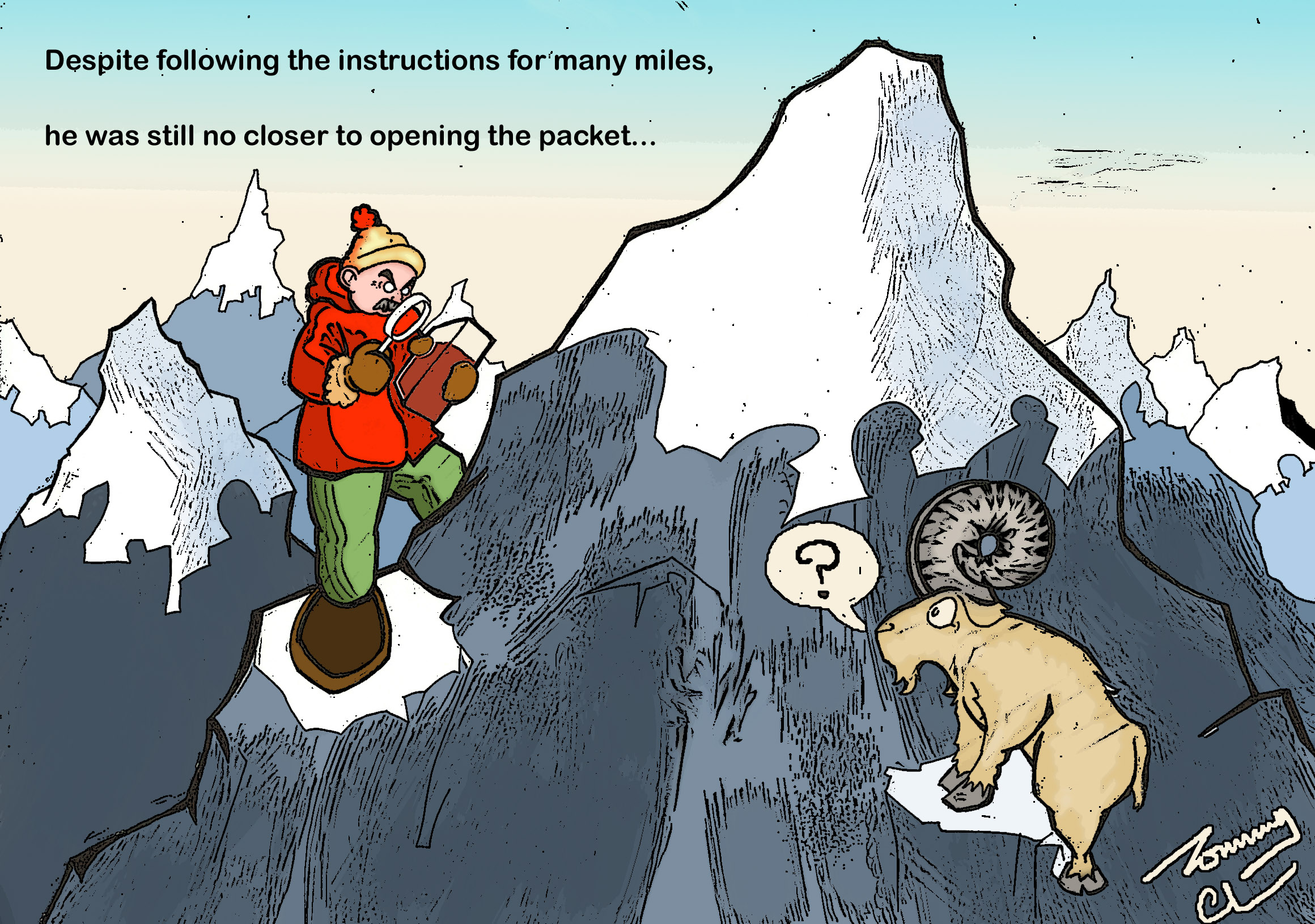
As our society ages, manufacturers that don’t make products suitable for the grey market, will miss out on a huge segment of elderly consumers.  It is especially frustrating when excellent products are wrapped up in impossible-to-open packaging because by then you have bought and paid for something you can’t get at, and you certainly won’t buy again!

Lots of older people have problems with dexterity so why not have easy-to-open pull tabs on packaging (and not ones that are too small to see!).  Equally, over 50% of the elderly have a degree of visual impairment.  Surely it can’t be too difficult to have larger printed information on the back.

I am going to keep banging on about packaging until it becomes easily openable and until the instructions on the back are in big enough print to read.  Back in September last year, I wrote my first blog on my struggles with Lizi Shaw’s breakfast cereal packaging (Find “Breakfast Exercise” by clicking on 6 September 2010  in the Archive).

So today, after my struggles with Lizi, I bought some Lovedean Granola, made by another lovely lady – Lucy O’Donnell, and her whole family.  Apparently she was inspired on holiday in the Alps to come home and make tons of Granola ???  If she had gone to Blackpool, I would probably be eating fish and chips for breakfast.

Anyway, the package was still fiddly to open and the Alpine story on the back still needed a magnifying glass.  The good news is the Granola was great.  I wonder where Lucy is going on holiday next and what will she come back with this time.

Posted in ELDERLY MARKET | Tagged | 2 Comments

” If the cap fits” – Commission on Funding Care & Support – 5

The Dilnot Commission is due to report in July and in true political style they have decided to fly some kites before making any formal announcements.  In an interview with The Daily Mail, Andrew Dilnot dropped out clear hints as to the direction of his teams’ thinking.

The biggest of these is the idea of setting a £50,000 cap on how much elderly people will have to pay for their own care before the Government steps in and picks up the cost.  This is a clever intervention in several ways:-

  • Firstly, it can be portrayed as being a universal subsidy and therefore it is better than the current open-ended commitment that has to be shouldered by asset rich people.  This means that if you have to sell your own home, you won’t have to use all the proceeds to cover care costs.
  • Secondly, it creates a platform of limited exposure for the insurance industry, which should stimulate more competitive long-term care insurance products. That should enable people to insure themselves against the risk of needing long-term care, which currently is prohibitively expensive.
  • Thirdly, from a treasury viewpoint, it still leaves the biggest burden of costs to be funded by elderly people themselves.  80% of older people are now homeowners and won’t qualify for immediate state support which will still be means tested.  Additionally, most people admitted to residential care survive for less than two years so many will never reach the £50,000 cap.

This is a simple and clever solution which neatly puts a level of certainty into the cost of care.  Although it still leaves a burden to be paid by elderly people themselves.  That is no different to the current situation and there is evidence to suggest that older residents and their relatives would accept this trade-off.

One hurdle that has still to be jumped is that this is a subsidy to the wealthiest older people and will require additional funding from somewhere.  As the next election approaches, this hurdle will no doubt be easier to negotiate when politicians realise votes are at stake.

Posted in Care Funding, Residential Care | Tagged , | 5 Comments

“The £6 Billion Question”

A recent report on the funding of residential care contained some significant information of major consequence to older people.  It was produced by the relatively obscure Local Government Information Unit and commissioned by the equally unknown care home fees specialist – Partnership.

The central finding of the report is the forecast that there will be £1 billion a year shortfall in residential care fees.

This is not a new message.  It’s just one that has been falling on the deaf ears of politicians for far too long.  Nor is it something that residents and their relatives want to face so they have been turning a blind eye to the issue until the harsh reality of not being able to cope at home forces them to come to terms with paying for the high cost of residential care.

Here are some facts from the report:-

  • 40% of residents in care homes are self-funders
  • 25% of them run out of money
  • 612,000 residents receive some state funds
  • On average self-funders live 4 years in residential care
  • This will cost between £120,000 and £220,000

Put all these figures together and roll them forward fifteen years and the LGIU forecasts the cost of state support for older people in residential care will need to double from £6.36 billion to £12.15 billion.

Of course, this won’t / can’t happen which is why the politicians set up the Dilnot Commission to hand out the bad news – which is that older people who need more care are going to have to fund it themselves.

The good news is that the over 65’s collectively own £1 trillion of unmortgaged property.  The not so good news is that this will only work if everyone chips in something towards the very high cost of the oldest and frailest, particularly those with dementia who tend to need care for longer.

This is the equation that Andrew Dilnot is wrestling with.  I am sure he will shortly come up with a solution which requires people to use their housing equity to pay for care.  The £6 billion question is


Posted in Residential Care | Tagged | 4 Comments