“Legal Eagles or Vultures 2”

The Mail on Sunday has reused one of my blog post ideas, although it took them four years to do it.

Back in 2012 I wrote a series of blogs about the legal profession pursuing more and more claims against the NHS (you can see the posts by clicking on February and July 2012 in the Archive – “Legal Eagles or Vultures”, “Untold Pressure”, “Cold Comfort”).

At that time the NHS paid out £1 billion in compensation for mistakes on a total of 8,500 claims and the Public Accounts Committee were recommending tighter controls on legal fees.     Needless to say nothing happened.      Except it drew attention to the pot of gold to be found in legal fees.

Four years on there are more claims than ever and the total bill for compensation reached just under £1.5 billion in 2015/16.  The grasping, ambulance chasing, no-win no-fee lawyers pocketed £418 million of that.

Surely the NHS could settle many of the claims much more quickly and cheaply without the intervention of lawyers, but to get to the truth quickly they would have to adopt a “no blame” approach to the staff involved.     I can’t see why an independent complaints tribunal couldn’t resolve most complaints quickly without resort to the courts.     There is currently an Ombudsman that could do this, but they don’t seem very effective.     Firstly because of the NHS’s reluctance to ever admit to making mistakes and secondly, because it is in the interest of fee-chasing lawyers to drag out the process.

The Government could also help by outlawing “no-win, no-fee” legal agreements, which would make people think twice before pursuing a claim.

An apology and corrective action is all most reasonable people want, before they talk to lawyers.     The lawyers would be poorer, but patients would not be dragged through years of anguish.

leagaleagle2

P.S.   The Times newspaper picked this same storey up with even more alarming figures, taken from the NHS Litigation Authority annual report.      The estimated future cost of negligence claims could be a staggering £50 billion.    That is nearly half of the NHS annual budget !

These  lawyers better hope they never get ill.

Posted in N.H.S. | Tagged | 1 Comment

“Inaction Turns To Care Home Crisis”

Many of the themes in my blog seem to repeat themselves year after year.  None more so that the subject of residential care, which I started writing about in 2010 shortly after I had retired from the ExtraCare Charitable Trust.

In October 2010 I wrote a blog entitled “Residential Care Dilemma” and thereafter I followed on with several other blogs on the same subject before focusing specifically on the collapse of the biggest organisation of residential care – Southern Cross.  (You can see all these blogs by clicking on “Residential Care” in the TOPICS list.)  Here are some prescient quotes from some of those posts which relate directly to the recent crisis in residential care which has been prominently in the media in the last few weeks:-

  1. “Now, many of the big residential care companies are on the verge of insolvency due to the combination of high gearing and artificially low fee income”;
  2. “If Care Quality Commission (CQC) wish to have a substantial, strategic and long-term impact on quality outcomes, it can’t be through increased regulation and more home closures”;
  3. “The CQC should champion good practice and facilitate learning and skills improvement throughout the residential and domiciliary care sector”;
  4. “If we do nothing, the tougher regulation road can only lead to crisis”.

There is no question that paragraphs 1, 2 and 4 have all come about as I predicted.    Here are some facts to prove it. :-

  • 1500 Care homes have closed in the last 5 years;
  • many other homes are on the brink of bankruptcy and will struggle to pay the new living wage to their staff;
  • care home providers are moving away from Social Service funded residents wherever they can. Resulting in more blocked beds in the NHS.
  • meanwhile the number of older people needing care is rising as the population ages.

Unfortunately little has been done from about developing a more positive role of CQC referred to in paragraph 3.    In its latest Annual Report CQC shows that in the last year it has rated one-third of the 17,000 residential and nursing homes as either “inadequate” or “in need of improvement”.

CQC needs to be given an expanded role which focuses on training for quality improvement throughout the residential care sector.   It need not cost  lots more money.      At a time when most staff will already be receiving increases in pay, it is an ideal time to expect them to improve their caring skills.     Without action it is the residents who pay with a reduced quality of service.

Regulation alone, used as a stick is never the  answer, it needs to be accompanied by the helping hand of hope !


Posted in Residential Care | Tagged | 2 Comments

“Lapsed Tai Chi”

I used to do Tai Chi early in the morning in the garden most days of the week……..a while ago………..a good while ago !       Recently I have noticed my joints are much stiffer and my breathing is much wheezier.  I wonder if these things are related?

A study of Tai Chi exercises for older people was reported in the Journal of the American Geriatric Society and would seem to suggest so.    The good news is that those who did the Tai Chi were 50% less likely to sustain an injury- causing fall compared to the other group.

These results were reinforced by another analysis in the British Journal of Sports Medicine.      Reviewing studies of the benefits of Tai Chi it found improved outcomes when used as treatment for arthritis, breathing, concentration, muscle strength and balance.    As well as increasing peoples’ sense of well-being.


tai-chi

I had better get back to Tai Chi in the garden again.  Maybe just a little later in the morning!

PS   My memory seems to have lapsed as well, because when I looked back over my blog I found some earlier posts on the subject of Tai Chi.    In July 2011  I commented on research in  America extolling the virtues of Tai Chi for older people.   Tai Chi is certainly proving to be a useful subject for researchers, even if it needs repeating every few years!

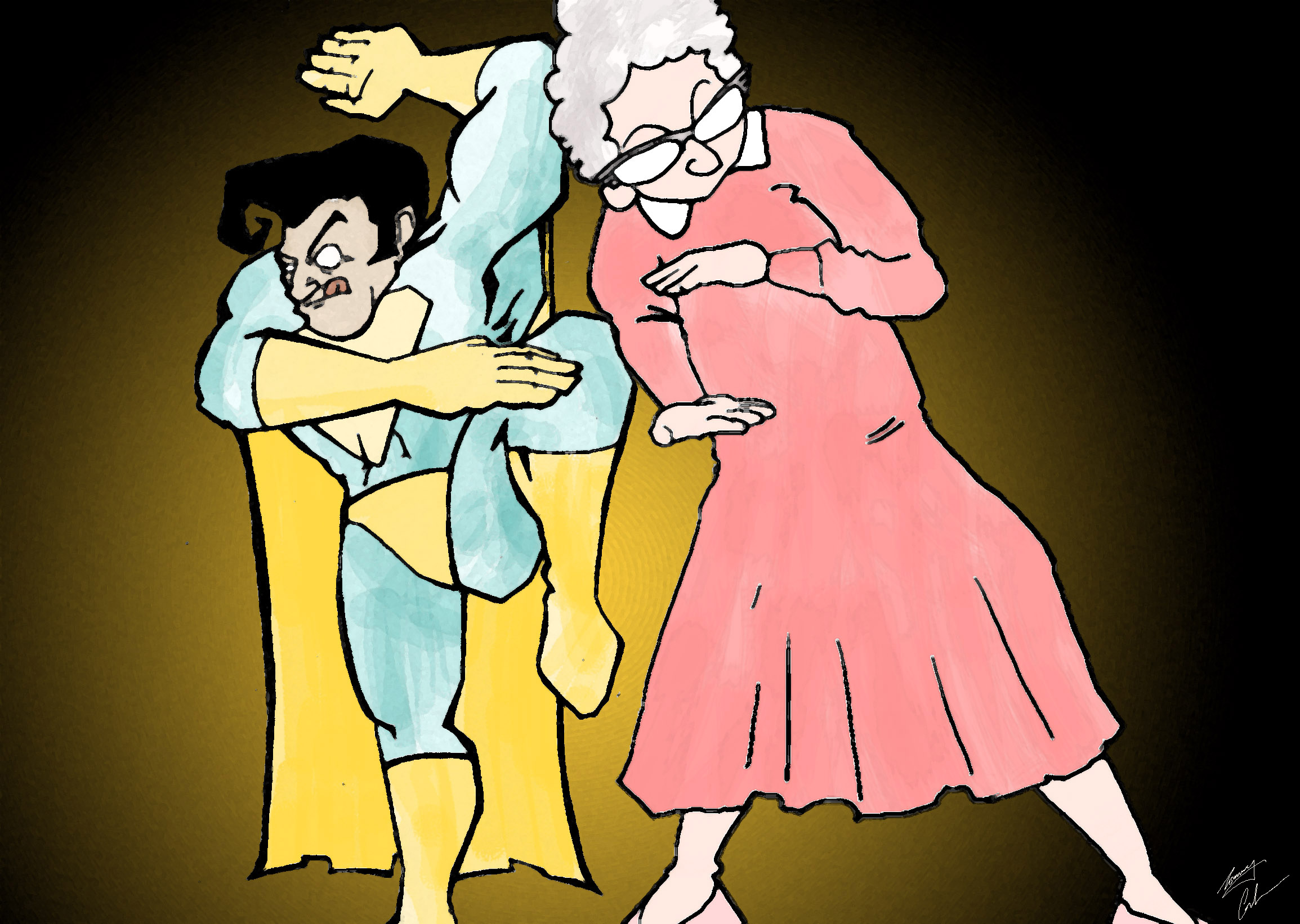
PPS    The cartoon I used then, which I include below, is of me as the super-hero helping the older ladies in Kilsby Village Hall keep fit with some Tai Chi moves.     In truth, they are doing it and I am not!

tiachi2-2

PPPS.     When l look back even further, to September 2010, I find my first post about Tai Chi.     Perhaps I am better at writing about it than doing it 😄

Posted in SMILES | Tagged , | 3 Comments

Boot Clutter

Last week my blog was about how clutter seems to hover around me.    I accumulate it daily without effort, it’s an unwanted skill I have acquired over the years.    I am not a hoarder, that would be a compulsive condition I might be able to get medical help for —— Obsessive Accumulating Disorder (OAD), more commonly  known as “Pig Pen’s disease” . Nor am I a collector, there might be some merit in that, who knows I could be on Antiques Roadshow in the years ahead.     But, my stuffs not valuable it is just stuff.

So now we come to my rugby boots.

boots

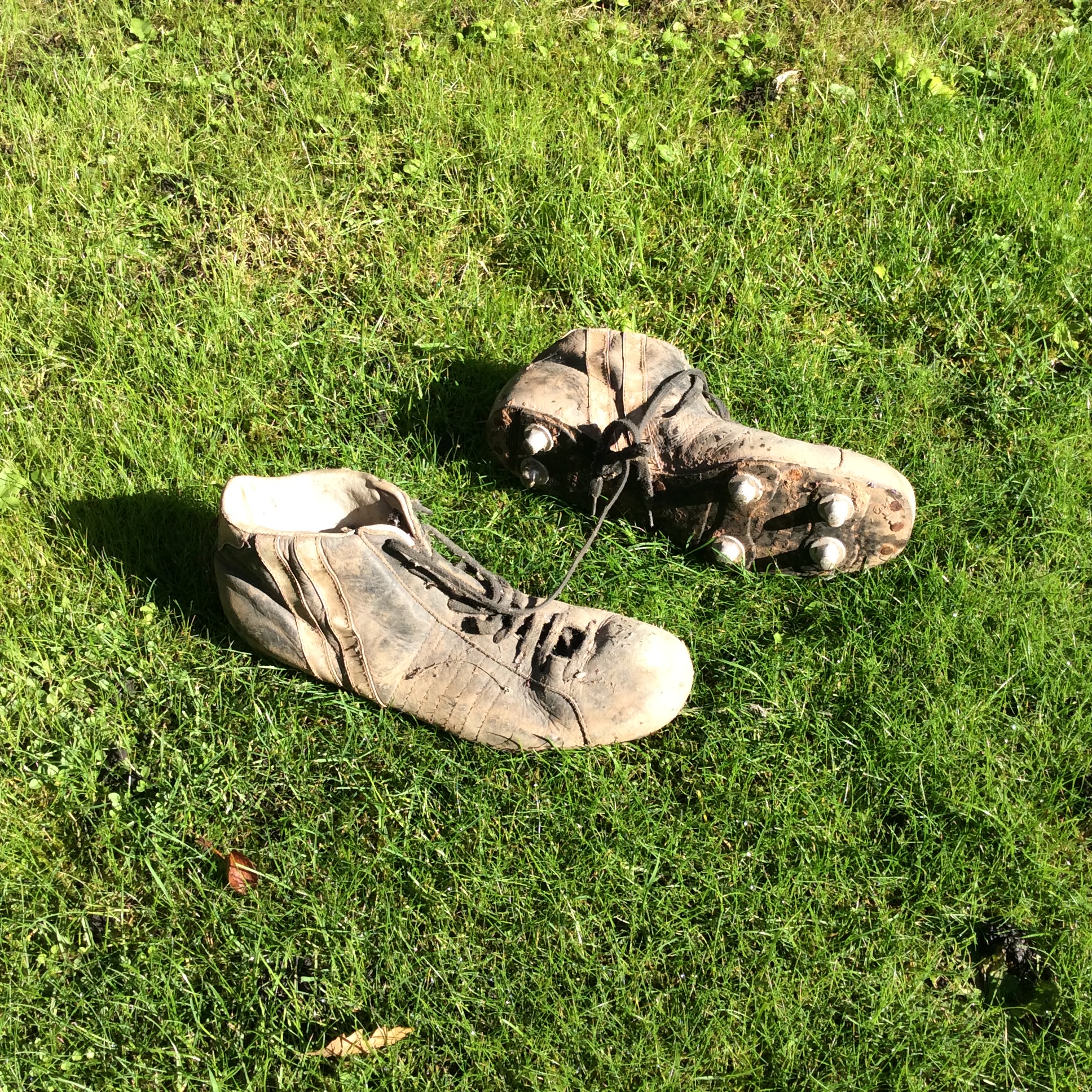
Not too many Rugby players, at 69 years old, still have their boots clean – well, almost clean – and ready to go, but I do.    Just in case, after my glittering career in Syston Thirds, I get a last minute call from Wales to play in the Autumn Internationals, or maybe I could just sit on the bench at the Millennium Stadium.   I am sure I saw a scout on the touchline  30 years ago at Syston and surely he must have seen me?

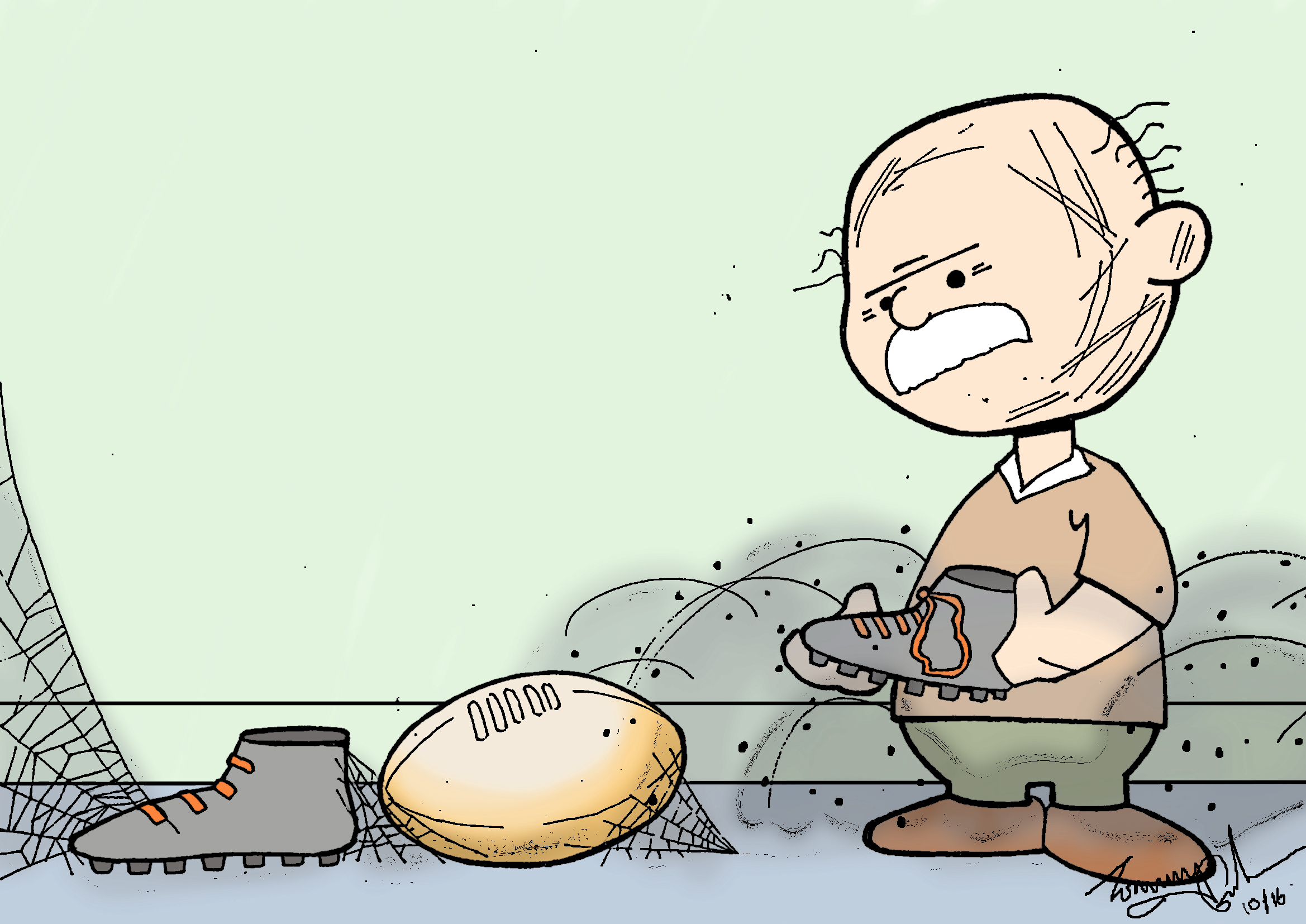
Therein lies my whole cluttering problem.   Letting go of my memories and wistful unfulfilled dreams is difficult.    I have kept those boots for years, first in my wardrobe and then for the last 20 years in my shed.   Ready to go on a Saturday as soon as the phone rings, or perhaps these days it will be a text message — oops— maybe that’s why I missed it?

boot-cartoon

Instead of cluttering up my shed, if only I had been more realistic all along I should have thrown those boots away years ago.

It’s obvious I would have to buy new brightly coloured boots if  the call to represent my country finally comes.

Posted in SMILES | Tagged | 4 Comments

Clutter, Clutter, EVERYWHERE !

I haven’t thought about clutter much recently, except every day when I am looking for something, —– which is most days!    I haven’t blogged about clutter for even longer, in fact it was 2013.    (You can see the posts by clicking on ” clutter” in the Tag Cloud )

  • Living a simple life is difficult to do unless you are ruthlessly efficient at throwing things away.  EVERYDAY.
  • It requires complete and constant concentration on the question —————-                  ————— “DO I NEED THIS ?”
  • It applies to everything ABSOLUTELY EVERYTHING.  — The next thing through your door – news papers, letters, flyers, junk-mail,  obviously not people, or at least most people😄  I am not forgetting emails,  but at  least they are up in the clouds until they rain  down one you one day.
  • But also, everything that has come through your door in the past that you did not throw away at the time and now fills up your drawers, your cupboards, any spare shelf space, spare rooms, attics, the garage, all the sheds in your garden and even space in friends garages.
  • You can even hire storage space in a warehouse to keep things you might need in the future.
  • It sounds like the house is untidy — it’s not.    The clutter is hidden away.
  • But it is there, I know it is there and it bugs me  from time to time, when I remember it, or when I can’t find something I know I have put somewhere,but don’t remember where😟

clutter-everywhere

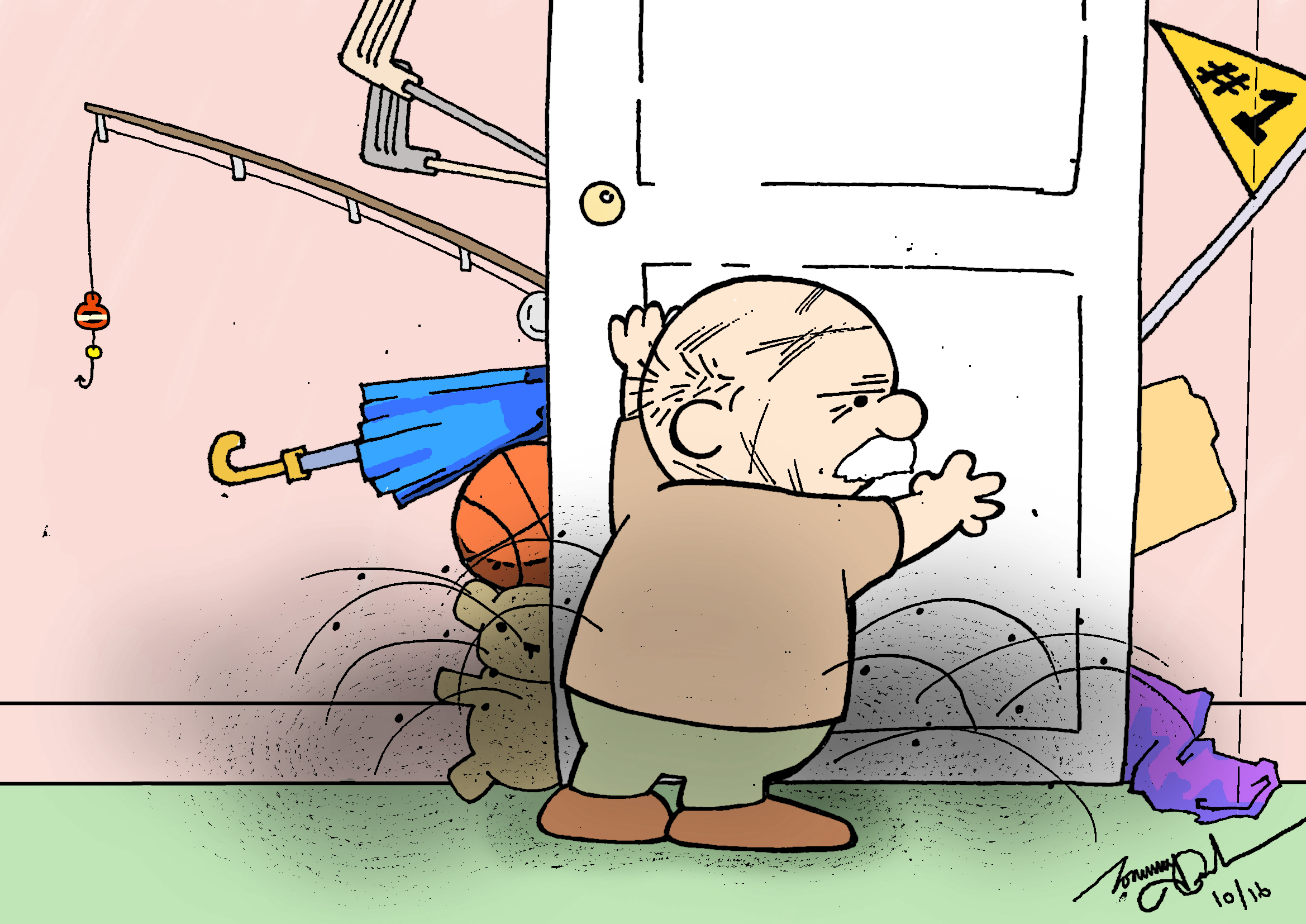
I am going to have an all out attack on my clutter and  clear the clouds of clutter dust that are engulfing me.   It won’t be quick, it won’t be easy, it will take time and determination, there will be setbacks and anguish along the way as  I discard accumulated bits of history.

But I can do it.

I know I can.

Well I think I can.

I will start tomorrow.

Or maybe the day after?


Posted in SMILES | Tagged | 20 Comments

“Timpson Tie Up”

One of the great challenges when you are growing up is learning to tie up shoe laces.  These are the days before Velcro.  Nothing was more embarrassing than not being able to tie your own shoe laces when you went to school.  It was your first big test to show that you were grown up.

Having mastered the tying up skill once, it’s strange how the same great challenge comes back to you again in later life.

Last summer my wife bought me a trendy pair of new shoes from that well-known High Street name in footwear from my childhood – Timpsons.  That’s where the challenge starts all over again!

The shoes were blue leather with white rubber soles and white leather shoe laces.  I was about to be the most fashionable man about town.  I put the new shoes on with childlike enthusiasm, tugged on the laces and one of the laces broke.  The square-shaped white leather laces were so unusual that I couldn’t find any more.  So the shoes went back in the box and were forgotten until this summer.

timson

Then my wife bought me the same new white Timpsons shoe laces.  The great challenge this time was to get the laces out of the packet.  They were tantalisingly encased behind a thick plastic cover sealed to an equally thick cardboard backing.  Nobody intended you to get these laces out easily.  There were no perforations in the cardboard, no fold away tear-off corner and the plastic was impenetrable.  This must be Timpsons’ last laugh.

When I eventually got the packet open with a crow bar……the laces were far too long.  I would have known this if I had read the instructions on the back, but I didn’t have my magnifying glass with me at the time.  Now with that in hand I can clearly see that I need a degree in shoeology to buy the right shoe laces, then I would know that with only two pairs of eyelets I only need 45 centimetre laces.  Sadly, I bought 100 centimetre laces which is long enough for 9 pairs of eyelets.  So now I need more eyelets!

Two other things I noticed in the small print on the back of the packet.  Firstly, all Timpsons laces are guaranteed for 6 months.  Secondly, they hope I enjoy wearing my new Timpsons Laces.

The final irony is the Timpson motto:

Great service for great people!

Posted in Grey Products, SMILES | 2 Comments

Retirement Housing – A Game Changer.

This post follows on from my previous post and builds on the many comments I have had on this and earlier posts on the subject of Retirement Housing.   (You can find them all in the Topics List under the “Retirement Housing” heading)

A radically different approach is needed, which will require the post-war baby boomer generation of children to accept that their parents aspiration of free health care and decent housing for everyone is only possible if they use the wealth they have fortuitously accumulated in their houses as property prices have risen.    The legacy they had hoped to pass onto their children and grand-children must first be called on to pay for their own health.    The added years of increased longevity  requires much more money than most have saved in their pensions.

The two big uncertainties older people face are about their health and their wealth.    Will they need more support/ health care as they grow older and put bluntly –  will their money run out  before they die?    The problem is that nobody knows.

“Head in the sand” is the most common individual reaction.   Most people hope to die a sudden death, but the evidence is that only 10% do.   The majority have a period of chronic illness before they die.   Long term  health care could be the answer, but it is expensive and people are reluctant to pay for an uncertain risk.

“Head in the sand” is also the Governments’ response, as all politicians are reluctant to honestly tell older people they are going to have to pay for their own care in later life.   Meanwhile, pressure continues to build up on the NHS and Social Services and the quality of care reduces.  Around this a blame culture developes and nobody looks for strategic solutions.

The answer is buried in the equity most older people (80%) have tied up in their houses.   The problem is that it is difficult and expensive to unlock.

Equity release has justifiably earned itself a bad name.  It is expensive because of the unpredictability of lifespans and the fluctuations of housing values.   So there needs to be a new, cheaper and more flexible answer to releasing equity in your home.

Retirement housing is in short supply and is holding its value, reinforced by a market where many purchasers are downsizing from larger more valuable houses and consequently are not so price sensitive  when buying a smaller home.   The market is primarily driven by quality of accommodation and lifestyle.    There is no point in moving unless your new home offers a better life.   Down-sizing on its own is only part of the answer — it solves wealth but not health.

Some people will have  money left  after down-sizing but for others they may need to continue to release more equity  to pay for health care and support.   Many people will have lived in lower value homes which only allow for part purchase of a new retirement home.   In both cases flexible shared ownership housing and the ability to continue to sell back further shares over time is an answer.

Traditionally shared ownership allows young people to  get a step on the housing ladder and then buy additional shares until they own their new home outright.     We need to completely reverse that thinking for retirement housing and allow older people to gradually release their equity share if they need resources to pay for care.

Retirement housing provided by charitable Housing Associations, which has a significant element of shared-ownership can appeal to a lot of asset rich and income poor older people.    Add to this the option of stair-casing down to release funds for health care  and you have facilitated the answers to future health and wealth.

This is not new thinking just a new mindset.   The caveat is that it must be simple and easy to do – no conveyance lawyers, just an open and transparent exchange of letters providing a release of capital  in exchange for shares given back to the Housing Association, underwritten by a charge on the property.

Governments won’t do it, because they do not think holistically about housing and health, nor are they prepared to face up to the truth about who pays for the cost of health care for older people.    Only forward thinking Housing Associations prepared to break the moulds of past housing models can create new opportunities for older people to look after themselves in later life.

In the latter half of the last century Housing Associations changed the lives of many older people with their provision of sheltered housing.   The question is will they again have the courage and passion to be :-

mansmilew-bigboard-cropped-183

Posted in RETIREMENT HOUSING | 4 Comments

Retirement Housing – Government Perspective.

This follows on from the previous blog on my market overview of retirement housing.

The current Government only has housing for new starters on the housing ladder in it’s sights.    They see retirement housing as a luxury only to be made available to those who can afford to buy.  What’s more this may well become a self-fulfilling prophesy if left to the private sector housing developers.

From a narrow and historical perspective the Government may be right.   In the past publicly funded social housing for older people required  huge capital grants, which remain tied up in those houses to this day.   In addition, the majority of the tenants are dependant on housing benefit to pay some or all of the rent and service charges.

The days of large capital grants have long disappeared, along with any significant supply of new social housing.   More recently the treasury has turned it’s cost cutting eye to reducing the level of housing benefit.    These two austerity measures have  all but eliminated the financial viability of new retirement housing schemes for social rent.

This one-eyed view ignores the social and health benefits of retirement housing.   Furthermore, there are proven savings to health and social care.

You have to have an holistic approach and wide horizons to find a way ahead for social housing for older people.   It needs to make real and transparent the savings to the NHS  and to Social Services, as well as selling itself to older people themselves as a positive improvement in lifestyle.

Lets hope the Housing  Association movement can rise to this new challenge.

Posted in RETIREMENT HOUSING | 2 Comments

Retirement Housing – A Market Overview

I have written a lot about the current state of the retirement housing market in the last twelve months,though it mainly reflects the relative inactivity in a stalled housing economy.    ( You can see my earlier posts by clicking on “Retirement Housing” in the topics list)

At a time when more and more of the baby boomer generation are entering retirement age and looking for new options in later life, there is a massive mismatch between demand and supply.   Or, perhaps more accurately between aspirations and opportunities.  There are simply not enough houses on the supply side, however, the demand is skewed by a host of factors related to both affordability and suitability.

There are expected to be an extra 3.5 million older households in England by 2033.   A 60% increase, which will mean that a third of all households will be occupied by people aged over 65.

Currently only 2% of older people live in specialist age related housing.  This has the potential to rise to 5% in the next decade, but only if the supply of new retirement housing increases dramatically.

It is a great opportunity, if we take it, or leads to a big problem, if we don’t.

I will expand on this theme in the days ahead.

Posted in RETIREMENT HOUSING | 1 Comment

“Daylight Robbery”

Most robbery is done in the dark.  More daring robbery in the day usually requires a disguise.

Pirates had patches over one eye.  Stagecoach robbers in cowboy films had their neckerchiefs pulled up over their faces.  Modern day jewellery thieves and bank robbers usually go to the trouble of donning a balaclava for their heists.

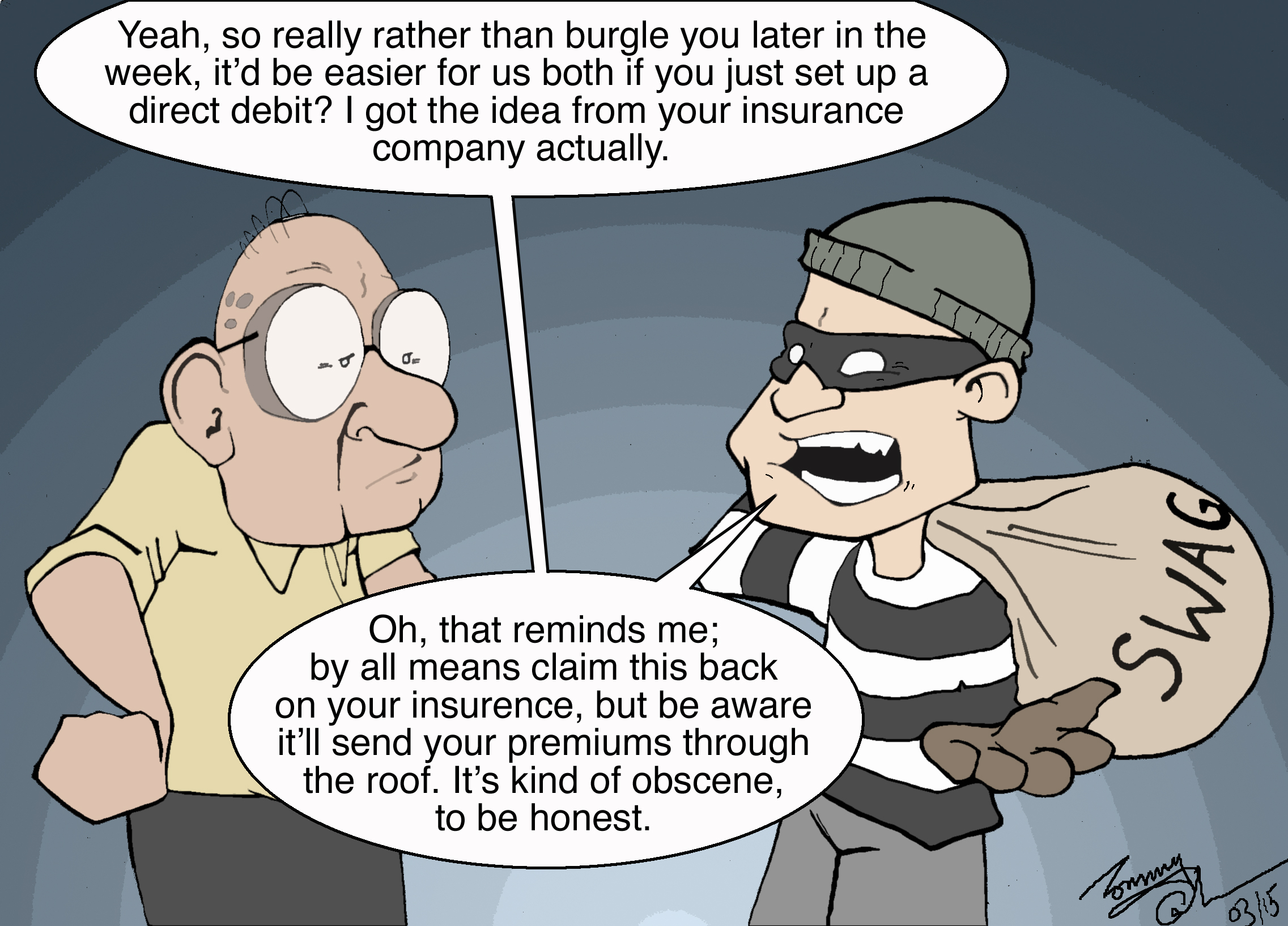
Today’s insurance salesmen are much more brazen, particularly with older people.  They come well dressed in grey suits; they don’t bother with a disguise, they hide behind their “trusted” brand.

A recent report in Times Money covered the cases of a number of elderly people who found they were paying way over the top for insurance renewals.

An 89 year old was paying five times as much as new customers for building insurance.  When they were finally exposed after the man had died, Lloyds merely pointed out that the man “could have cancelled his insurance at any time”.   Not so much a trusted friend as buyer beware !

In another example, a daughter found her mother was paying more than twice the going rate for house insurance.   After they were rumbled, Aviva claimed it was a “miscalculation”.

It appears there are many more examples like this where insurance companies exploit the fact that at renewal time, elderly people are less likely to shop around and switch providers.    Most older people are used to being able to trust their insurance company to treat them well.     It now seems that trust maybe misplaced.

Who knows what they will be upto next ?

daylight robbery copy

Posted in Grey Products | 4 Comments