Cheylesmore Good Neighbours – Survey

The first meetings of this newly formed group of older people in Coventry took place at the end of January 2014.  They were held in the Cheylesmore Community Centre and later in the Queens Road Baptist Church.  To invite the attendees we had earlier sent out an invitation which was delivered by a flyer to all 6,000 households in Cheylesmore.  About 60 people attended one or other of the events which is a 1% response rate to our flyer.

The survey was a shortened version of the previous research we had done with the Age Research Centre but questions focused more directly on the help and assistance people might need living independently in the community.

My thanks to Laura Cole at the University and Yvonne Robinson of the Cheylesmore Steering Group for collating the results of the survey.  We have a more detailed analysis of the survey results, but I have just listed below a broad summary of what our two initial groups of older people had to say:-

  • Coffee Mornings – three quarters of the people agreed they might use this service and just under a quarter were prepared to help.
  • Social Events – the response to this was similar to Coffee Mornings.
  • Talks – More than three quarters might attend, although this could depend on the subject and a few people offered to help.
  • Home Visits – Around a half of the people were interested in home visits and a quarter could help, but rather fewer specifically put forward their names.
  • Befriending – Just over half were prepared to be involved in befriending phone calls.
  • Escorting – Just over half might use this service and a quarter could help.
  • Newsletter – Nearly three quarters liked the idea of a newsletter and a few were prepared to help.
  • Handyman – Nearly three quarters might use this service and a few could help.
  • Home Safety – Around half might make use of this service, only a few could help.
  • Home Monitoring – Just over a quarter might use this service with a few offering to help.
  • Household Admin – Around a half might use the service and a quarter could also help.
  • Gadget Assistance – Around half might use this service and a few could help.
  • Computer – Slightly less than half might use this service and again only a few could help.
  • Transport – Just over half might use the service and very few could help.

This is a very small sample group and is quite probably not representative of the most isolated and possibly older and frailer residents in the community.  Nonetheless, it represents a significant interest in making use of a range of self-help services and to a lesser degree there is clearly some capacity to provide help for others.

Our first step was to look for some easy wins by providing an event in the form of an afternoon social gathering.  Between 20 and 30 people have been attending these events so far.

Our next step will be to explore in more detail with this group exactly what sort of individual services and help they could benefit from or provide for others.  Later posts will expand on our experiences with the first few meetings.
Posted in Cheylesmore Good Neighbours | Tagged | 3 Comments

“Cheylesmore Good Neighbours”

Almost a year ago we carried out a survey of a group of about 50 elderly people in Coventry working with the Coventry University Age Research Centre.  The results of that group were published in this blog in the summer of 2013.  They can be found by clicking on “CAFE PROJECT” in the TAG CLOUD.

After the initial meetings, we tried to get a group off the ground focused on gardening.  A smaller group of people met at Coventry’s Belgrade Theatre and our discussions have been summarised in a post called “BELGRADE PROJECT” dated 5th July 2013.  Although we had some very interesting discussions, it was too big an initial jump to try and establish a project on a city wide basis.

Our next step was to focus on a single district of Coventry with some of the people who had attended all the Belgrade meetings – Frances Fielding, who lives in Cheylesmore and Alex & Yvonne Robinson, who have been running computer courses in Coventry.  We initially set up a small localised survey in Cheylesmore with around 30 older people from the area.  That has become a regular group who meet fortnightly in the Cheylesmore Baptist Church.  This thread in the blog will follow our experiences as the group develops.  They have adopted the name:-

ManSmilew-BIGboard Cropped 138

Posted in Cheylesmore Good Neighbours | Tagged | Leave a comment

“No more useful years”

Medication is becoming more and more expensive as new drugs are developed all the time.

The Government’s way of keeping the lid on the cost is to use the inappropriately named “National Institute for Clinical Excellence” – NICE – as the gatekeeper.  They are tasked with assessing the effectiveness of new drugs.  That’s a NICE thing to do, because nobody wants drugs that don’t work.

But increasingly NICE is not just a gatekeeper but also a ration book. Making decisions about whether a drug is not just effective but also cost effective and that is not so NICE.

The Government would like to see “wider social benefit” taken into account when considering whether to pay for a drug on the NHS.  This is just a back door way of making some drugs only available to people who are still economically active i.e. young enough to “contribute to society”.

Cold hearted economists in the treasury obviously didn’t take the Hippocratic oath.  You could certainly see how we will save a lot of money by not giving expensive drugs to older people who were no longer economically active.

This is a very slippery slope which is contrary to all the principles of the NHS by putting a price on useful years of life.   A harsh outcome of these times of austerity?

It has nothing to do with clinical excellence nor care excellence, but a lot to do with expedience.  Perhaps NICE should change its name.  How about:-

NASTY INSTITUTE FOR CARE EXPEDIENCE

Posted in HEALTH | Tagged | 1 Comment

“Hayley Safe in NHS Hands?”

(Continued from “Hayley Home Alone”).

What if Hayley went into hospital?

Terminally ill plus a fall or a call and you’re back in hospital – i.e. any accident or call to your GP at an inconvenient hour like night-time or weekends and you are likely with a terminal diagnosis to be whisked off to hospital.

Now you can step on the Liverpool pathway to heaven.

If you don’t like hospital food, you won’t need to worry, because you won’t be getting any.  You may not even get a drink.  There is ample evidence of this neglect and a terminal illness is an express ticket to this non-care.  What started as a careful approach to end of life care, has become a horror movie in the NHS.

Now the name has been dropped but the beds are still blocked.

Lord Falconer is slowly, but surely, steering his proposals on assisted suicide through Parliament portrayed as a careful caring step.  A Hayley Cropper happy ending.

But reality TV is much more brutal.

  • Hayley had a grasping distant relative  – how many more people do?
  • Hayley had a loving husband and close friends near by but many lonely bereaved older people living alone do not.
  • Hayley had an attentive GP but her only home visit was to certify Hayley’s death.
  • Hayley’s end of life TV episodes certainly raised the issue of terminal illness and good for that.
  • But the reality of a lonely death at home alone or a neglectful nil by mouth, no care, rapid decline in hospital would have been too much like real life for a soap opera’s evening entertainment.

Good night and God bless Hayley

Posted in ELDERLY UK POLICY, HEALTH | Tagged , | 7 Comments

“Hayley Home Alone”

(Continued from “Hayley Comes a Cropper”).

What if Hayley Cropper had lived at home alone?

Sent home with a diagnosis of terminal cancer, only headlines and TV to turn to.  No time or motivation for bucket lists and happy endings.

Denial is maybe the best solo tactic until you can’t cope with the pain and the drowning rain of “why me?” emotions.

On your own, you can’t pass this burden onto now distant family or passing-by friends.

The State has virtually deserted home care and left it to less skilled domiciliary care agency staff.  If you are lucky you will be within reach of more specialist voluntary sector cancer support, like McMillan Nurses or charitably funded hospice care.

Your GP will be there to offer some help but it will be severely time limited.  Unless he is like Dr Harold Shipman who took time out of his busy schedule to help his patients to a swifter death than they might have liked.  Or a more recent GP who helped his daughter to inherit a terminally patient’s house before helping his patient to die. These are surely rare examples.

  Time is the bigger thief for those needing comfort and support.

Where is the NHS when you need them ? 

See Next Week’s Chilling Episode

Posted in Assisted Suicide, ELDERLY UK POLICY, HEALTH | Tagged , | 1 Comment

“Hayley Comes a Cropper”

For the past few months Britain’s most popular TV soap has been running the storyline that a key, long-serving character – Hayley Cropper – has terminal cancer.   Three nights a week “Coronation Street” took us through the emotional roller coaster of cancer.

The fear and apprehension while waiting for the initial diagnosis.

The dreaded “C   ” word —- a lightening bolt of news.

To make the bad news even worse ” terminal” is added.

The scared secrecy of not wanting people to know.

Unwanted sympathy when they do know.

Attempts to carry on as if nothing has happened.

The “bucket list” of things to do before you die.

Hurry to put the wrongs of a lifetime, to right in a moment.

It was a fearful and heart-rending portrayal of some of the emotions of a terminal diagnosis, brought to the attention of a greater than usual 10 million viewers.

As you would hope with your TV soap, it came to a happy ending, or at least as happy as death can be.   Hayley died at home in the arms of her loving husband Roy.

Now wake up!

The adverts are on, Hayley’s not dead, she is an actress.   Soap’s happy endings are not reality TV.   If they were, the storyline could have been much harder to watch.

See next week’s thrilling episode

Posted in Assisted Suicide, ELDERLY UK POLICY, HEALTH | Tagged , | 1 Comment

“Bright Sun and Long Shadows”

A mild January day, no plans and no excuses.   Time to take a step on my Health Ladder – Tai Chi in the garden first, porridge and honey next.

Then it’s all new walking boots and Christmas present socks and brand new scarf.

It is a misty damp morning, but a swan and a gaggle of ducks greet me when I get out of the car to start my country walk.   Must remember some bread next time.   Then perhaps they will waddle away looking a bit happier to see me.

As I step off the road into a path through the fields, it becomes increasingly wet under foot.   The bad news is the new boots are completely waterproof, so no excuses to turn back.   Rising up the hill is all asthma puffers and short of breath.   This is an official right of way with signposts and white marker discs to show you the route ahead.   Why don’t they think of seats at regular intervals along the way?

A good news reward higher up the hill – the mist disappears and there are fine views with distant houses drawn in sharp feature by the low winter sun.   The mist adds mystery by painting several distant horizons in increasingly lighter shades of blue-grey.

Birds scatter in alarm as I approach, but surprisingly the sheep hold  their ground.   I am in their field after all.   For the first time close up I notice that sheep are heavily into ear-piercing.   Some have blue earings, others have yellow.   The farmer certainly knows the difference, I hope the sheep don’t.   I guess there must be a “Liverpool Care Pathway” for sheep.

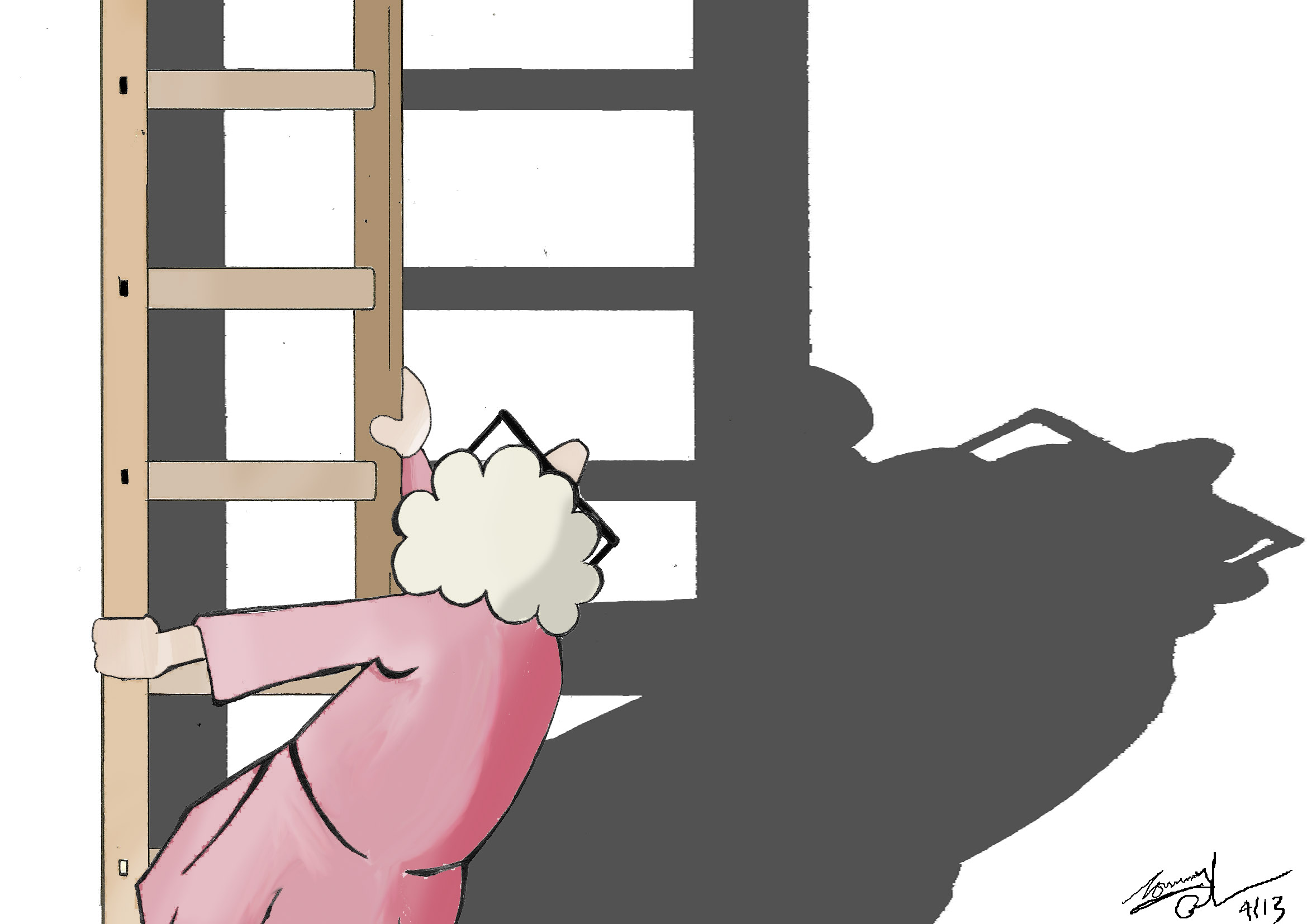
Brightsunlongshadows

Enough of my winter wanderings.   I head off back to the pub for a liquid lunch which will add back all the calories I’ve lost.

Still, I feel better for it and it made me reflect.   Everyone has periods of bright sun in lives, but also times can be often shrouded in mist.   In later life, we would all hope to have cast long shadows which are a mark of our accomplishments.

As people get older, we need to find the bright sun and long shadows in everyone.

Posted in HEALTH | Tagged | 3 Comments

“Double Triple Talk”

Continued from two previous posts.

In making his New Year announcement on maintaining the pension triplelock until 2020, the Prime Minister said it was a choice based on his values – “I want people, when they reach retirement, to know they can have dignity and security in their old age”.

He obviously has not been out much lately.  Certainly not to the NHS with hospitals overflowing with older people.  Nor to Social Services, overwhelmed by demands for domiciliary care they can no longer afford.  Definitely not to the many thousands of isolated older people, lonely and cold in their own homes in the community.

Meanwhile, the very next day, his Chancellor unravels the Prime Minister’s promise by saying that major cuts are still to come in the welfare benefits budget, which will hit the lest well off pensioners hardest.  At the same time, Iain Duncan Smith, the Work and Pensions Secretary, added that he wanted to remove the entitlement to winter fuel allowances, free bus passes and free TV licenses for better off pensioners.

There won’t be quite so much dignity and security left when all this double talk about the triplelock has finished.

Posted in ELDERLY UK POLICY | Tagged | 1 Comment

“Triplelock Triple Take”

The “Triplelock” was introduced in 2010 and intended to give reassurance to pensioners about their income from the State.  It links annual state pension increases to the highest of inflation, average wage increases or 2.5%.

Sounds simple enough, but everything is not quite what it seems.

Inflation used to be defined as R.P.I – the Retail Price Index.  Then it got changed to C.P.I. – the Consumer Price Index which somehow ended up lower than R.P.I. That’s the first of the triplelocks unlocked.

Wages since 2010 have been held down by Government austerity measures – unless you are a banker or politician.  That’s the second of the triplelocks unlocked.

So that just leaves the 2.5% which is a number that can’t be changed – unless we erode pensioners’ savings, dramatically reduce the value of annuities and eliminate final salary pensions.  That’s the third triplelock unlocked.

Hey Presto! Politicians promises

Posted in ELDERLY UK POLICY | Tagged | 1 Comment

“Pension Double Take”

David Cameron has suddenly rediscovered pensioners.  In his New Year’s resolutions for 2014, he has announced a vote-catching promise to extend the triplelock on pension increases for the life of the next Parliament.    Sounds good  ?????

In Daily Mail speak that translates to a headline grabbing:-

£1000 a year by 2020

Sounds almost too good to be true – so let’s work it out.  From April 2014 the basic state pension is £113.10 per week:-

  • plus 2.5% in 2015 = 115.93
  • plus 2.5% in 2016 = 118.82
  • plus 2.5% in 2017 = 121.80
  • plus 2.5% in 2018 = 124.84
  • plus 2.5% in 2019 = 127.96
  • plus 2.5% in 2020 = 131.16

A bit of a slow burn promise and of course it only applies if the conservatives are re-elected in the 2015 general election.   Oh and not in Scotland if you vote for Independence.

Still, an extra £20 per week is not to be sneezed at, even if you catch a cold with energy prices rising by 10% a year.  The good news is that the other political parties are likely to follow Mr Cameron’s lead rather than risk losing 12 million pensioners’ votes.   If that happens, we will be back at square one with nothing much to choose between the political parties as far as pensions are concerned.

Meanwhile:-

  • Hospitals are filling up with older people;
  • Domiciliary care has all but disappeared;
  • Savings rates remain at zero;
  • Energy and food costs keep rising.

So That’s Alright Then!

Posted in ELDERLY UK POLICY | Tagged | 1 Comment