“Fruitful Research” 7

In my never-ending search for a ladder to a healthy lifestyle, I am on a constant lookout for miracle cures.

The New Year brings new hope from researchers at Cambridge University.    It looks like copious quantities of tomatoes must be added to my already extensive list of berries.     (See earlier posts on this subject by clicking on “FRUITFUL RESEARCH” in the TAG CLOUD).

The scientists have developed a pill based on lycopene, which is found in tomato skins.    It appears to have properties which boost blood flow and improves the lining of blood vessels.    This could reduce heart disease which causes 160,000 deaths each year and help cut strokes,which cause another 49,000 deaths.

fruitful research 2013 (2)

It is just a pity that this had to result in another pill.    Anyone who has been reading this blog for a while, will know I have an aversion to too many pills.   (click on “PILLY GALORE” in the TAG CLOUD).

There again, one pill is equivalent to 6 pounds of tomatoes and that might be a bit of a challenge each day.               So now, until the next miracle cure is discovered, my daily intake needs to include :-

carrots,   cowberries,   acerola,  chokeberries,  apples,  grapes,  blueberries,   strawberries,  beetroot,  oranges,  aubergines,  red cabbage  and tomato pills.

ManSmilew-BIGboard Cropped 120

What ever happened to 5 – a- day ?    I might as well move in to Sainsburys or even Kew Gardens.    I will be a research study all on my own soon !

Posted in HEALTH | Tagged | 1 Comment

“Age Friendly Gadgets”

Technology is intended to make our lives easier and over the last couple of centuries it has undoubtedly done so.    All of us take electricity forgranted, although very few of us could explain how it works.    The good news is you just press a switch and there it is !

elderly gadgetsV2[1]

Early TVs were the same.    You had two channels – BBC and ITV.   No need for a remote controls nor too many buttons on the tele.    Cookers had on/off switches and not much more.    Fridges had one temperature.    Washing machines had one spin cycle.  Tumble dryers were separate items of equipment.    Kettles whistled when the water was boiling.    Telephones just rang –brrring —brrring — no fancy ring tones.   They all made life easier and  they were not difficult to operate.

Then they became GADGETS!!

They added more functions, could do many more things but needed more controls to work them —- and therein lies the problem.

That’s when I started getting left behind.    Only slowly at first but now to a point of :-

“ACCESS DENIED”

  • TVs got more and more channels   — then came the ultimate gadget and promoter of family fights – the remote control.    Videos came next and about as soon as I had mastered them, they became obsolete and were replaced by DVDs.    With luck in these times of austerity, we will end up with BBC1 and ITV1 and just two buttons on the tele.
  • Fridges fortunately have not advanced as fast as television.   Although the addition of a light inside was a good idea, even if leaving it on all the time is a bit wasteful.
  • Washing machines are now on a whole different level.   Fully combined with the tumble dryer they can rinse, boil wash, cool wash, white wash, coloured wash, spin dry and blow dry.    What’s more they can do it for hours and make endless noise, especially if you leave coins in your trouser pocket.   Once started there is no stopping them.    The programme is in charge and there is no changing your mind.    Bring back the washboard and the socks in the sink, I say.

  We need Age Friendly gadgets !

Posted in ELDERLY MARKET, Grey Products, GRUMBLES | Tagged | 3 Comments

” Dementia Avalanche “

In researching for the GrumbleSmiles blog I follow a number of issues using a Google reader file that tracks news around the world.  The subject that attracts most publicity by a very long way is “dementia”.  Just in February and March of 2013, I was presented with 250 different articles covering —-  research, activity programme, support services, possible causes, possible cures, new housing, fitness regimes, diets, abuse and missing residents.

Here are some headlines on :-

RESEARCH:

  • ” New drug Cerebroylsin shows promise “                —–      Sichuan, China
  • “Could hearing loss and Dementia be connected” —–     New York Times, U.S.A.
  • ” Can aspirin fight Dementia ”                                        —–     Texsas, U.S.A.
  • “TSG might be novel treatment for Dementia”       —–     Beijing, China
  • ” HRT could delay early onset Dementia”                 —–     D.Telegraph, U.K.
  • “Can coffee prevent Dementia”                                       —–    ABC News, U.S.A.
  • “Biomarkers point to Dementia progression”         —–    Brescia, Italy.
  • “Novel protein may help detect Dementia”               —–    Mayo Clinic, U.S.A.
  • ” Midlife fitness may lower Dementia risk”               —–   Fox news . U.S.A.
  • “Chinese scientist find smoking-dementia link”     —–   Anhui, China

Here’s the rising scale of the problem :-

  • ” Rise in Dementia diagnosis”                                          —–  Somerset Mercury, U.K.
  • “Rising rates of Dementia exposes need for better seniors care” —– Canada.
  • “23,000 more Dementia sufferers”                         —– New South Wales, Australia
  • “Dementia cases could rise by 75%”                         —-  Huddersfield, U.K.
  • “Campaign to raise awareness about Dementia”      —– New Zealand

Here’s some support programme ideas :-

  • “Seeking volunteers to make a Dementia friendly community”  —– Kinsale, Ireland
  • “Music activity for people with Dementia”                 —–    California, U.S.A.
  • “Poetry project targets Dementia patients”               —–     Wisconsin,U.S.A.
  • “Support for caregivers  for those with Alzheimer’s”  —– Athens, Greece
  • ” Educational programs offered on Dementia”        —–    Indiana, U.S.A.
  • “Montessori programme helps Dementia”                 —–    Michigan, U.S.A.

Here are some stories about vulnerable adults :-

  • ” Police need help to find elderly woman with Dementia”  —– Louisville, U.S.A. (similar headlines in New Jersey/Philadelphia/Illinois/Colorado/Delaware
  • ” Disgraced clergyman stole £61,000 from Dementia man”   —– D.Mirror, U.K.
  • ” Midwife dragged Dementia patient by collar”        —– D. Telegraph, U.K.
  • “Health Care worker admits stealing from Dementia patient”   —– Orlando, U.S.A.
  • “Dementia patient called an animal”                                     —-  Stafford, U.K.
  • “Dementia patient on ventilator moved home”                —– Delhi, India

These are just a sample of articles from all around the world and reflect similar issues that societies are facing with the rising numbers of older people and the increasing incidents of Dementia.  The stories vary in tone from wishful thinking miracle cures to positive strategies for supporting Dementia sufferers.  Sadly many of them end with numerous stories of missing residents and abuse.

For now we are left with many more questions than answers !

Posted in Dementia, HEALTH | 1 Comment

“Elderly Bouncers”

Slow stream rehabilitation is a thing of the past.    Now they rush elderly people out of hospital faster than they rush them in.    Unblocking beds is almost as vital as unblocking drains.    Hot bedding does not include hot water bottles.    Just like hot desking, it  is becoming the new “just in time” technique in the NHS.    Nobody should be in hospital one minute more than it takes to fill in all the paperwork.

The problem is that older people don’t heal as quickly as the young and often don’t have anyone to look after them when they return home.    So surprise, surprise they frequently come bouncing back to the NHS not long after they have been discharged as “cured”.

16% of all over 75’s needed emergency re-admission within 28 days of being discharged.  In 2010/11 that amounted to 210,000 re-bound admissions.    That compares to 103,000 re-admissions in 2001/2.    In the meantime rehabilitation and convalescence are wards and words that have disappeared from the NHS dictionary of helpful hints and tips.

If you were a manufacturer or a retailer and 16% of your product was returned as defective, you would soon go out of business.      In the topsy turvey business world of  the NHS, each discharge of an elderly person is counted as a “successful clinical episode”.

BOX – SO THAT’S ALRIGHT THEN 

Posted in HEALTH, N.H.S. | 2 Comments

“Southern Cross Shadow”

Eighteen months ago, the Southern Cross Nursing and Residential Care Group was in the headlines every day (see “SOUTHERN CROSS” in the TAG CLOUD for earlier blogs).

They were up to their necks in debt and in danger of imminent collapse.   After a poker game of bluff and counter bluff with their bankers, the regulator and the Government – all of whom stood by with their hands firmly in their pockets – they did collapse.

But the debts did not go away, they just transferred to the property landlords, who were operators themselves.    The three biggest are:-

  • Four Seasons with 445 homes;   22,364 residents   and £525m debt
  • NHP                 with 236 homes;   12,683 residents   and £1.8b debt
  • Care UK           with 87 homes;   5,540 residents   and £480m debt

The financial model still stands on very thin ice, buoyed up only by the growing numbers of frail older people, especially those with dementia.   With such pressure on debt repayment and new referrals only coming from “critical and substantial” cases, you have to wonder how long it will be before there is another scandal about quality in residential care.   Fees are still being tightly controlled by social services and Central Government.  Staff in the main are on minimum wages and homes operate at minimum staffing levels.

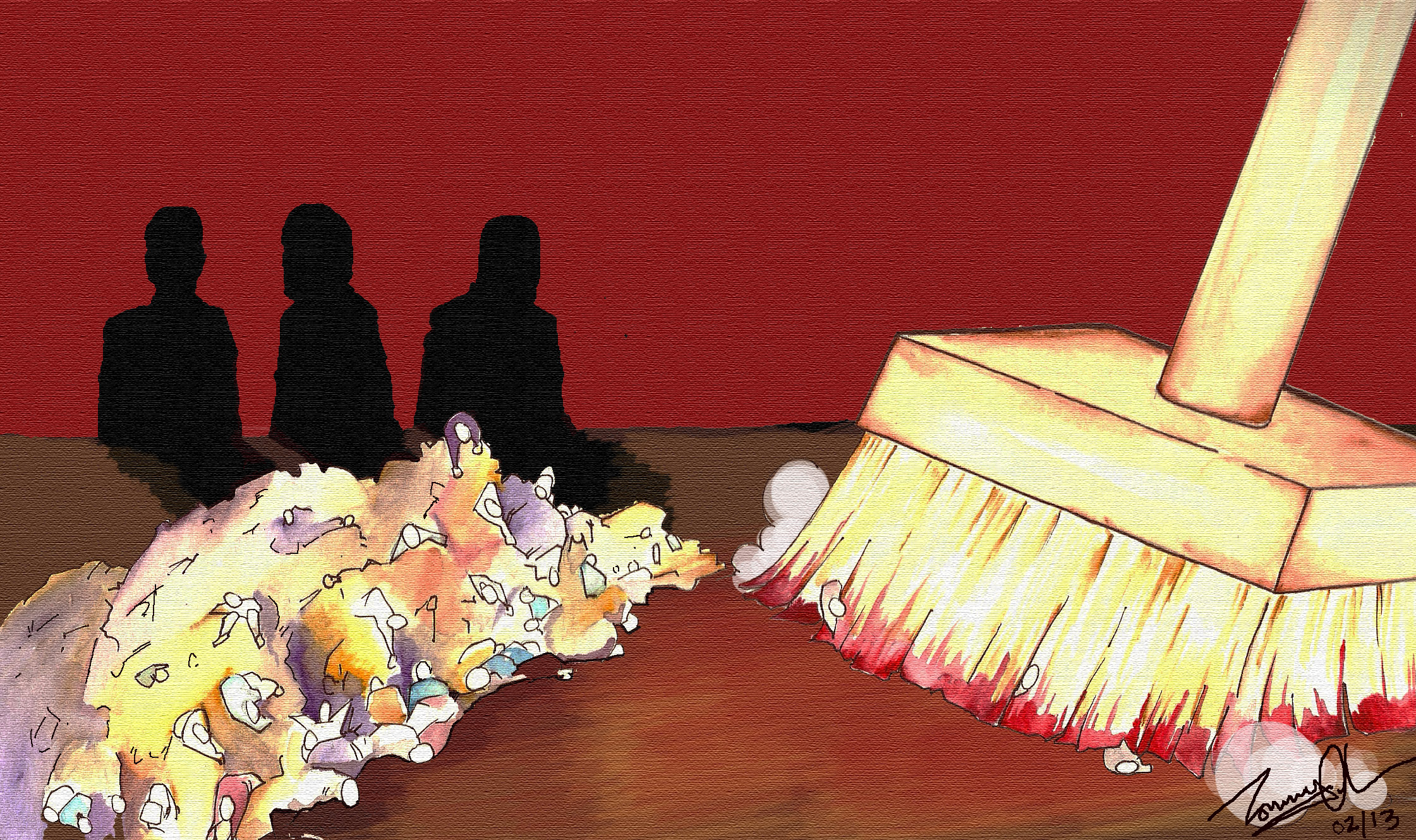
Have we just shoved 40,000 vulnerable old people under the carpet ?

southerncrosshadow (2)

Posted in Nursing Homes, Residential Care | Tagged | 2 Comments

“Dilnot Update 3”

This is a continuation of the previous blog entitled “DILNOT UPDATE 2” on the 6th March 2013.

The one key question that politicians of all parties will not face up to.   A “King has got no clothes” situation :-

WILL I HAVE TO SELL MY HOME  ?  

This is the Daily Mail’s total preoccupation with the “horror” of moving into residential care.

Headline after headline over the last three years has declaimed the gross unfairness of elderly people having to sell their own homes to pay for care, if they move into a residential home.     This idea has been so frequently repeated that it has become an accepted “no go area”, even by the Government.     No politician will stand up and suggest people should sell their homes to pay for care.

But why do people need to keep their house if they move into residential care?     Obviously if their spouse is still alive that is a different matter and is allowed for in the current system.  Otherwise there is no rational reason for hanging onto a house you can’t live in.    It is only the emotive argument that Mum or Dad’s legacy is being sold to pay for care, when others did not scrimp and save to buy their house and now get their care for free.

Failure to confront the reality of this situation is what holds back the release of billions of pounds that could begin to transform the lives of so many elderly people, who while they hang onto their house, cannot afford good quality care.

Yes, people worked hard all their lives to buy their houses, but it is house price inflation, more than hard work, that really added value to their houses.     The hard fact is that while they were paying off  their mortgages, people were not saving enough for their retirement.  Now, they need to think of their house as their retirement fund rather than hanging onto it to leave to their grown up children.

If they can do both they are lucky.    If not their first priority must be to look after themselves, which is what most children would want for them.

The “hang onto your house at all costs” message, so strongly advocated by the Daily Mail and often picked up by the voluntary sector, holds back homeowners from the reality of a better life.

My message is the opposite.    Cash in your house now and buy yourself a better life while you are still young enough to enjoy it.     Forget the idea that the State will look after you, it won’t.     All the evidence is that State funded care in both the NHS and the social care sector, is underfunded and poor quality.    It is only through homeowners looking after themselves by downsizing, that there is any chance of a significant amount of additional funds being available to improve the lives of older people.  Equity release is an alternative but it is prohibitively expensive.

The missing link, which Dilnot set out to solve but Government intervention in his report has sunk before it got started, is a viable and affordable long-term care insurance market.

The only sensible answer left is a new compulsory social care tax on everyone, to cover the cost of long-term care.

ManSmilew-BIGboard Cropped 127

Posted in ELDERLY UK POLICY | Tagged | 6 Comments

“Dilnot Update 2”

This is a continuation of the previous blog entitled “DILNOT UPDATE” on the 5th March 2013.

The devil is in the detail of the Government’s proposals on long-term care funding.   That must be why they need four years to work it out, which is why nothing will come into effect until 2017.

Here are some of the detailed questions:-

  • What counts as care?

First of all, it won’t be all care.    It won’t be care you want, it will be the care Social Services think you should have.    So the idea of “personalised care” has gone out of the window, before it even got established.    Domiciliary care, i.e. care in your own home, is unlikely to qualify except where it is cheaper than residential care and then only for “critical or substantial” cases.

  • Will it cover all residential care costs?

Almost certainly not, because the costs will be limited to the level defined by the local Social Services.    Many homes charge more than the basic level and you will have to pay the rest yourself.    So don’t expect a room with a view or a balcony if you can’t pay the higher charges.

  • What about accommodation costs?

In future you will have to pay these yourself, or presumably with housing benefit if you qualify.    That is around £12,000 a year, which in theory you are already paying in your current home.

  • So what will it cost?

The exclusion of accommodation costs presumably means that care costs will reduce.    If residential care currently costs around £40,000 a year, then minus £12,000 for accommodation, care should come down to £28,000 per year which means the £75,000 cap will require you to pay your own care costs for nearly three years.    If you add back the accommodation costs you have to pay yourself, then over three years will need around £111,000 – more if you stay in a better quality home.

If you’re still alive after three years in residential care,— which most people arn’t, —it’s only then that the Government will start to pay.    Unless of course your assets sink below £125,000, in which case a tapered level of state funding for care will be offered to you.

ManSmilew-BIGboard Cropped 126

…………TO BE CONTINUED

Posted in ELDERLY UK POLICY | Tagged | 2 Comments

“Dilnot Update”

It is now nearly three years since our politicians were so all consumed in finding a solution to funding long-term care.    This was in the run-up to the last general election.    (See all my earlier blogs on this subject by clicking on “DILNOT COMMISSION” in the TAG CLOUD).

Of course, politicians’ promises soon disappear after elections and sure enough the standard prevarication tool of a commission to look into the issue was set up.    The Dilnot Commission began its work in 2010 and reported its conclusions in July 2011 in its report which was called “Fairer Care Funding”.

Essentially they amounted to:-

  • A £35,000 cap on residential care costs;
  • Residents paying £10,000 per year for accommodation;
  • State funding increased to those with up to £100,000 of assets – albeit tapered.

Andrew Dilnot’s laudable aim was to open up an insurance market to cover the  first £35,000 cost of long-term care.    This left the Government to fund, what the insurance industry would not cover.    What the insurance industry calls the “catastrophic stop loss” – i.e. the costs when the £35,000 runs out.

This was a something for everyone solution that might just have worked, were it not for the new-found “time of austerity” and the rising numbers of elderly people with long-term conditions.   The Government’s problem was the £2.3 billion price tag.

So wait another year and the prospect of another election begins to beckon.    So the Government “modifies” the proposals:-

  • A raised £75,000 cap on residential care costs;
  • An uplift on accommodation costs to £12,500 per year;
  • Some state funding for those with less than £125,000 assets.

Oh and by the way!  ————- not implemented until 2017.

This is unlikely to open up an insurance market because the cost of cover will be too high.  For most people they will still end up paying their own costs at around £100,000 for the first two years.     What the revised proposal offers them is “stop-loss care insurance” beyond the first £75,000, which is a very small improvement on the current situation.

ManSmilew-BIGboard Cropped 125

………… TO BE CONTINUED

Posted in ELDERLY UK POLICY | Tagged | 4 Comments

“The More you Walk”

I have blogged about the merits of walking before and about the many excuses why I do not do it.  (Click on “WALK FOR LIFE” in the TAG CLOUD).

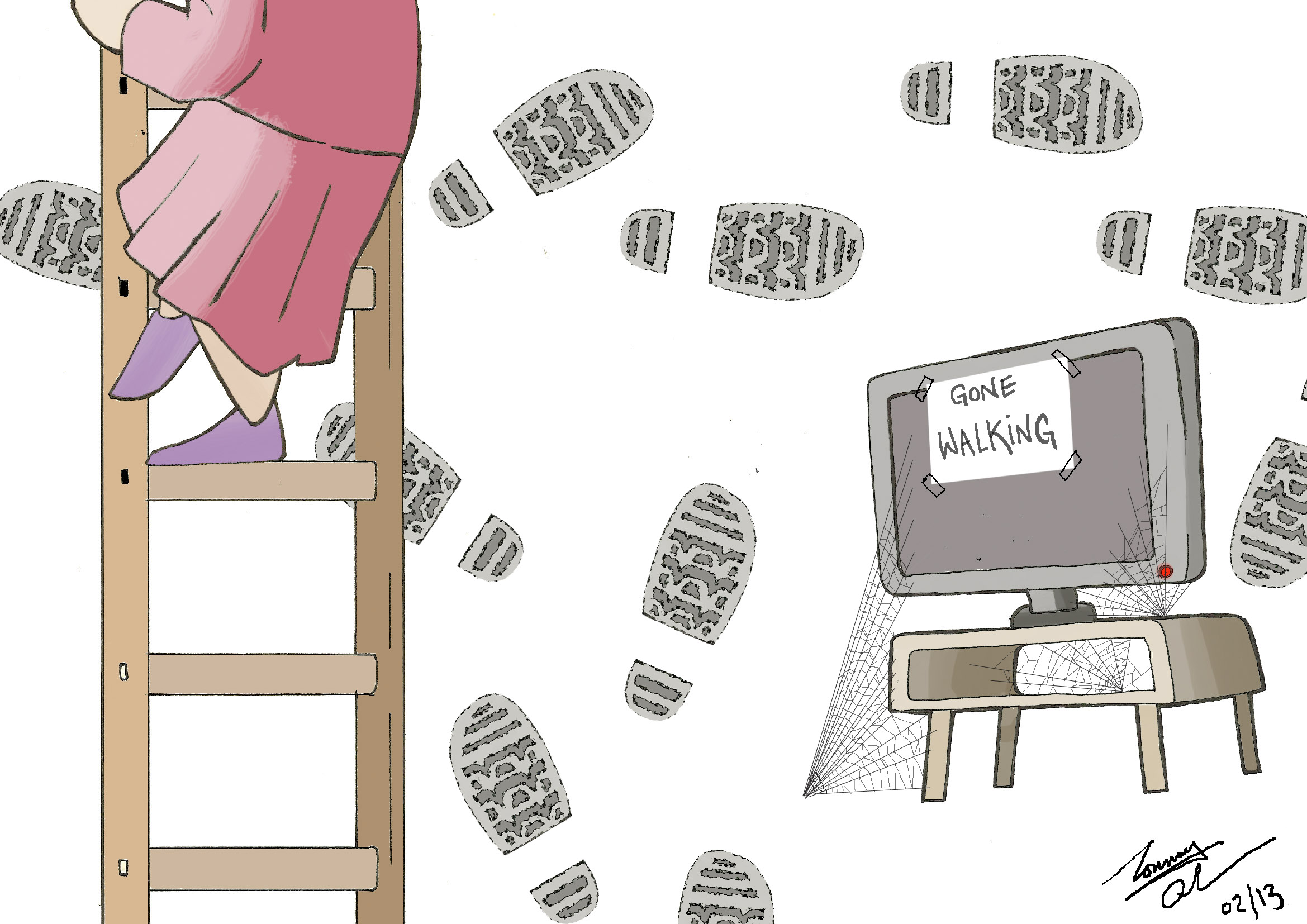
A brisk walk everyday is an easy step on the health ladder.   It costs nothing.   There are no gym membership fees.   No marathons to walk.   No preparations to make.   No expeditions to take.   Just 15 minutes a day and you extend your life by 1.8 years!

This is recent research by Harvard University no less.   They studied 600,000 people and broadly concluded that the more physical activity you do, the better you are.

This is hardly revolutionary.   It is just good common sense.   So why don’t so many of us follow this advice?   For most of my working life, I jumped in the car to go to work, sat down for the day at work, jumped back in the car to go home and then flopped in front of the TV for the evening.   That is a lifestyle so many of the people in the western world have adopted.   Activity and recreation is squeezed into the weekend.

Ladderhealth10V2

The good news is that in retirement it need not be like that.  We can all find 15 minutes for a walk.

SO, GET OFF THAT SOFA, TURN OFF THE T.V.,  GET OUT IN THE FRESH AIR  AND  WALK.

ManSmilew-BIGboard Cropped 121

Posted in HEALTH | Tagged | 4 Comments

“Hooked on Pills”

Most children seem to instinctively have an aversion to pills.   That’s why “a spoonful of sugar helps the medicine go down”.

However, by the time we get to our later life years, the number of pills we take can become a badge of honour, or at least a recognition that someone still cares about us.

(See my earlier blogs on pills by clicking on “PILLS” in the TAG CLOUD).

The pill industry is thriving, even in the midst of a recession.   Doctors, urged on by their patients, shovel pills down us like there is no tomorrow.   Chemists are open 24 hours a day, 7 days a week with shelves and shelves of pills and potions.

BUT    is this a step on a Health Ladder ?   or a slide down a slippery snake ?

Concerns are now being expressed, not before time, that patients are becoming addicted to pills.

  • 62 million prescriptions are issued for painkillers every year
  • 50 million are given out for sleeping tablets
  • 18 million tranquilizers are prescribed annually

Ladderhealth - hooked on pills

A study at Harvard University found that pensioners who had regularly taken pills for insomnia and anxiety were 50% more likely to develop dementia.

The new guidelines being given to GPs urge them to consider alternatives to drugs, such as counselling and physiotherapy.   This is pretty hollow advice if counselling and physiotherapy services for the elderly are almost non-existent in the NHS.

ManSmilew-BIGboard Cropped 124

Posted in Dementia, HEALTH | Tagged , | 4 Comments