Fruitful Research “3”

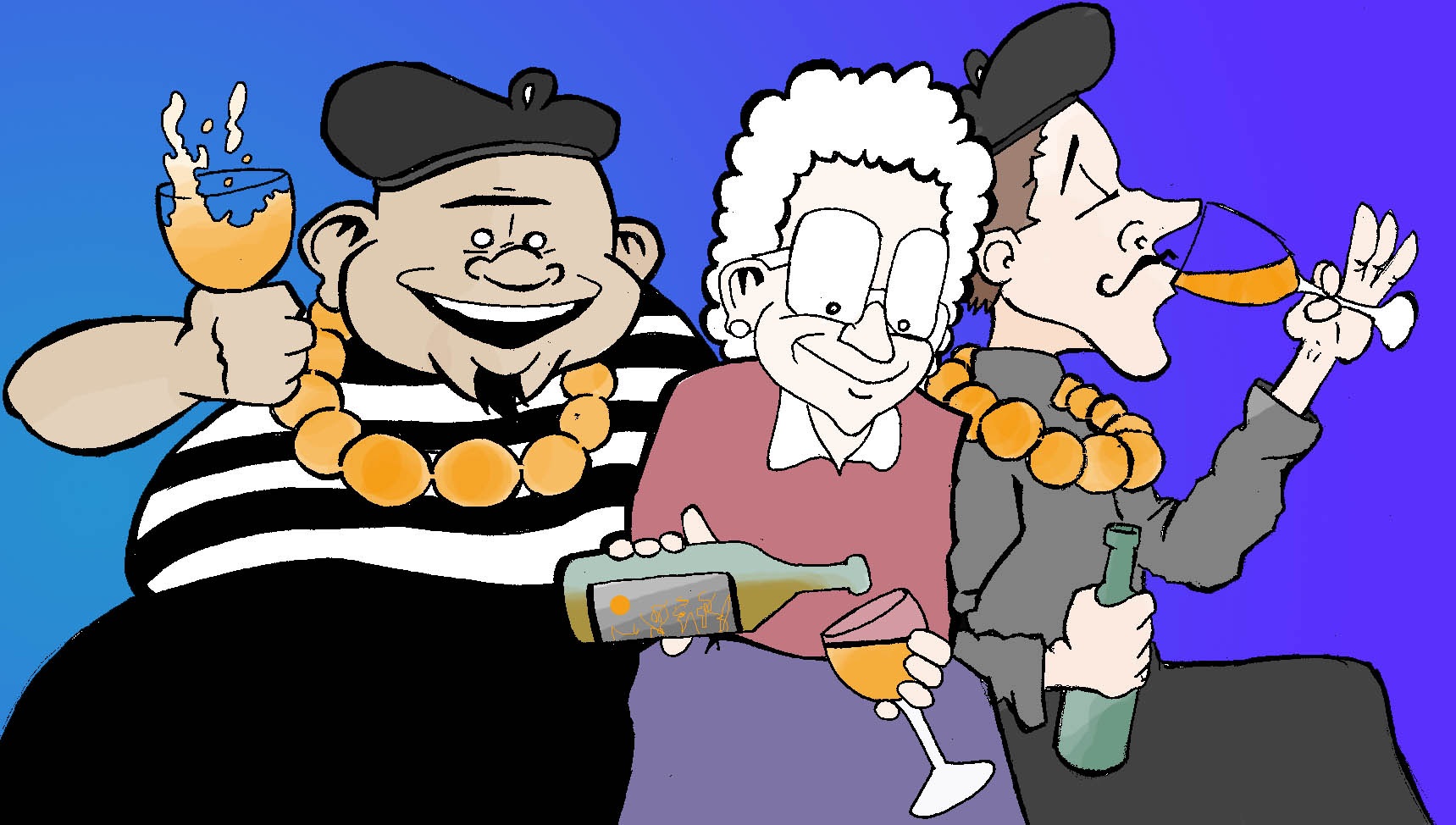
Whilst you’re drinking down your five glasses of beetroot/apple/grape juice a day to ward off dementia (see Fruitful Research “2” dated 23 January 2011) it might be an idea to add just 2 more glasses of orange juice!!

Research at the University of Auvergne in France with 24 overweight, middle-aged Frenchmen, found that after drinking orange juice for two weeks, their blood pressure reduced significantly.

High blood pressure affects one in five people in the UK, and is estimated to cause 50% of strokes and heart attacks.

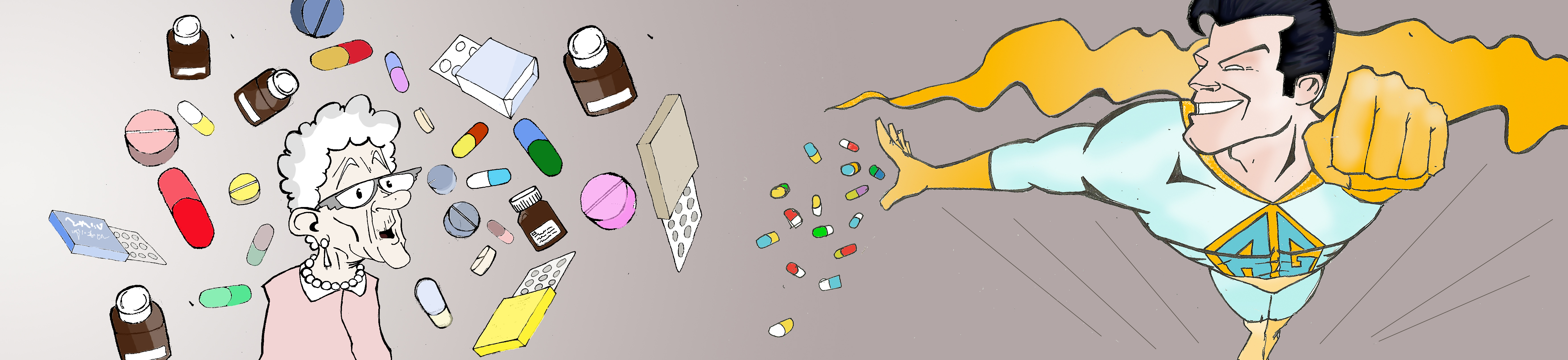
WARNING!  However, previous studies suggest some fruit juices can reduce the effectiveness of some drugs, so talk to your doctor before consuming too much juice.

I was just on my seventh glass today when I read that last sentence.  OOPS!

I wonder if they grow oranges in the Auvergne?

Posted in HEALTH, SMILES | Tagged , , | 2 Comments

Fruitful Research “2”

Dementia is increasingly talked about as the disease of the 21st Century, particularly in the ageing nations of Europe, America and Japan.  It is a subject which is attracting more and more research, both medical – searching for a cure and marketing – searching for a profit.  Mix the two together and you get a fruit cocktail with higher margins but less certain health benefits.

In the last month there has been much publicity given to research from the University of Cincinatti about the value of beetroot juice in preventing the onset of dementia because the Nitrates in it help boost blood supply to the brain.

There are also claims for apple juice which is supposed to improve memory because it contain Acetylcholine.

Not to be left out of this juicy mixture – purple grape juice also improves memory according to psychiatrists at the same university.

Finally, an earlier study of Cincinatti found that people who drink a pint of blueberry juice a day performed better in memory tests at the age of 70.

So don’t forget that’s:-

A glass of beetroot juice

2 glasses (1/2 litre) of apple juice

A glass of purple grape juice and

A whole litre of blueberry juice

EVERYDAY!

P.S. It might be an idea to move nearer to fruit farms (see “76th Birthday – Move to the Country” posted under “Smiles” on 28 May 2010) so you can pick your own.

P.P.S.  If you do decide to do that, don’t forget to also get some tomatoes.  Their juice is good for the sunburn (and wrinkles you will get while outside picking all that fruit).

Posted in Dementia, SMILES | Tagged , | 5 Comments

Houses Built on Sand – Residential Care Dilemma 2

In the residential care sector, elderly people have become a commodity. I talked about it in my earlier blog – Residential Care Dilemma dated 12 October 2010.  Southern Cross, the UK’s largest provider of residential care, is much talked about in the financial press, but sadly it is its survival that is being discussed. This is a new and in some ways more dangerous sub-prime mortgage crisis. The outcome could well have to be another huge state funded bail out – although nobody, least of all the Government, is talking about that yet.

The seeds of this potential destruction were sown in the 1980’s with the birth in the corporate sector in residential care. That in itself was not a bad thing. The sector needed vast investment to respond to meet the increasing needs of frail older people. The public sector had already priced itself out of the market and was starved of capital funds by the Government of the time.

The rapid growth of the more commercial corporate sector was seen as life saving at the time. They were building on a private sector cottage industry often with out of date buildings, poorly trained staff and a reputation for poor quality service. Corporate providers were seen as the strategic way of bringing in large scale investment and raising quality standards. Initially this worked. The biggest corporate providers TakeCare and Westminster Health Care focussed on newly built projects with single bedrooms and later en-suite facilities. This certainly succeeded in raising the bar of building standards but it did cost much more in capital investment. Some of the money came from traditional bank lending but as headlong growth was pursued, new more entrepreneurial investors entered the market with business start-up capital, venture capital and mezzanine finance. Each new avenue of money became more expensive to borrow but was underpinned by the seemingly endless growth in the market. In the 1980’s, elderly people could walk through the doors unchallenged and if they had no money the state would pay.

One day in 1993, the Government woke up and realised they were paying for all of this. From then on the game changed and Social Services were required to assess people before they moved in. Investors did not appreciate the subtlety of this change; they were interested in money not people and the money kept rolling in. The need for places had not diminished but Social Services’ purse had strings and gradually they were pulled more tightly. Fees were held down by a state monopoly purchaser while at the same time the Government continued to attempt to raise standards, expect higher staffing levels with more training and introduce the minimum wage.

Something had to give. Occupancy levels dropped, profit margins shrank. In the world of high finance, sale and leaseback and mergers and acquisitions became the new order of the day. Companies and company names changed hands as frequently as revellers on a merry-go-round change horses. The elderly are truly a commodity now.

The toothless regulators are way out of their financial depth, in this world of high finance. Even though financial viability is supposed to be one of their key measures of performance, they can only watch the unfolding drama. In theory they have the power to intervene on behalf of the thousands of vulnerable adults who are caught up in this crisis. But in practice they would have to propose an alternative solution and thinking creativity is not one of their core skills. Indeed their only significant act so far seems to be to block future admissions to 19 of Southern Cross’s homes. As necessary as this may have been, it is definitely not going to help matters. Southern Cross’s occupancy levels are already dangerously low at 85%.

So if thousands of elderly people are now to be sacrificed on the Southern Cross, what is the solution? One option being considered by some of the landlords, who now own their buildings, is to switch to another operator. But it all sounds like the thrashing around of drowning men. Particularly when you realise that many of the landlords are themselves already in administration. Not exactly the best people to resolve the situation you might think!

Still, the alternative is even more difficult to contemplate. Southern Cross could be left to go bankrupt. Surely this would never happen? Well, in the world of commodities, it does. Administrators would be appointed to start picking over the bones, but financiers won’t worry about the residents’ worries, they will just want to get their money back. What a pity old people aren’t just widgets, or perhaps they are in the world of high finance.

The eventual answer may be for the Government to step in, but they won’t act too soon for fear of having another banking bail out on their hands. It will not be a cheap option if they have to pay off the landlords so best let them go bust first. Then step in and like a white knight on his charger, the politicians can be seen to rescue the residents from a fate that Governments have had a significant hand in creating.

A second alternative more in line with Coalition Government thinking would be to close all the Local Authority old peoples’ homes which at £824 per week cost almost twice as much to run compared with the private and voluntary sector places. Many Local Authority homes are well past their sell by date in terms of building standards but a move into the private sector would be staunchly resisted by residents, staff and trade unions. It would nonetheless, if we accept old people as a commodity to be moved around at will, fit perfectly with the Government’s desire to reduce the size of the public sector, whilst at the same time increasing the occupancy in private sector homes. The public sector homes having to close to bail out the private sector might seem a particularly cruel injustice but it is the logical conclusion of an unspoken strategy that has been in existence for many years. It also addresses the longstanding and unfair disparity between the fees paid by Local Authorities for residential care places and the costs of their own homes. An even more innovative move would be to radically alter NHS provision and move many elderly patients out of acute hospitals and into nursing and residential care homes. This too would be very strongly resisted by the NHS unions. It would have potentially even greater financial savings since the cost of NHS beds are probably quadruple the cost of residential care beds, and many elderly people spend weeks in hospital waiting around for tests or waiting to be discharged – the time spent actually with clinicians is relatively brief. Without question the residential care sector would have to very significantly increase their rehabilitation skill levels to accommodate an influx of frailer residents, but this is very much in line with the move towards GP commissioned services. Sadly bold solutions like these will only come after a crisis and so it will probably mean that an organisation like Southern Cross will have to go to the wall before any action is taken.

Posted in Residential Care | Tagged , | 6 Comments

“Fruitful Research”

At last some welcome research from America which is very easy to agree with.  Scientists at the Department of Agriculture are suggesting that eating strawberries may help you protect your brain against ageing.  Apparently strawberries are high in polyphenols – maybe they are all the little seeds that stick in your teeth – either way they have anti-oxidant and anti-inflammatory properties.  Blueberries have similar properties.

The research must have been fun.  Cream teas everyday in future for me !

The researchers do go on to say that beetroot, aubergines and red cabbage are also good sources of anti-oxidants, but they don’t go down so well with cream teas.

Posted in HEALTH, SMILES | Tagged , , | 2 Comments

Always look on the Bright Side of Life

Positive mental attitude is a quality in people, employers always look for when recruiting new staff.  They frequently quote the phrase “attitude is one thing, it’s difficult to train for”.

Judging by some research recently carried out in America – Grannies and Grandads may well have something to teach us all.

The study was evidently done rather like a TV Generation Game with groups of old and young people competing against each other to see who could recollect the most things.  The researchers used brain scans – not Bruce Forsythe – to see who won.  The winners were the group who remembered more of the positive things they were shown – presumably on the conveyor belt.              The older groups won.

This is a conclusion that certainly challenges the image of grumbling old people.  Perhaps a more significant implication of this study is that companies should recruit or retain more older people on their staff to keep their talent pool of positive thinkers.

B & Q do it, I wonder who else does?  What are the implications of this at a time when retirement age is planned to be put back to 70?

Posted in SMILES | Tagged | 5 Comments

“Neglect Shames Britain 3”

The blaze of publicity in the Daily Mail about the Patients’ Association helpline appeal is beginning to die down.  So now let’s look at their longer term strategy for improving elderly care, which is to appoint independent matrons to hospitals all around the country.

Intuitively, I am uncomfortable with this approach, but I don’t have a better alternative so until I do, I will go along with trying any new idea, in what is a desperate situation.  My reservations are that as “independent” people, they maybe able to be critical friends but they won’t have the teeth to change things.  There are lots of good nurses and ward managers working inside in the NHS who are well aware of its deficiencies but seem powerless to change the system, so how will someone from outside reminding them of their shortcomings help.   It could work if it is done co-operatively and with the full support of a senior management team who genuinely want to improve their service to older people.  So perhaps it would be best to pilot the approach first with a few Health Authorities who are given the freedom by the Department of Health to step outside of the current systems and procedures.

The Health Secretary, Andrew Lansley, was quick – almost too quick – to support the Patients’ Association.  Cynically you might think he was just trying to jump on board the Daily Mail publicity band wagon or at least trying to contain an issue which might otherwise get out of control.  The problem is Mr Lansley, health care of older people is already out of control, and needs more than sticking plaster solutions.  What a happy coincidence that Mr Lansley was able to announce his intention to set up “health watch organisations all around the country to act as a voice for patients”.   In my own cynical way I would say they are very aptly named – designed to  make small ticking noises but not be loud enough to disturb anyone.  It sounds like a remake of Community Health Councils which were abolished by the last Government.

Mr Lansley goes on to say that he also intends to send senior matrons and nurses around hospitals to do spot checks on standards.  Forgive me but shouldn’t they already be doing that, it is a fundamental part of any manager’s job.  The Minister goes on to say he wants to see unannounced inspections and a national report to shed light on standards of care in hospitals.  Isn’t that what the Care Quality Commission is supposed to do?  Mr Lansley increasingly sounds like a guilty suspect who under the pressure of difficult questions will say anything, but one who has no intention of changing when he gets out of the spotlight.

It’s not long ago that the Labour Government introduced the concept of “modern matrons”.  These were to be the superwomen of a new millennium nurse-led health service supported by a degree qualified infantry of project 2000 nurses.  Sadly they seem to have crashed and burned in the headlong rush to achieve Government targets for discharging patients as quickly as possible; a sort of McDonalds fast health service.  It’s quick but not very satisfying or healthy in the longer term.

Perhaps we should look further back for an answer.  To the 1950’s and 60’s of ITV’s “The Royal”, where matron Wendy Craig ruled over her empire of cleanliness, starched -uniformed nurses and all knowing doctors.  Wendy would shred today’s nurses of paperwork and risk assessments and just walk the floor setting standard in her every word.  She would answer the information demands of management with their targets and e-mails by telling them to get off her ward and mind their own business.  In The Royal there were more nurses and carers and far less Administrators and Managers.  At what point did we conclude that more bureaucracy would improve health care? 

Harking back to the past, while offering some interesting insights, is unlikely to lead to a solution.   Nostalgia is only tinged with truth.   So I doubt that “independent matrons” on their own will be able to change very much.

Fundamentally the problem is that the health service is being overwhelmed by the rapidly increasing numbers of older people.  Particularly the older elderly with multiple health needs.  Advances in health care, whilst a blessing, compound the problem further by making new and often expensive treatments possible.  We can’t, nor should we want, to turn the clock back.  But we must recognise that our vastly improved health service capacity to keep people alive longer will only be a success story if we also extend the quality of life.

To do this we need a much more radical reform of the health care system for older people.  It needs a new vision, new resources and thinking way outside the box.  That’s what I will write about next.


Posted in ELDERLY UK POLICY | Tagged , | 3 Comments

“Neglect Shames Britain 2”

Two days after the Patients’ Association and Daily Mail campaign to improve NHS care of the elderly started, it continues to attract attention.  Thanks to the information provided through the Patients’ Association helpline and the continued excellent coverage in the Daily Mail.  No reports yet on how the appeal to raise £100,000 to expand the helpline service but the Daily Mail donation of £50,000 got it off to a great start.  So far so good, but:-

How can the helpline help?

The £100,000 will only fund an additional 2 or 3 full time workers, which will only help process a few more complaints.  Surely, raising an army of volunteers to man the helpline might be a better option, and this would allow the money to be used to promote awareness of the Patients’ Association helpline service in every NHS hospital.

But you still have to ask – will it tell you any more than you already know?

And – how can it reach beyond the tip of the iceberg and reveal the full scale of the problem?

What it can do is help build up a fuller picture, but the media is hungry for new news, more of the same won’t do.  Both the press and their readers can be notoriously fickle friends.  They need constantly feeding with new stories and most of all new angles.  So that’s the challenge for the helpline story.

So what are the angles:-

The first and most obvious angle that people pursue is to seek to blame someone for their wrongdoing.  Whilst this is a natural response, it is the least likely to lead to long term change.  Pursuit of blame leads to defensiveness, concealment and often obstruction.  If there is an outcome at all, it will probably be a grudging apology.  If there is a compensation payment, it will usually be without admission of guilt and with a required vow of silence.  Neither of these leave the complainant really satisfied. 

A second more challenging approach is to cry “Health and Safety.  For issues like serious falls and unexplained deaths, this may well bring down the might of the Health and Safety Inspectorate, but it takes an interminable amount of investigation and time; as a result few individuals decide to take this route.  Maybe more should since the fines for a conviction are considerable. 

Another angle is to look at health outcomes, which should be the most obvious and constructive way of learning from bad experience. 

 Is the patient cured or at least healthier when they are discharged? 

 Are they now incontinent? 

Have they acquired an infection like MRSA or C.Difficile?

 Are they able to go back home or move into a higher level of care? 

Do they quickly return to hospital through the revolving door?

Sadly, the NHS does not feel like a learning organisation.  The systems are too heavily geared to maintaining the status quo, and the staf are too busy getting on with the next mistake.  If the Care Quality Commission, with its newly established powers become involved, the most likely outcome is a blizzard of paper and audit reports.  This only focuses the staff on avoiding blame in future and takes them even further away from the patient.

Gather figures from the helpline and you will build hard evidence of the effectiveness of hospital treatment.  Clearly the people who complain don’t think they or their relative are getting good care, but the scale of the problem is where the news story is.

The last angle, and the only one that will ultimately make the Government listen is MONEY (and then only if it is a money saving measure).  So gather evidence from the helpline cases and extrapolate them to achieve a broad health-economic picture of just how much could be saved by providing better health care e.g.:-

Reduce Waste – unnecessary

treatment /unesscessary    tests/ unused food /high absence levels

Eliminate Infection – which extend stays due to hospital acquired MRSA / C.Difficile

Outcomes – The higher cost of care post discharge / revolving     door re-admissions

 Waste money will grab attention – don’t you think?

Drip feed these stories into the Daily Mail publicity machine.  Continually raise awareness of the justifiable fear older people now have that they are no longer safe in the hands of the NHS.

Then the answer is:-

“Yes the helpline can help”

Donate to the Patients’ Association helpline appeal

www.patients-association.com

Posted in ELDERLY UK POLICY | Tagged , , | 1 Comment

“Pilly Galore”

A follow up to “Pills for Everything” dated 7th September 2010.

This is the story of Pilly Galore and her GP, Astroglaxo.  Pilly is 85 now and each new year brings more ailments. She lives alone and rarely goes out, except to the local shop once a week.  Her only other regular trip out is to see her doctor, who she calls “Astroglaxo” after her favourite drug company.  Pilly has had the same GP for 30 years. Although there are lots of new doctors in the surgery now, Pilly says “they are all too young and only training”.  She always insists on seeing “Astro” (they are on first name terms) because “he can cure everything”.  Equally Astro has a soft spot for Pilly and so never sends her away empty handed.  Their brief conversations always end with Astro confidently saying “take one of these a day Pilly and you will soon be better”.  Pilly leaves reassured until the next ailment comes along.

That’s the psychology of quick fix consultation today.  GPs are expected by their masters – the Department of Health, to come up with instant cures like a McDonald’s fast-pill-take-away-service. Equally their patients feel cheated if they don’t come away with a prescription for something.  Luckily for Pilly she does not have to keep going back because she can just phone up Astro’s assistant Pharmacuti and get a repeat prescription with the new McDonald’s express home delivery service. Thanks to Astro, Pilly has always got lots of pills in the bathroom cupboard.

Every year millions of people are given unnecessary or inappropriate drugs

• It is estimated £400m of drugs are wasted every year

• Multiple prescription drugs often have side effects in the older people

• Up to 30% of all hospital admissions in the elderly are caused by inappropriate prescribing – British Geriatric Society.


Posted in HEALTH | Tagged | 2 Comments

“Neglect Shames Britain”

I have often criticised the “Daily Mail” for it’s over sensational headlines, particularly those that raise unnecessary fears for older people.  The title of this blog is their front page headline of the 2nd December and for that they deserve CONGRATULATIONS!  More so because it was followed up the next day with a double page spread and a £50,000 donation to the Patients’ Association.  Then on 4th December yet another double page spread (albeit by now relegated to pages 20 and 21), this time with politicians and celebrities jumping on board – from Andrew Lansley, the Minister of Health and Stephen Dorrell, a former Health Secretary to Jack Charlton, Ulrika Jonsson, Carol Vorderman, Duncan Bannatyne, Ann Widdecombe, Simon Cowell, Esther Rantzen (obviously none of them just wanting to step in the limelight of publicity).

The touch-paper of this “campaign” was lit by a report from the Patients’ Association which focussed on the significant increase in complaints about the care of older people in the NHS.  This is far from a new issue, but it is one that has fallen on deaf ears so many times in the past.  Let’s hope the legacy of Claire Raynor, who was until recently, President of the Patients’ Association, will put wind under the wings of this initiative. 

They are a very small organisation who deserve the highest praise for managing to raise the profile of this issue on behalf of thousands of older people, past and present.  The challenge for them now is can they keep up the momentum, and are they able to resource themselves, both financially and strategically to promote a major change in health care.

If we go back to the source of this issue, it is a rise in complaints about elderly patient care to over 5,000 a year.  A number which has doubled since 2008, and will almost certainly be on the tip of an iceberg of real concern by residents and their relatives.  Many patients are reluctant to complain, either for fear of stimulating a negative reaction or because they have no confidence anything will change.

The NHS management and the medical professions are renowned for their defensiveness when criticised.  Yet many of the complaints highlighted in the report are indefensible:-

  • Failing to feed people
  • Failing to give them a drink
  • Failing to provide personal care
  • Failing to give relief from pain
  • Not providing dignity or respect

All these things are at the lowest level of meeting Maslow’s hierarchy of needs, are the very basics of good nursing care.  They are neither expensive nor technologically difficult to provide, so why are they so frequently not available?

Step out of the NHS box for a minute and imagine we were talking about DOGS.  Dogs that were not fed or given water; dogs that were never groomed or washed; dogs that were left sitting in their own urine and faeces; dogs knowingly left in pain.  There would quite rightly be uproar.  Neighbours would report owners to the RSPCA.  The RSPCA would step in and take over care of the dogs.  The dogs’ health care would promptly be attended to.  Prosecution of the previous carers may well follow.  Widespread neglect would attract the attention of animal rights campaigners and the general public would be fully behind them.

Perhaps the key difference is that pet care is provided by owners and animal support organisations, either voluntarily or through charitable donations.  There is little Government support or intervention in support for pets.

You have to ask if the malaise which affects the lack of care of the elderly rather than blaming the medical carers on the wards, really starts at the top with the Government.  Successive Governments have consistently under-funded elderly care while simultaneously increasing the burden of legislation that bears down on the care sector.  I will write more about this later.

In the meantime, let’s wish well and God speed to this Patients Association report and Daily Mail campaign.  Is £100,000 anything like enough – shouldn’t it be at least £1m?  And will independent matrons really be able to turn around an elderly, careless NHS culture?

More later, what do you think?

Posted in ELDERLY UK POLICY | Tagged , , , | 3 Comments

“No Gumption 2”

On the 11 June 2010 I wrote a post about the problem of chewing gum on the pavements of Westminster City Council.

Looks like this problem is going to increase.  Kraft have opened a new gum research centre in Switzerland to cash in on the growing chewing gum market by developing new flavours.  Apparently the market is worth $23,000,000 annually.

How about inventing a flavour that appeals to dogs like Boneo gum, Winelot gum or Pedigree gum.  That way there’s a good chance that everybody walking their dogs will be hoovering up the mess on the pavement at the same time.

Otherwise we are all destined to be stuck with the problem for a long time.


Posted in SMILES | 2 Comments