Bewitched, bothered and bewildered

When I was first thinking about writing this blog in late 2009, there were relatively few issues in the news about the elderly.  Then as the 2010 General Election loomed, all the political parties started very belatedly to discuss how the cost of elderly care could be funded.

None of the hastily cobbled together policies (discussed in my blog “Tangled Link Web” dated 11 April 2010) were robust enough to last and the inevitable political fudge after the election was to pass the problem to a Commission who are due to report in 2011.

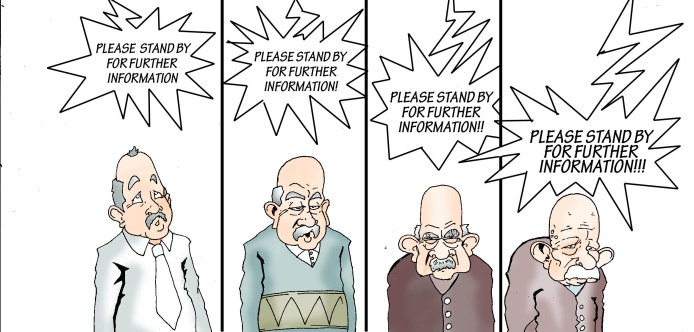
Meanwhile, Bewitched by the avalanche of baby boomers rapidly approaching retirement age, suddenly the media is full of stories related to the ageing population.  It is certainly time that the issues were discussed but the number of new policies now being hurried into legislation seems to be a piece meal response to individual pressures rather than an holistic and strategic perspective of our ageing society.

It is understandable that the Government is Bothered about the credit crunch and inevitable that the elderly will have to contribute towards resolving the problem.

On the edges of the debate, proposals have already begun to emerge.  Free bus passes, free TV licenses and winter fuel allowances have been floated as possible options for cutting or at least reducing in value and eligibility.  The biggest issue which will affect the upcoming baby boomers who are nearing retirement, is the decision about retirement age.  This is like a receding hairline – 60 is becoming 65, then 66 moving up to 70 and now even 72 is being suggested.

Most Bewildering of all is the slowly emerging issue of “personalisation” which was intended to be a step in the direction of improved and individualised care.  As the implementation date now approaches, it looks more and more like a financial cut in support for those in greatest need.

Maybe I have got it all wrong, perhaps a clear vision of a positive future for older people will emerge out of this long overdue debate.  Right now I am sure I am in the company of thousands of other older people who are perplexed by all the proposals when they desperately need to be reassured and inspired.  A longer life should be seen as a blessing to be welcomed, not an unbearable burden.

Posted in ELDERLY UK POLICY | Tagged | 4 Comments

Tangled Web

“Oh what a tangled web we weave, when first we practise to deceive”

This quotation from Sir Walter Scott, sums up well the outcome of the political debate in the run up to the 2010 election, on funding of elderly care in future.  The “web” is made up of significantly different proposals from each political party, varying in cost from £20,000 to £8,000, to 50% of something.  The “tangle” is because the proposals are all based on different timescales and cover different services.  The “deception” is that none of them are properly costed nor do they take full account of the huge future growth of the older and frailer elderly population.

Let’s look at what we can agree on:-

We are in the worst economic situation for nearly a century – overburdened with National debt.

We have a failing social care system – in terms of quality and cost.

The NHS is already struggling with health care under the pressure from increasing numbers of older people.

There is an approaching, demographic wave which will double the number of older frailer people.  Nobody disputes these issues but an election is no time to face up to the truth!

All politicians want to offer something for nothing.  Free or part free social care is the latest carrot being dangled in front of the electorate.

Relatives do not want or are simply unable to cope with looking after mum or dad – but would like a legacy when their parents die (most older people would agree with that).

There is more than enough money locked up in unearned assets of un-mortgaged property.  Now is the time to cash in these life savings for a positive new life in later life.

We need honesty to confirm that the state can’t afford to pay for a universal benefit for all.  Innovative new options are needed for older people to secure their own future.

So, what are the party political proposals:-

Labour is offering a one-off £20,000 lump sum which only pays for the care element of residential care costs and is paid as a legacy hence the name “Death Tax”.  The positive thing about this is the deferred payment which is relatively easy to accept – presumably it becomes a first charge on your estate.  This is just like accepting a higher level of inheritance tax, which would be especially attractive to the wealthy who are liable to IHT.  For people on the margins of IHT or with wealth below £325,000, they might be inclined to dispose of their money to avoid having to pay.  No doubt there would be a whole bureaucracy (like the Court of Protection) set up to control early disposal of assets.  The £20,000 price tag seems reasonable value – although it would have to be compulsory for all, to keep the figure that low.  This universality fits with the original ethos of the NHS and presumably means that even people with pre-existing health conditions would receive the offer when they reach pensionable age.  That is a very good deal for wealthier disabled and chronically ill people who currently have to pay for themselves.

The big downside of this approach is that it only covers costs after an initial two year period in residential/nursing care and thereafter it only pays half the cost.  It also does not cover housing and hotel services, which makes up 50% of the costs of social care.

So effectively this is a co-payment scheme which explains why it is so cheap at £20,000 when compared to the current lifetime care insurance market.  In that sense it is quite clever really, so it is a pity it was pilloried so much by the Conservatives.

So let’s look at their idea:-

The Conservative proposal is for a voluntary insurance scheme which covers all costs including housing.  Set a £8,000 it sounds too good to be true.  Certainly if you think that it costs £30,000 plus per annum for an average stay of 2 years for the 1 in 20 people who eventually need residential care it is a very reasonable bet.  Even more so if you end up staying in care for longer, perhaps with dementia or some other chronic illness.  Presumably if you have a pre-existing condition at retirement, the offer would not be open to you.

If the scheme is voluntary how do you avoid self-selection where only those whose health condition suggests they need care, take it up?  If this were to happen the cost to the Government would be much higher.  Also, who decides when your entitlement to care begins – Social Services already have to ration care now based on budget limitations.  So presumably you would have to be in “critical and substantial need” to qualify for financial support.

On the face of it this looks like an offer you can’t refuse – a steal – it is a fraction of what the insurance industry now charges for critical illness insurance.  That is why it might work.  The take-up could be quite good albeit, it would have to be entered into when you first retired and didn’t need care, and then only after a medical to prove it.  Disabled and chronically ill need not apply you’re already part of “broken Britain”.

Summary

Ironically the Labour and Conservative proposals both have merits and could work well together; a cheap £8,000 voluntary offer now or a £20,000 compulsory charge when you die.

There is another option not being considered in the current debate:-

Keep the status quo – which by default has already been decided by the Labour Government by passing the issue to a Commission to decide during the next Parliament.  But why will the final decision by any easier in the run up to the next election.  It’s never going to be easy and it is hard to imagine political consensus holding for very long on such a big issue.  Strong leadership is what is needed along with straight talking and the widespread agreement of elderly people.

The status quo issue leaves people with over £23,000 in the bank, having to fend for themselves, and ultimately paying for care out of the sale of their home if they have no more financial resources.  It’s a gamble as to whether this is a better option for individuals than the ones currently being proposed.  The odds are 20 to 1 in favour of you never having to go into residential care.

Given that most people block out of their minds that they will ever get ill until it happens and that the current state funded nursing and residential homes are not a choice people would willingly take, the Government staying out of the way may be most peoples’ preferred option.

The status quo is however not acceptable for those people with very limited resources (less than £23,000).  They have no alternative but to rely on social service support which is often poor quality and only available as a last resort.  To make matters worse, the number of over 80s are going to increase dramatically by 2020 and the pressure on all care services will increase exponentially.  So the Government has to do something for the group with least resources which will exacerbate the feeling that those who haven’t saved all their lives are still getting everything for nothing.  This widely held but often hidden resentment can only grow and lead to the conclusion that there is no point in saving for your retirement.

Concluding Remarks:-

Clearing the Cobwebs Away

The White Paper on social care was launched by Andy Burnham, 30 March 2010 and heralded as a new way forward for social care.  Well, it’s the start of a long journey to reach consensus on a clear direction and a properly funded strategy.  There will be many options to be evaluated, much consultation still to be done and no doubt many hopelessly optimistic bubbles to be burst along the way.  There is not even an agreement yet on the ultimate destination we need to get to, or by when, nor is there any real understanding of the overall cost.  Except that like the Millennium Dome, the Olympics and the Afghan War, the end up cost will be many, many times more that which was envisaged at the start of the first proposal.  Further more, the cost of delay and prevarication will be counted in lives lost, uncared for, and unfulfilled, while we wait for the course to be charted and the resources to be mustered. 

Yet the reality is that the resources are already in place, and the talent of our older generation only needs to be unleashed.  The key to open this treasure chest is honesty.  The nest egg that the baby boomer generation have effortlessly been saving all their lives is the equity they have gratuitlessly accumulated in property ownership.  The inflated value of their homes is their salvation but it’s not a message they want to hear.  They had hoped the “gravy train” of free education, free health care and endless affordable consumption would go on forever.  Now it would only be honest to tell them that free health care for life was a mirage and there is a price to pay in the end.  The good news for elderly home owners, is that that nest egg can now be cashed in to secure a better future in later life.  Sadly that means their children (who with increased longevity are not children at all) will have to make their own way in life OR grannies and grandads can come and live with them!

So with that said.  Honesty now out on the table.  Let’s get on and start planning to help ourselves.  The state certainly doesn’t have the money, and would not spend it well if they did.  Universal health care is just another way of the Government gathering in our money and deciding our future for us.  The best form of personalised budget is for the state to get out of the way and leave us to determine our own lives.  There is a role for the state in helping those who don’t have resources and the ones in greatest need, but in our property owning democracy that is now the minority.  It’s a significant minority nonetheless, which is all the more reason for the Government to concentrate its efforts on helping them rather than imagining it can please all the people all of the time.

A Commission after the election may well be the opportunity needed for calm and reasoned discussion on the issues and ideas that have been raised.  It will give time for the demographic and economic facts and their implications to be more clearly explained to the older generation and their siblings.

There does need to be a new dawn of reality.  The Commission should be charged with providing a new and positive vision of later life.  The options can be so much better for older people than the ones presently available.

The leadership needs to come from elderly people themselves using all their talents and resources to take charge of their own futures.

Maybe this “grumble-smiles” blog can be a platform for ideas and discussion on the way forward.  There won’t be one way for all, more likely there will be thousands of small steps which collectively will lead to a new life in old age.

So what is the direction and what are some of the first steps:-

Start with economic honesty and forget a universal system.  Expect the majority of homeowners to help themselves.

Encourage them to do this by promoting a big expansion of free well-being and preventative health service in the community.

Re-establish day centres/social clubs accessed by free transport.  Make living in the community an easier and preferable option for most people.

Make equity re-lease a respectable option (regulate it) (reverse mortgages) stair-case down to rent.

Promote attractive housing and care options that entice older people to trade down and release equity through selling large under-occupied houses.

Make community living an attractive alternative to isolation and living on your own.

Fund projects that promote volunteering to keep elderly better occupied and helping each other.

Enable people to work part time, tax free, rather than forcing everyone to carry on working by pushing pension age back to 70.

Have you got more ideas to pass onto the Commission ?

Posted in ELDERLY UK POLICY | Tagged | 2 Comments

Silence is Golden

I am waking up in London at the Dorchester Hotel in the lap of luxury.

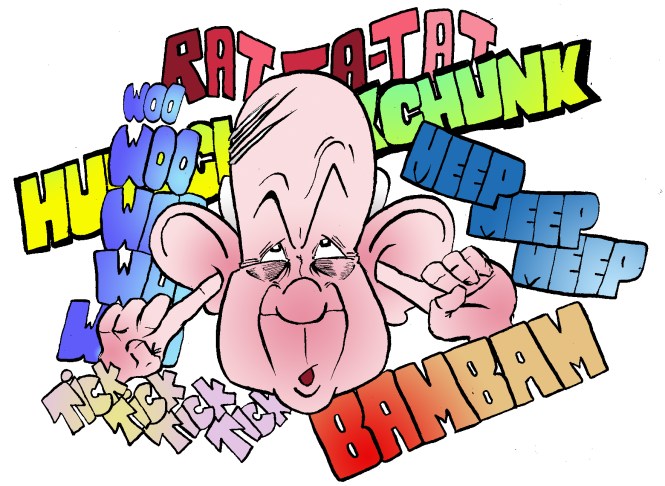
In the middle of the City with Hyde Park on one side and Berkley Square a few streets in the other direction. According to the song nightingales used to sing there – not now I suspect.  The tranquility doesn’t last for long, the silence is broken by a new age dawn chorus, as a delivery lorry reverses with an insistent BEEP, BEEP, BEEP, BEEP, BEEP,  endlessly saving lives no doubt – thanks to our all embracing health and safety culture.  Society has decreed there will be no more accidents, just willful neglect and no-win-no-fee lawyers pursuing compensation cases.

Meanwhile, this BEEP, BEEP, BEEP echoes through the city streets rudely waking up many more slumbering people who were safely tucked up in their beds and in no danger from the out of sight but not out of mind incessantly reversing lorry.

Next to join the cacophony is the WEE-OOH, WEE-OOH, WEE-OOH of an approaching police car, or is it an ambulance racing its way to some distant emergency or false alarm.  Awakening swathes of sleepers from the peace and quiet of the night to remind them of the crime and accidents outside waiting for them.

Now I know why even in these extravagant and opulent surroundings I could not live in a city.  A far cry from the birdsong of my country home.

What is the real cost of the peace and tranquility of all our lives being invaded in this way ?

Posted in GRUMBLES | Tagged | 1 Comment

How did we become such a burden!

(Unraveling the demographic and economic clash.)

Everyone agrees there are a lot more older people around these days because they are all living longer.  Trouble is they are also a lot frailer which is why they are costing so much more to look after.  How did this creep up on us?  Like a Tsunami you don’t know its coming until  – one day BAM!

But hold on – demographic changes don’t happen suddenly, they are born over decades, centuries even.

The Victorians have a lot to answer for; they sowed the first seeds of today’s longevity – out of the era of dark satanic mills when people worked themselves into an early grave.  Additionally in the 19th Century major epidemics like cholera and typhoid played a significant part in killing off large numbers of the population, especially children.  From this hell hole of early death came major social reforms in employment and very big improvements in sanitation and public health.

However before these things could really make a difference the First World War intervened and culled a generation of young men.  Out of the carnage of the trenches, advances in medical care were born and in the post war period infant mortality also reduced.  Longevity was on the increase but would take many more years to be noticed.  The second world war obscured this understanding but in its aftermath it created an urgent enthusiasm for social reform to deal with the inequalities of the past, from which there was no turning back.

Beverages welfare reforms created expectations of universal rights for the home-coming heroes and their families to survive and thrive.  Then Nye Bevan set out to erase the inequalities of the health care system by founding the NHS – a safety net free for all.

This raised everyone’s eyes to the prospect of a longer, healthier and wealthier life.  The untimely deaths of the Victorian era were banished to history and the dire poverty of the interwar depression were forgotten.

Today’s generation of grannies and granddads have memories of that period they prefer to forget but a dangerous seed was sown in the minds of the baby boomers born after the second world war.  A something for nothing mentality in a new generation of all hope and expectation but little sense of history.  Indeed, they were not taught modern history, rather they learned about Britain’s great past – the all conquering, all consuming British empire.  A rose-tinted view of global domination and exploitation, at a time of 1851 – innovation and cultural enlightenment.  The more relevant recent past of the 20th century where there were important lessons to be learned, was too tragic and raw to discuss, so we left it out!

So now our young people live life in the fast paced space age generation leaving behind the baby boomers to enter retirement and boldly go where no man (or woman) has gone before.  In an era of longer lives, huge expectations and few resources to cover the cost of old age, we are left with the question

“How did we all get to be so old and so frail so suddenly”

Posted in ELDERLY UK POLICY | Tagged | 1 Comment

Happiness and Healthiness are Linked!

What a surprise!  More money being spent to prove something that Grannies’ common sense could tell you for nothing.

Yet another research study in America, at the University of Kentucky – this time by sticking needles into students – not old people thank goodness.  The results suggest that staying positive helps boost the immune system and keeps you healthy.  The study took a year to establish that more optimistic people had stronger immune systems and could therefore be less susceptible to viral infections.

Blindingly obvious and common sense the results may be, nonetheless, they are important. So often our social policies lead older people into unhappy lifestyles and then we wonder why so many suffer them so much ill health.

We surround the elderly with negative images of growing old, retire them to a life of inactivity and daytime TV.  Constantly tell them they are a burden on society.  Hardly surprising then that so many older people succumb to this pessimistic outlook on life and present themselves at their GP’s surgery, or worse still, end up occupying one of the almost two thirds of all hospital beds that are taken up by older people.

The implication of this little research exercise could be far reaching if taken seriously and acted upon in the development of future social policy for older people.

Reduction in GP visits would save £000’s in the drugs prescribed just to make you feel better.

Reduction in hospital stays might follow if you had something to look forward to when you get out.  This could save £000,000’s.

Encourage older people to continue working part-time.  Their more positive outlook on life will help their employer and improve the older person’s health.

A small amount of money invested in promoting positive approaches to ageing could lead of massive dividends in terms of healthier lifestyles for older people.  This would also free up hospital beds and hours of GP time with significant financial saving to the NHS.

Can it be that simple ?

Granny used to think so.

Posted in HEALTH | Tagged | 1 Comment

Lucy died today

I assisted Lucy to die today.  Although she could not tell me her wishes at the end, I thought I had to be cruel to be kind.  She had been a valued member of our family for 20 years, and wonderfully affectionate for so long.  In the last nine months of her long life, she had become very arthritic and her mobility was limited to staying around the house.  She hid away and slept most of the time, lost her appetite and didn’t look after her appearance they way she used to.  Her status as the grand old lady of the house created some jealousy among the other residents.  It brings a lump to my throat as I write this but today she seemed to have a minor stroke and we found her walking around in circles looking lost and confused. Out of kindness we had her put down.  It was quick and I stayed with her until the end.  Now she is home again and buried in the garden she loved.

Twenty years is a long life for a cat, but how much more complicated this chapter of her life would have been if she were human.

The same day I read an article in the Times about Debbie Purdy, the lady with Multiple Sclerosis who wants to know that her husband would be free from prosecution if he helped end her life, at some point in the future when she was too frail to do it by herself.

As a sufferer from MS, I found it difficult to read about Debbie’s case, it was easier not to think about it than to confront the issue head on.  Debbie must have thought that too, especially when so many people found it easy to pronounce on the matter with great self-righteousness.  Life looks simpler from the lofty pedestal of good health.

Debbie and her husband are young enough not to have raised their heads above this parapet of taboo’s about assisted suicide.  So what a brave decision it was to talk about an issue which usually only has meaning when its too late to talk.  Yet really the only time to confront it is when it must be painful in your heart to do it.  That’s real bravery.

The parallel with Lucy is not a trivial one.  It had crossed our minds months ago to have her ‘put to sleep” but we hung on to her life because she was precious to us and because deciding to end her life was not easy.  She could not tell us her wishes nor could she choose when to die.  When the decision was made there was no-one to judge us but ourselves and no-one questioning our right to do it.  “Being cruel to be kind” were the only words of condolence.

If we can be kind to cats shouldn’t we, with appropriate safeguards, be able to extend this kindness to humans.  As medical advances allow us to prolong life, isn’t it time we had a much more open discussion about living wills ?

God Bless you Lucy and thank you Debbie for the courage to think ahead.

Posted in ELDERLY UK POLICY | 1 Comment

Lest we forget

Dementia is an illness which through its actions society most wants to forget.  The forgotten army are the hundreds of thousands of carers, usually spouses or devoted daughters desperately holding on to a loved-one who is slowly disappearing before their eyes.  They receive little help or understanding and indeed may well disguise what is happening for fear of embarrassing their husband, wife, mother or father.  Until the burden becomes too great or their own health suffers and they are no longer able to cope.

The scale of this unfolding tragedy is seldom spoken about because the reality of the numbers is overwhelming and society’s response is so inadequate.  There is no cure and few therapies are available.  Nonetheless, this is all the more reason to encourage an open discussion and to seek more research into both a cure and more positive treatment.

A study by Oxford University at least provides some of the facts:-

35 million people worldwide have been diagonosed with dementia.

822,000 people in Britain are believed to have dementia.

60% of British sufferers have Alzheimer’s Disease.

Only 31% are being treated by the NHS.

37% are in long term care.

14% of women aged 80-84 have dementia

36% of women aged 95-99 have dementia

Two thirds of sufferers are not receiving any treatment for the disease from the Health Service.

THESE FIGURES ARE ASTOUNDING !

Let’s look at the estimated costs:-

£27,646 is the annual cost of each dementia patient.

£1.2 billion is spent on dementia by the NHS.

£9 billion is the Social Services’ cost.

£12.4 billion is the value of unpaid carers (relatives)

£23 billion is the total annual cost of dementia care.

–   this is twice the cost of cancer care

–   and three times the cost of heart disease

Now the real travesty and why I say this is a forgotten problem.  As a society we spend just £61 on research for each person with dementia.  A total of £50 million a year on research, which sounds a lot until you realise that £590 million is spent annually on cancer research.

We can no longer hide this issue under the carpet.  Our ageing population is only going to significantly increase the problem.

Time for a radical re-think, don’t you think ?

Posted in Dementia, HEALTH | Tagged | 2 Comments