My de-cluttering saga continues. (You can see my other blogs on this theme by clicking on “Clutter” in the TAG CLOUD).
I don’t know why I have so many pens. I seem to have hundreds of them, scattered all over the place. But the amazing thing is I can never find one when I want one.
So now I am into de-cluttering in a big way, I am going to set about today and sort out my pens (and pencils and marker pens and felt tip pens and every other writing implement) and when I say pens I really mean biros.
So my first step should be to gather them all together, but I will need a clear space before I start and that in itself is a challenge !
Desk top cleared, here we go :-
I start with my pen drawer where all the pens ought to be —- there are at least 60 black biros in the drawer which I use for most things. I am sure there are still more to find all around the house. Then I also find 1 lonely black felt tip, plus a load of photos which are obviously in the wrong place but I won’t look at them or I’ll be here for hours.
My desk tidy or more properly called my “desk untidy”— I have 3 desk untidies, plus a tray of odds and sods, plus a small flower vase all full of assorted pens and pencils, 3 staplers with no staples, plus pins, paper clips, big and small crocodile clips and scissors. The last thing it does is make my desk look tidy ! It just looks a mess and I haven’t even mentioned the large hole punch, the 3 foot folding ruler, the sellotape and the post it notes which don’t fit in the desk tidies, so they get moved around the desk top all the time.
Now for the office desk drawer —– this has all of the above items and more. Parcel tape stuck firmly to the bottom of the drawer, invisible tape – what was that for?, a pencil sharpener that I must have last used in school, almost fossilised blue tack and white tack, floppy disks which were obsolescent before I learnt how to use them😟
I spread everything out on the desk top. I could run a school with all of this, or at least open a pop up branch of Staples. I fill one desk tidy with a sample of each thing I might need and put the pins and paper clips into containers in the drawer. I throw away all the duplicate rulers, the round the world collection of hotel pens, three now empty desk tidies, two pencil sharpeners, and two fountain pens with a bottle of Quink ink, which have secretly been waiting to be discovered on Antiques Roadshow.
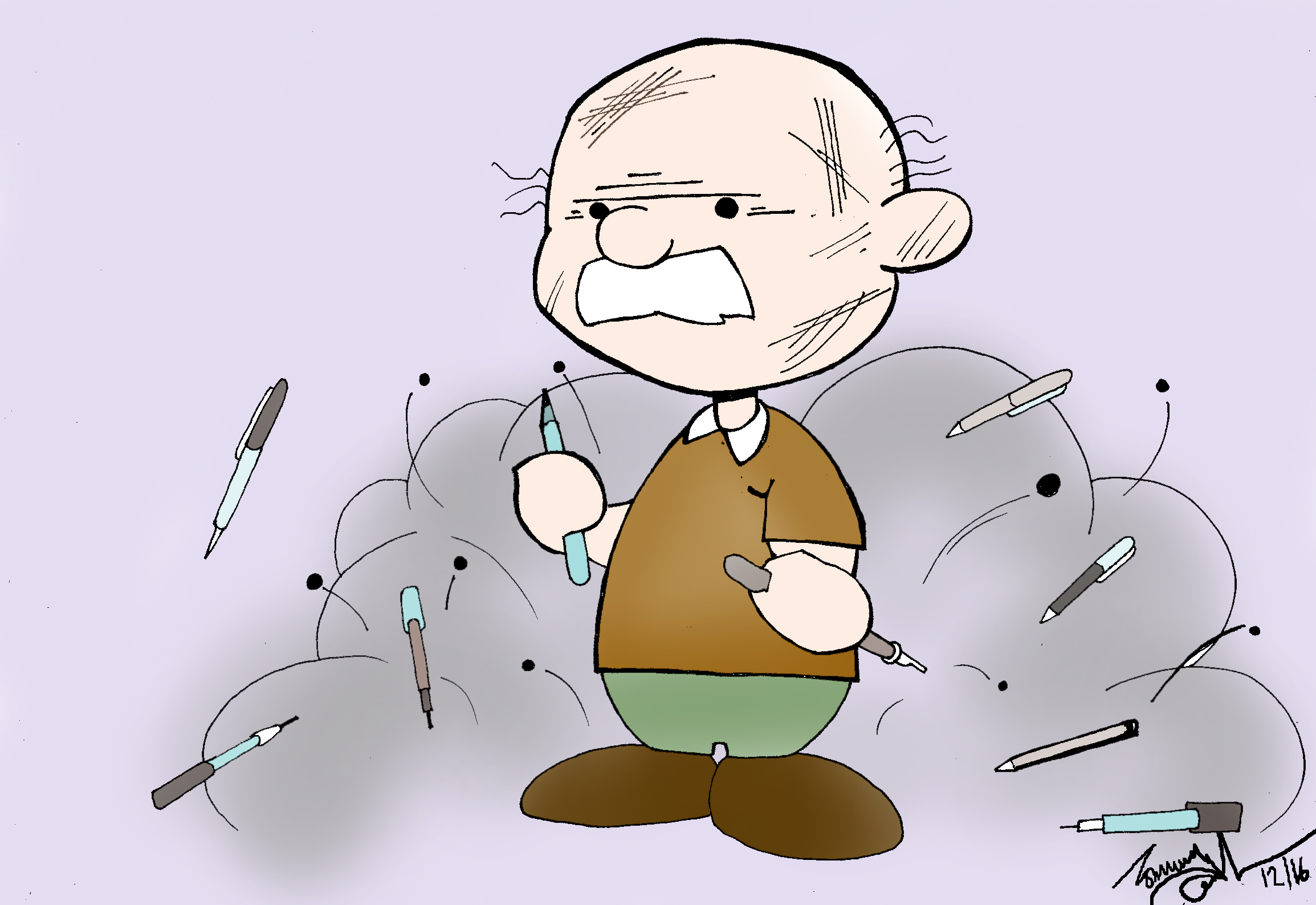
Now all I am left with is about 200 pens. The ones I set out to sort hours ago. First I ditch the round the world collection of hotel pens, then most of the pencils go in the bin. I keep all the black biros, they should last me till about 2036. I also hang onto all the Stabilo felt tip pens just to remind me of my glittering architectural career.
Finally, I am left with about ten pens with my father’s insurance brokers brand name. I remember Dad was very proud of those pens. He had lots and lots of them that he used to give away to all his clients.
At last it dawns on me. Pig Pens Disease must be hereditary, that’s where I got all this pen hoarding from 😄. It’s all my Dad’s fault.
So has anybody got any good ideas for disposing of lots of pens ?????
There will be a copy of Walt Hopkins’ book — “Seven Ways to Lighten Your Life Before You Kick the Bucket” — for the best ideas on de-cluttering.