Here is another theme from the “Repetitive News Headlines” about older people in the news over the last 12 months. (Click in the TAG CLOUD on “Same Old Same Old” for other posts on the theme).
Loneliness and isolation has been a frequent subject in my blogs:-
- A quarter of those over 75 who live alone, go whole days without any human contact;
- Half of all pensioners say TV or their pet is their main source of company;
- The link between loneliness and ill-health is well established;
- Social isolation is more damaging than not exercising and twice as harmful as obesity;
- Loneliness increases the risk of depression and raises the odds of developing dementia by two-thirds.
Report after report reiterates these findings. Meanwhile, Local Authorities have been forced to close day centres and subsidised public transport has been gradually reduced. Short term austerity measures have a high cost in human terms but eventually lead to higher costs to the NHS.
Action is required, not more reports and newspaper headlines. The voluntary sector needs to be better funded to enable more elderly people to get out and about and socialise.
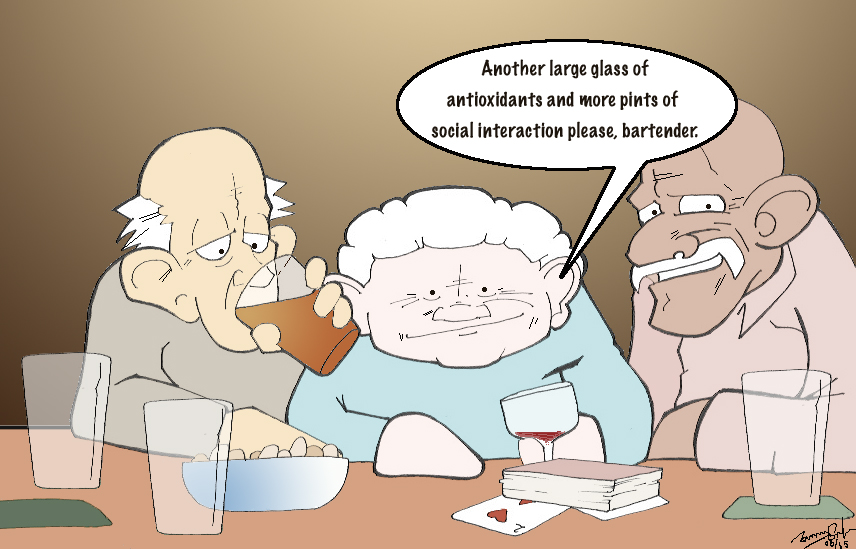
This could be a new daytime role for the many struggling pubs at lunchtime. It already happens on a small informal scale. It needs to be stepped up to a whole new level.
How about ——- Pubs as communication hubs :-).
Many pubs have “happy hours” to entice early evening customers after their working day by offering cheap drinks. Why not have a similar “age-friendly seniors happy hour” every afternoon and encourage older people to get together in their local pub. Activities could be supported by offering health advice talks; education classes run by the University of the Third Age and games and quizzes to refresh the ageing brain. GPs could offer red wine on prescription – for health reasons of course – all those anti-oxidants :-).
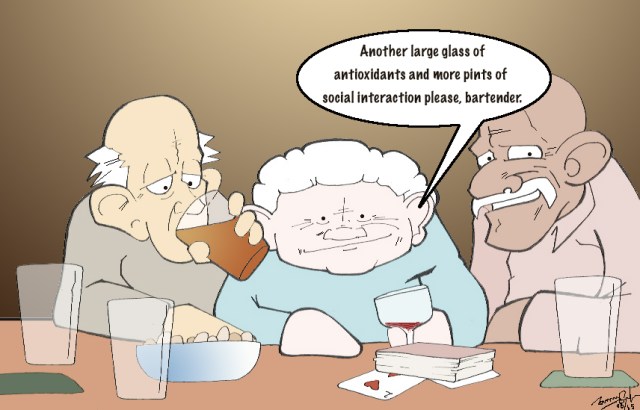
I appreciate pubs have to run on commercial lines but an influx of new customers in the afternoon would not only bring in new business, but could be partly subsidised by the health service to cover the costs of the use of their facilities. This would require bold and innovative new thinking by the NHS, but it would be a positive response to the fact that there is a strong correlation between social isolation and loneliness with ill health.
Maybe Age UK could see this as a new line of business 🙂 a new chain of age-friendly pubs building a social network for older people. Easy access for wheelchairs throughout – especially to the toilets. Sufficient space between tables for wheelchairs. Waiter/waitress service to your table so you don’t have to carry your own and other people’s drinks. Large print menus and small portion meals. These are not major changes that require significant investment, but they do require a more open and age-friendly approach to the everyday needs of older people.
Next we could to go on and apply this approach everywhere else so that old people feel welcome everywhere they go:-
Personal shoppers for people who can’t get out;
Shops that offer home delivery for old people, free of charge;
Supermarkets with age-friendly check-out lanes exclusively for old people;
Schools that invite older people in to act as teaching assistants, 1-1 pupil helpers, living historians;
Mobility scooter lanes on all inner city roads and charging points at convenient locations in every town.
Banks with real people behind the counter to answer your requests, rather than automated computers.
It is not much to ask ! Most of these services could be provided free of charge in an “age-friendly” city in recognition of the contribution older people have made to society over the years, but also in respect of the fact that older people in later life can continue to offer much to society as volunteers. The other effect of this greater engagement of older people is likely to be a positive impact it has on their lives and the beneficial reduction in their health care needs.


 GrumbleSmiles