ExtraCare Traditions 6 – Sheep Dip

THIS IS ONE OF A SERIES OF BLOGS OVER THE NEXT FEW MONTHS DESCRIBING SOME OF THE HISTORY AND CULTURE OF THE EXTRACARE CHARITABLE TRUST.  THIS WAS THE ORGANISATION I FOUNDED AND WORKED FOR FROM 1987 THROUGH TO THE TIME I RETIRED IN 2010.  I HOPE IT WILL INSPIRE OTHERS TO LOOK AT NEW WAYS OF LIVING IN LATER LIFE.

For other blogs in this series, click on “ExtraCare Traditions” in the TAG CLOUD

From the very outset in ExtraCare, we were trying to do things differently and this meant we had to build a very strong culture which could be easily understood by residents and staff.  Our overall goal was to deliver “Better Lives for Older People”. 

The good thing was we didn’t see ourselves as a group of professionals with all the answers.  We knew what we didn’t know and therefore we had to build our ideas by consulting our residents.

In the early years we started this thought process with the Directors and Managers in regular monthly meetings.  These were then followed up with team briefings to all the staff in a regular monthly “Newsround” where I visited each home and scheme and briefed the morning, afternoon and nightshift staff.  This was a considerable commitment but it paid dividends in terms of everyone being aware of what we were trying to do, whilst at the same time giving me rapid feedback on the issues that were in the residents’ and staffs’ minds.

Once a year we drew all this together in an “Annual Away Day” with all the Directors and Managers.  The processes we used were facilitated by an excellent Change Man Consultant – Tony Turrell.  We talked about our core values and surveyed staff and residents for their views which we then discussed at the Away Day.  Talking over dinner I commented to Tony that it would be good to do this for all the staff so that they could all be immersed in the cultural discussions.  He said it would be a bit like a “Sheep Dip” and ever after the title stuck.  For several years going forward we held large scale training sessions for all the staff and later on included residents as well.
6.  Sheep Dip 1

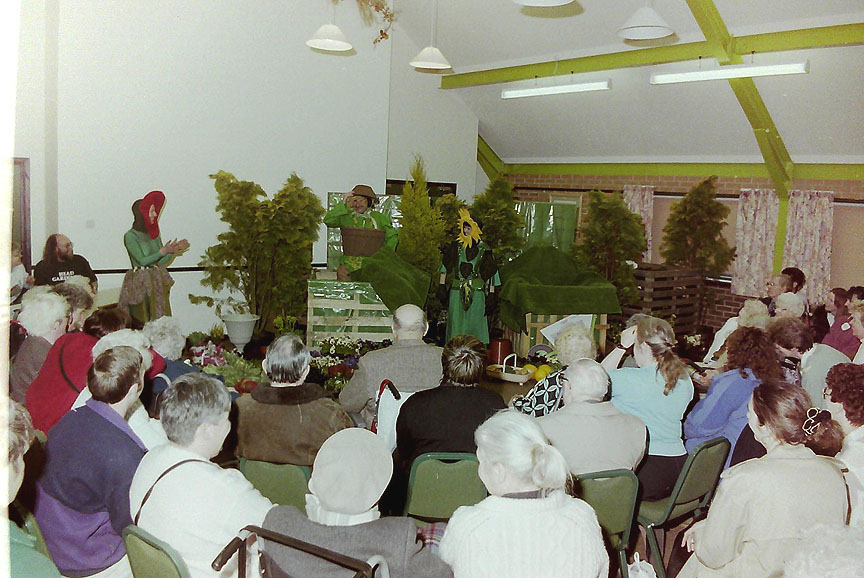
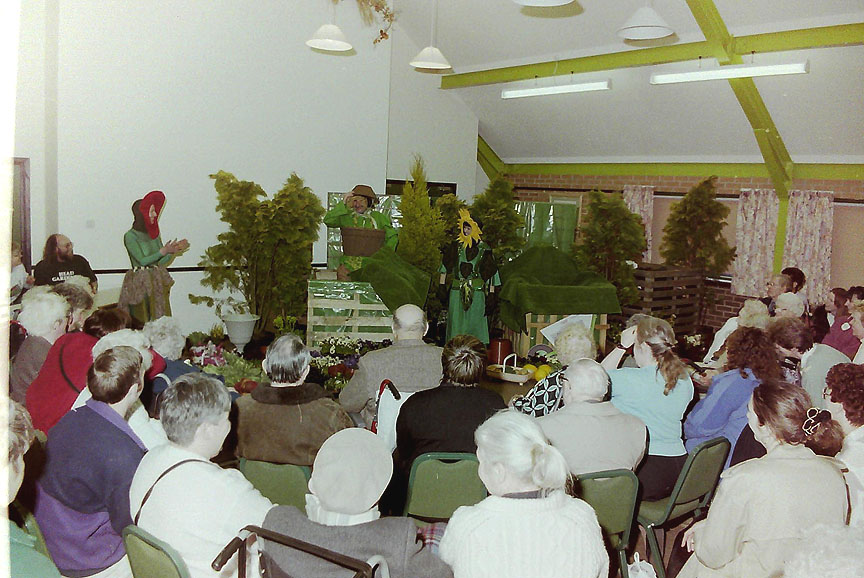
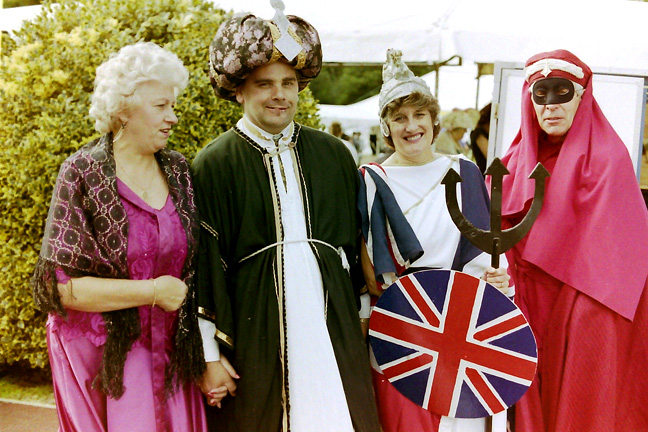
The culmination of this stage of our Change Management process was a “Sheep Dip” event held at Allesley Hall, which was one of our nursing homes.  It was based on the 1930’s and everyone came dressed up and celebrated the achievements of the residents and staff through the year.  The team in the photo above were led by our Activities Manager – Mike Hallam.  Mike brought an amazing imagination to all of our activities and a great level of fun.  He was ably assisted by a talented team of entertainers and creative people.  Two of the most popular were Bill and Jan Butcher who are on the right in the photo above.
 6. Sheep Dip 2

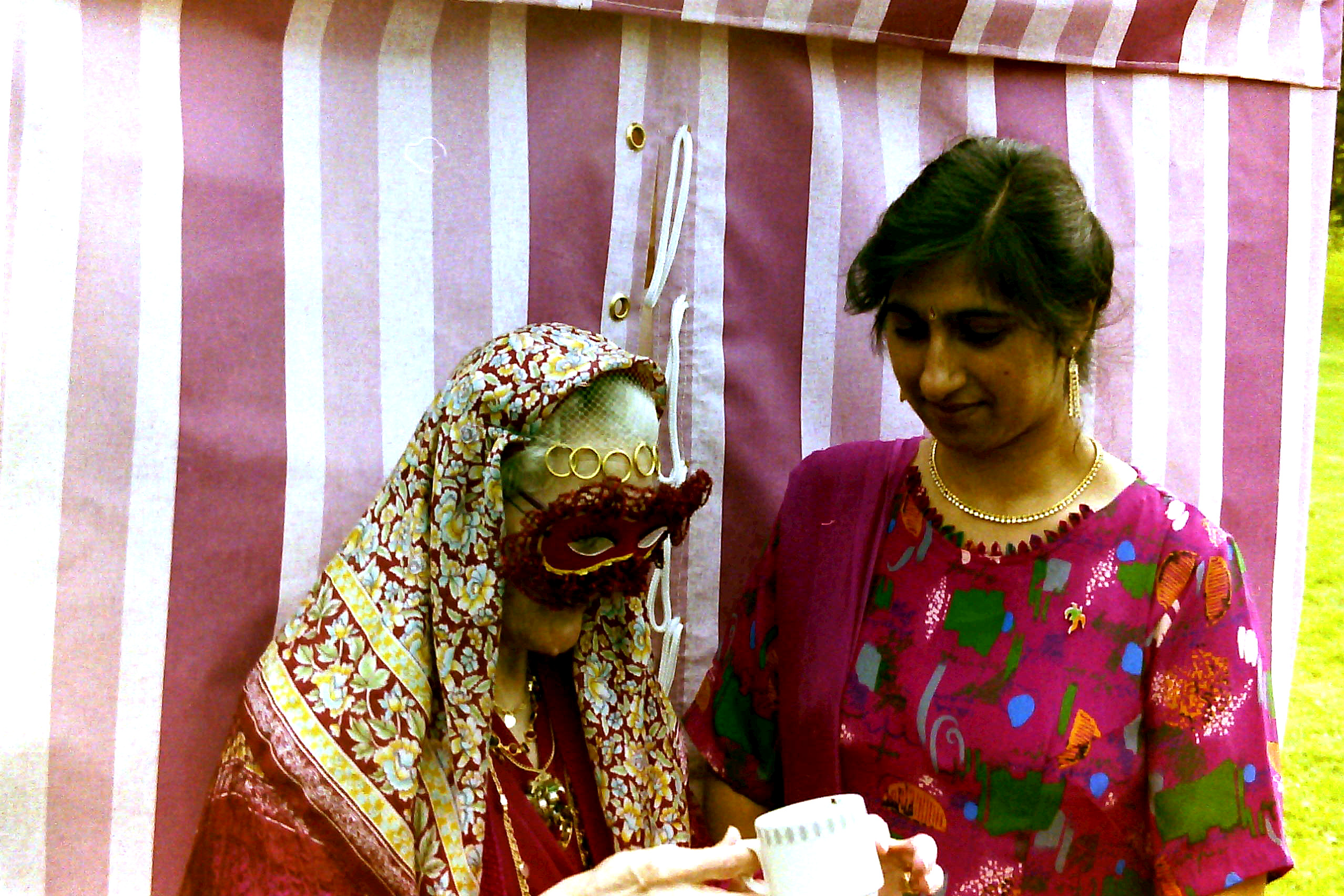
One of the residents on the day demonstrated her skills at reading tea leaves.  Many other skills were shown on the day including choirs, writing, painting, cake making, all of which indicated our desire to focus on lifestyle opportunities rather than just the health, care and risk aversion focus that tended to be emphasised by the regulators.

We eventually dropped the “Sheep Dip” title but by that time the culture focused on creating “Better Lives for Older People” was very much embedded in our approach.

Tagged | 1 Comment

“Two Pomegranates”

It seems like only yesterday that I was blogging about pomegranates.  (See my earlier blogs by clicking in the archive on December 2014 and look for “Too good to be true”).  Now like buses, two come along in quick succession.

This time, researchers at the University of Huddersfield have published some findings in that well read every-doctors-surgery-magazine, the Journal of Molecular Nutrician & Food Research.

They studied pomegranate extract and found that it could prevent inflammation of brain cells, which could help stop the progression of Alzheimer’s disease.

 ManSmilew-BIGboard Cropped 163

My last blog was sceptical about the research in case it was too closely linked to a pomegranate growing area where the research had been carried out.

This time I don’t think there are too many pomegranates grown in Huddersfield.  So all my Christmases have come at once after all 🙂

Posted in Dementia | Tagged , | 1 Comment

“Am I going nuts”?

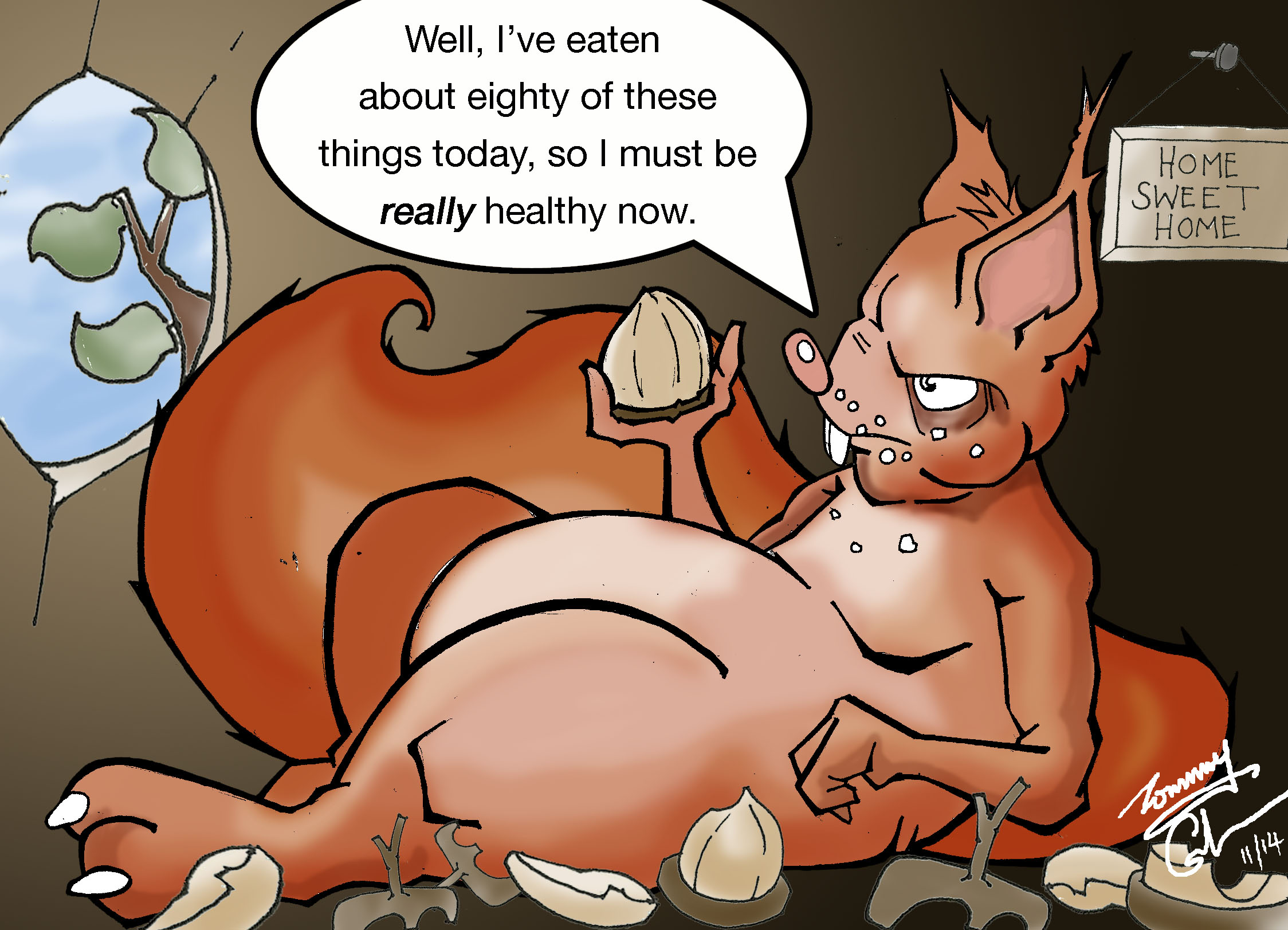
It only seems five minutes ago since I discovered the virtues of eating almonds.   In fact  was in September, just at the very time that the squirrels are stocking up on food for the winter.  (see “Wonder Nut” by clicking on EMFV in the TAG CLOUD).

Now it appears I am not being NUTTY enough.   Research by Hua Zhong University in China and the Harvard School of Public Health in Boston suggests that eating more cashews, peanuts and Brazil nuts can reduce your risk of heart disease by nearly a third. Strange they didn’t mention almonds, but perhaps they don’t grow almonds in China or America.   Mind you, eating all those nuts might have you jumping around in trees and burying food in the garden.

AmIGoingNuts

Still Christmas is just around the corner and that is when we all start to stock up on nuts.  So we should all be a lot healthier  soon.    I wonder what the researchers have to say about mince pies and Christmas pudding ?

ManSmilew-BIGboard Cropped 162

Posted in HEALTH | Tagged | 2 Comments

“A Convenient Generational Truth”

The Gerontologist is a journal that you would pretty much only read if you are old and then only if you have nothing better to do and you can find a copy lying around in the doctor’s surgery.  Unless of course, you are a young researcher interested in studying older people.

They recently published a research study from the Universities of Pen State, Texas and Michigan.  The study found that parents aged over 60 who are giving help to their children suffered from less depression.  Interestingly, low levels of help like giving advice or talking over problems added to the older people’s depression.  But, more substantial support in the form of money or repairs around the house were found to lower older people’s levels of stress.

No doubt the young students are so proud of their research they will be sending copies to their parents.

Next year the American Association of Retired Persons, with tongue in cheek, is launching a follow up piece of research to see if young people who help their parents by visiting them regularly or taking them on a surprise holiday feel happier.

Posted in SMILES | Tagged | 1 Comment

“Too good to be true”

When I was a child, pomegranates were an annual special treat in a Christmas stocking.  Ice cream was a more frequent reward, but only if you were good and only in the summer when the Mr Softee van came around, announcing its arrival to the tune of Greensleeves.

In my older age, relentless pursuits of healthy living are aided by my inability to run after the ice cream van; now ice cream is a rarer indulgence.  Furthermore, pomegranates ceased being a highlight of Christmas afternoon, when Santa Claus stopped coming to call.

The good news is that researchers at Erciyes University in Turkey found that pomegranate peel and seed oil added to ice cream can improve the body’s response to insulin.  They are also rich in antioxidants and linked to fat burning.  Best of all they have anti-cancer properties.

So, now with pomegranates and fifty different varieties of Ben and Jerry’s ice cream available in all supermarkets, all my Christmases can come at once!

There again I suspect Erciyes is the pomegranate growing capital of the world, so perhaps you need to take this advice with a pinch of salt.

P.s. maybe you should leave out the salt!

Posted in HEALTH | Tagged , , | 1 Comment

ExtraCare Traditions 5 – Gardening

THIS IS ONE OF A SERIES OF BLOGS OVER THE NEXT FEW MONTHS DESCRIBING SOME OF THE HISTORY AND CULTURE OF THE EXTRACARE CHARITABLE TRUST.    THIS WAS THE ORGANISATION I FOUNDED AND WORKED FOR FROM 1987 THROUGH TO THE TIME I RETIRED IN 2010.          I HOPE IT WILL INSPIRE OTHERS TO LOOK AT NEW WAYS OF LIVING IN LATER LIFE.

For other blogs in this series, click on “ExtraCare Traditions” in the TAG CLOUD

Gardening was always quoted as one of the most popular former past-times of our residents when we started the ExtraCare Charitable Trust.   Because initially we began by developing nursing homes, gardening was still more of a lost art to our residents, who were only able to have not much more than a pot plant on their bedside table.   When we started building extracare housing, we were able to provide outdoor balconies to the flats and patio and garden areas on the ground floor accommodation.  We were also able to build communal greenhouses into most of our schemes.

As a start to our activities programme, we always thought that gardening held a lot of potential interest to many residents.    One of the first things we did was hold a “Gardener’s Question Time” at Ryton Gardens in Coventry.    This event included a number of professional gardeners giving advice on all sorts of gardening activities from vegetable gardening to flower gardens and greenhouse gardening.

We always had a fun element to what we did and so our Activities Manager, Mike Hallam and I, went to the Wholesale Fruit and Veg Market in Coventry at 5 am on the morning of the event and bought a job lot of flowers, fruit and vegetables.   When we got to Ryton Gardens we built a stage set modelled on the children’s TV programme, Bill and Ben The Flowerpot Men.    Mike and I dressed up in sack cloth and flower pots and hid, crouched down, in two large crates, while the serious questioning got started.   We were surrounded by an allotment stage set of melons, carrots, cabbages, turnips, parsnips, pumpkins, pears, apples, oranges, bananas, grapefruit, grapes……………. you name it and we bought it.   The whole of the backdrop was decorated with trees and flowers – dahlias, daffodils, chrysanthemums, roses, tulips, geraniums and the centrepiece was a giant weed, which actually was my 8-month pregnant secretary in a green leotard.  Susan was a great sport!

After some serious questions from the professional gardener’s panel, Mike and I popped up out of the crates and started our own question time quiz aimed at the audience, based on another children’s TV programme, Crackerjack.    Every time somebody gave a correct answer to our questions, we threw them cabbages and some quality fruit and veg from the stage set.    It was great fun and by the end of the afternoon everyone was sent home with a party bag full of fruit and veg, including lots of packets of seeds to enable them to get started on gardening.

 5. Garden Capt Day

This event was way back in the 1980’s and ever after gardening took off as a major activity for many people in our nursing homes and extracare housing schemes.   In the nursing homes they had lots more pot plants and they also did hanging baskets and window boxes and had “gardening in tights” afternoons.    In the extracare housing schemes, as well as using the large communal greenhouses, residents were able to do their own gardening in their own patio and balcony areas.    In a few schemes they were also able to create small allotment areas.

In each housing scheme and nursing home, all these activities were promoted by “Gardening Captains” drawn from both the staff and the resident volunteers.    This culminated in an annual “Garden in Bloom” show with photos and displays of residents’ work.    Up to 500 people from all the homes and schemes attended.   The entries were judged by celebrity TV gardener Howard Drury and the successful gardeners were awarded with certificates, medals and cups, along the lines of the Chelsea Flower Show.

I am pleased to say the event is still going strong today and has been emulated by many other organisations.


Tagged | 1 Comment

“Elderly No-care Costs 1”

This is the start of a series of blogs which will cover the financial cost of providing for oneself in later life, including the cost of care should you need it.

As we move closer to the next General Election in 2015, the politicians start to test the water of what might appeal to the electorate and what would upset them. Think tank reports are a way of starting this process and then being able to distance yourself from ideas that don’t curry favour.

The Baker Report on how to pay for long-term care of the elderly has a chocolate box selection of things elderly voters will like and dislike in equal measure. The overall aim of the report is laudable in that it sets out to end the inequalities of funding the care system, in which some elderly people have their long-term care costs met but most do not, particularly those with dementia.

I think this was wishful thinking from the start and another example of raising false hopes. The Government estimates that the current annual no-care budget of £6 billion will increase to £9 billion by 2025.

Providing free no-care would double this to £20 billion by 2025.  So that guarantees it won’t happen.  There is no going back to free care, when care was never free for those who could afford to pay.

The illusion of free care only persists because no Government wants to face the elderly and tell them that they will have to pay the cost of long-term care themselves, if they want a quality care service.

ManSmilew-BIGboard Cropped 161

Posted in ELDERLY UK POLICY, Residential Care | 1 Comment

N.H.S. Golden Goodbyes


Once again the elderly are being cast as a problem to the NHS.  The trouble is they will keep getting ill !

The Health Service chief Sir Bruce Keogh has been talking in the last few day about the problem of bed blocking.  During September there were over 1,000 patients, most of whom were elderly, who were unable to be discharged because of lack of social care at home.

This is estimated to cost the NHS £34,ooo,ooo a month !

So here is my simple solution :-

                                 An NHS GOLDEN GOODBYE

£34 million divided among 1000 patients, who are probably as keen to leave as the hospital managers are to get rid of them, would amount to £1,133 each.

If they went home and paid a carer £10 an hour, they could buy themselves 113 hours of care — at say  4 hours a day that would give them enough for paid support for a month.  Rather more than the 15 minute visits they might get from Social Services.

Alternatively, they could check into a budget hotel for a week, have a private room with en suite bathroom/shower, a colour TV and room service meals.  After their illness that should put a smile on their face 🙂

The even more adventurous ex-patient could be dropped off at the local airport in the ambulance and with their £1133 NHS Golden Goodbye money they could buy an Easyjet ticket to Spain and have two week all found winter break on the Costa Del Sol.

The overnight benefit to the NHS would be 1,000 beds at no extra capital cost — and— shorter waiting lists.


Posted in N.H.S., SMILES | 5 Comments

“Final Swiss Tour”

Switzerland is a wonderful place to visit, the scenery is fantastic, but if you go on a Warner’s Coach Tour, be very careful where you get off.

Researchers at the University of Zurich found that the number of people travelling to Switzerland to die, because of their lax laws on assisted suicide, have doubled in the years between 2008 and 2012.  During that time 611 people travelled there with a one way ticket.

If the tour bus stops at the Dignitas Clinic, only get off if you are absolutely sure you know what lies ahead.  There are no return tickets from Dignitas.

If Lord Falconer’s Bill in the House of Lords gets approval in Parliament in the next few years, it will not be necessary to travel to Switzerland.

Then free bus passes for older people may take on a whole new meaning in Britain.

(For other blogs on this subject, look at Assisted Suicide in the TAG CLOUD).

Posted in ELDERLY UK POLICY | Tagged | 3 Comments

“Failure to adapt”

Some recent work by AGE UK has highlighted the delays elderly people experience in securing aids and adaptations to their homes before they can leave hospital.  New figures suggest that some older people can spend a month longer in hospital, while waiting for alterations to be done to accommodate them after they have been discharged.

The extended hospital stay probably costs the NHS at least £6,000, whereas the adaptations can often cost less than £1,500.  It seems obvious at the current system should be speeded up.

Shrinking Local Authority budgets, protracted approval processes and lack of co-ordinated, joined up thinking, have been a problem in this area for years and it seems nothing has altered.  A radical change in the system is needed.

AGE UK has gone on a tangent and suggested that all new homes should be designed for easy adaptability.  There is nothing wrong with this suggestion but only just over 100,000 new homes are built each year and most of them are for families.  So in that way the problem may be solved in the next millennia.

Currently only around 3% of homes meet accessibility standards, so a lot of older people will languish in hospital a lot longer unless:-

AGE UK learn to rage about ability aids and adaptations and demand a new system!

Posted in RETIREMENT HOUSING | Tagged | 5 Comments