This is continued feedback on the CAFE group Introduction survey. (see previous posts by clicking on ” CAFE Project ” in the Tag Cloud )
This section of the survey examined the possible barriers to Coventry becoming an Age Friendly City.
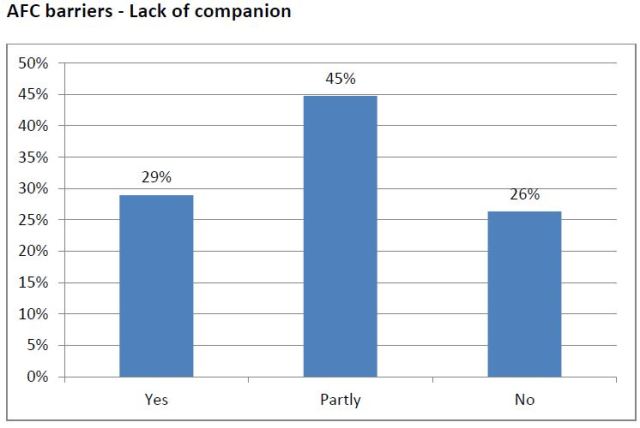
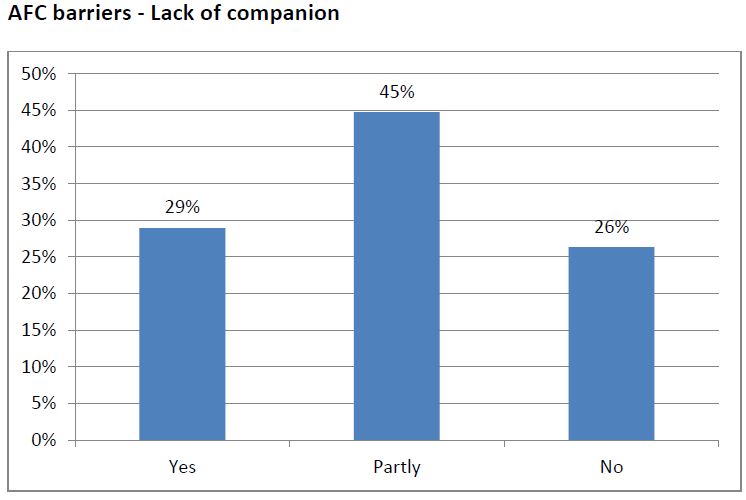
Going out on your own is clearly a concern for many people. Only a quarter didn’t see lack of a companion as a problem.
Quotes from the “EXPERTS” :-
– Differences between men and women – some women cope better than men; men may need a catalyst / somewhere to go
– Some people wouldn’t go out without anyone else
– Is there anything worth going out for? Poor shopping offer. High cost of entertainment
– Lack of community – not much chatting – but people will talk if you talk to them – sometimes making the first move can reap benefits
Footnote:- Linking people together to go out or to go to events would obviously be a major benefit. At the same time it is important for this generation to distinguish this from a “dating” site. It would also be important to screen people who are interested in meeting other CAFE members which may be possible to do using Skype. Criminal Records Bureau Checks is also an issue that needs consideration.

Transport and travel were a barrier in the minds of half of the group. Issues were raised about the infrequency of some bus services and also the distance some people have to travel to a convenient bus service. On a more positive note, several people mentioned that some bus stops were a very good place to meet people.
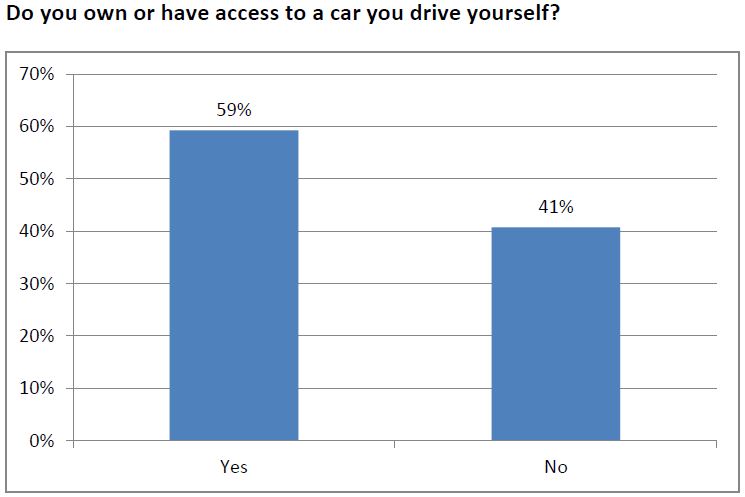
Perhaps not surprisingly the other half of the group didn’t see it as a problem quite possibly because they were still active car users.
Quotes from the ” EXPERTS” :-
– The most isolated of people may not know about transport
– Higher isolation for those who are less mobile (ring and ride is now a chargeable service)
– Some bus routes are less regular – particularly at night to and from the city centre
– Bus stops as social space
– Parking is an issue – disabled parking; picking up / dropping off zones
Footnote :- There’s obviously an opportunity to link people with cars to those who see transport as a barrier.
Information about bus timetables is already available on the internet but an easy to use APP for Coventry may be something we should consider.

The vast majority of this group were retired and 61% said that the fact they were no longer working was no barrier to remaining connected. However the fact that they were no longer connected to work colleagues may be a reason why 39% said not working was a potential barrier.
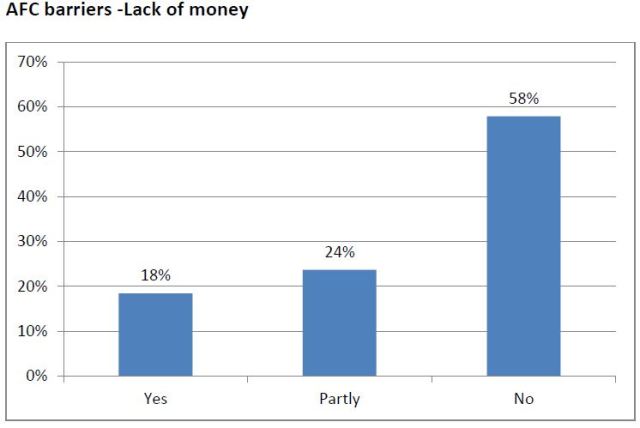
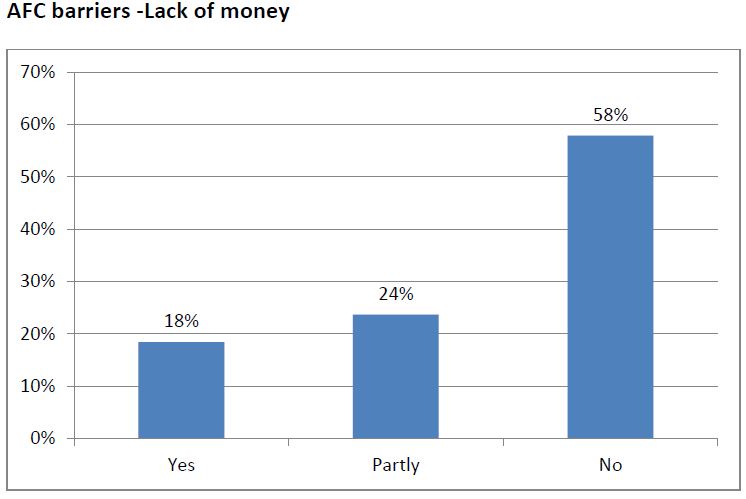
Nearly 60% of this group didn’t see money as a barrier. Less than 20% said it was a barrier and a further 24% saw it partly as barrier.
Quotes from the “EXPERTS” :-
– A problem for some people
– Others with money may be reluctant to spend and instead save for a ‘rainy day’, security for the future, inheritance for children/grandchildren
– Some people compare prices to those a few years ago
Footnote:- An APP which identifies free or concessionary events in the city may be useful to people who see money as a barrier.
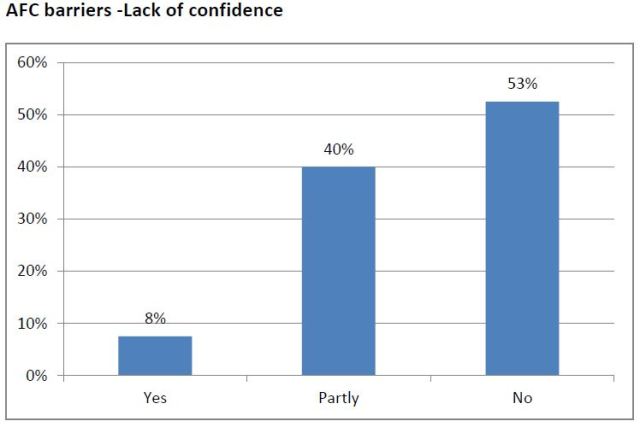
Nearly half the group saw lack of confidence as a potential barrier to being more connected. This is not surprising given that a majority of the group are women and many of them are single.
Quotes from the “EXPERTS” :-
– Transport / bumps on road and breaks in pavements cause problems
– Lack of confidence when going out at night – judgemental about younger people
– Not helped by infrequent transport
– Could be related to the way services are delivered, e.g. in a person’s own home

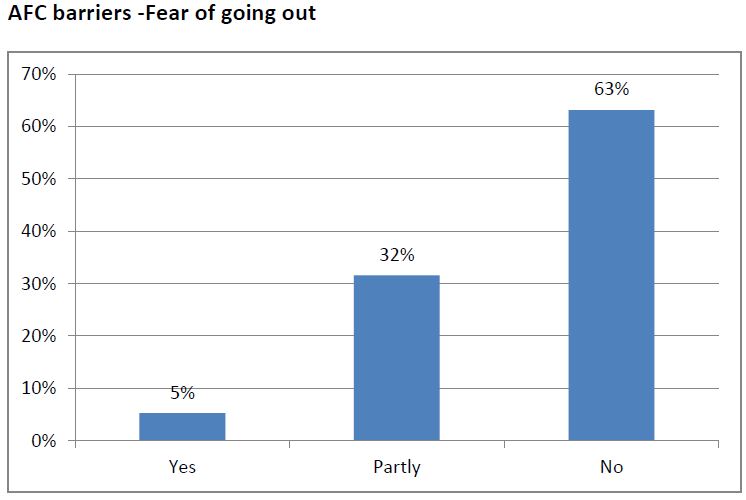
The majority of the group (62%) had no fear of going out but 37% had some fear of going out which should not be the case in an age friendly situation. What needs to be further examined is whether the fears were real or imagined and whether they were specific to particular locations in the city.

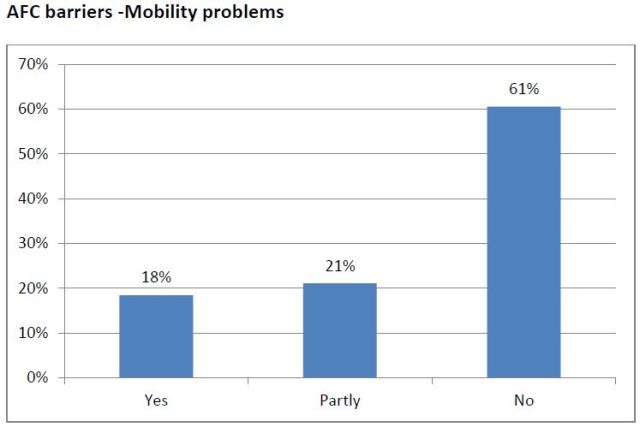
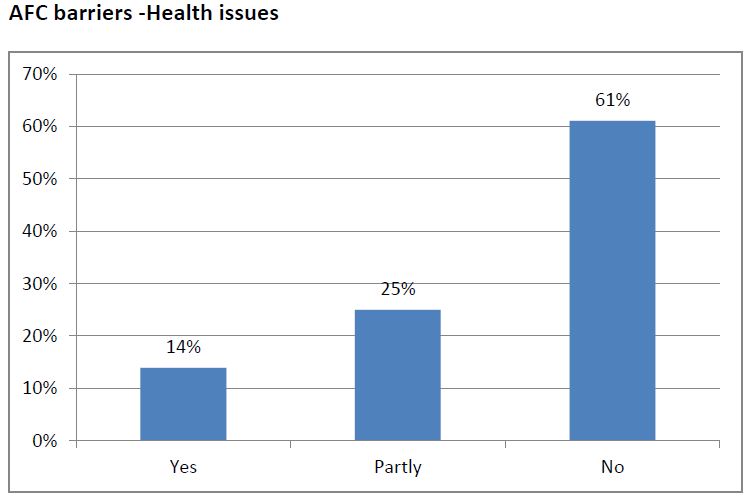
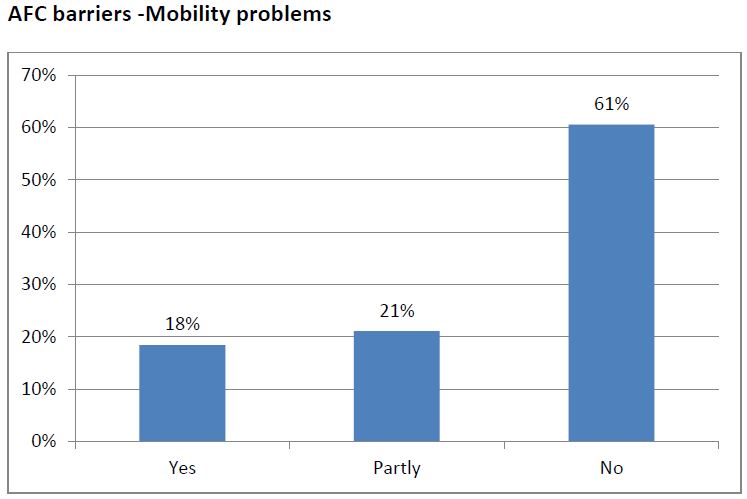
39% of this group saw health issues as being a barrier to remaining connected and the same number identified mobility problems as a barrier.
Footnote:- In summary the most significant issues for those people who had concerns about remaining connected were lack of a companion, lack of confidence and difficulties with transport. Given the relatively high level of car ownership and use within this group, it’s not difficult to imagine the benefits of a mechanism to connect people with cars with single people who lack the confidence to go out on their own.
This could be based on a Skype connection between members of a CAFE Club who share information about each other’s interests and skills.











 GrumbleSmiles