“Silence is Golden” 2

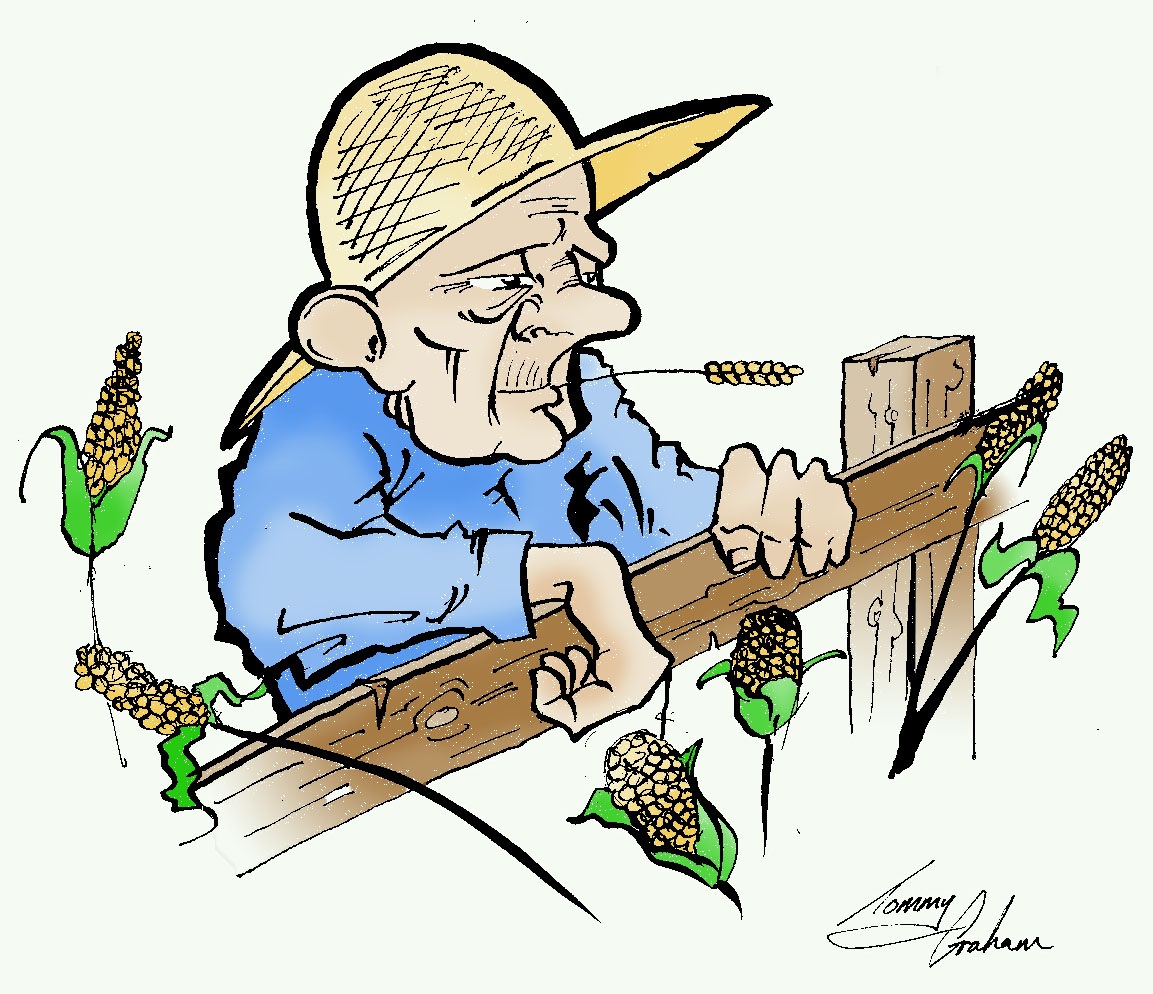
In April last year I wrote a blog about the invasion of noise in our lives entitled “Silence is golden”.   It was an early morning grumble, but perhaps not surprising given I was in central London at the time.

Now one year, on  I find myself in the heart of the country making the same complaint !

This is a sitting -in-the- garden sunny day reflection —- not so much a grumble more an ironic smile.

It’s natural to be potitive about life when sitting in the sun, especially when the spring birds are joyfully singing their songs for free. The village church bells chiming out the hours of the day are a timely and welcome addition to the country orchestra.  Unfortunately, the same cannot be said of the BRRRRRRRRRRRRRRRRRRRRRING   lawnmower of one of my neighbours. Not so much interrrrrrupting my trrrrain of thought , as completely obliterrrrrrrating any thoughts I could have strrrrrung togetherrrrrrrr. The mower not only cut the grass it gave a short ,back and sides to my brain as well !

If we are going to have any more human rights, how about a right to peace and quiet ? Maybe the Kilsby Parish Council could pass a bye-law that lawns can only be mown on  one fixed day a week.  If they could make it Wednsday when the bin men come we could get all the noise over and done with in one day.   On that day all the grumpy old men in the village, like me, could go to the pub in the next village where moeing could be done on a Thursday.

As I write this blog a small plane flys overhead and they must have forgotten to put oil in the engine, because it sounds like a Lancaster bomber. Iwonder if we can have a no-fly zone over Kilsby — except on Wednesdays.  It would certainly make air traffic controlers lives more interesting.

Isn’t that what localism is all about ?

Posted in GRUMBLES, SMILES | 7 Comments

“Longevity – Burden or Blessing ? “

Almost a year ago on the 7th April 2010, I wrote a blog entitled “How did we become such a burden?”  It was sub-titled “unravelling the demographic and economic clash”.  According to a report by the National Institute of Economic and Social Research, the situation needs to start “unravelling” very soon or it will be too late to avoid an even bigger economic disaster than the one caused by the recent banking crisis.  The paper predicts that the ageing population will lead to a widening gap between the money we spend and the money we raise in taxes – some £85 billion per year by 2058.  The “unravelling” options are stark and difficult both politically for Government and individually for the old and the young.  For older people it means a later retirement age and lower levels of free health and social care.  For the younger generations taking no action would mean a doubling of taxation to pay for the ageing population.

This is not a new message, it is just one that we collectively do not want to hear.  The point of my blog last year was to attempt to explain the demographic growth in the ageing population, which didn’t happen overnight – it took decades – indeed generations.  There was ample time to plan for the future, but the majority of us individually did not save enough in pensions and collectively our politicians focussed on the short-term rather than long-term planning because few of us would vote for the higher costs of social care if it meant higher taxes.

It is a collective failure which we will now have to redress —– and it won’t be easy.

In a blog in June 2010 I commented on an article in The Times by the journalist and economist Anatoly Kaletsky which forecast tension between generations.  He accurately predicted there would have to be cutbacks in pensions, health care and long-term care.

Just look what has happened since.

In terms of pensions:-

  • Retirement age has been abolished
  • The State pension is now annually increased but only linked to CPI not RPI
  • Eligibility for a State pension is gradually moving back toward 70
  • Final salary pensions have all but disappeared in the private sector and are planned to be reduced in the public sector

Health care:-

  • NHS elderly care is under severe criticism in terms of quality
  • Social Services support is limited to critical and substantial cases only
  • Residential care homes are struggling to survive economically
  • Long-term care funding awaits the outcome of the Dilnot Commission but it is clear there will be a significant element of sharing the cost in future between the individual and the State

There is an inevitability about the direction that all these moves are taking, and no question that most people are going to have to pay more for their old age.  It would be best to greet this outcome not as the burden we all have to carry, but as the blessing of all the additional years we have been given in later life.  To do this, our focus needs to move away from costs and cuts towards a new and positive vision of ageing.


Posted in ELDERLY UK POLICY | Tagged | 2 Comments

“The £140 Pension Illusion” 2

Back in October 2010, I first wrote very scathingly about the announcement by Steve Webb, the Pensions Minister of a huge increase in the basic State pension.   Recently an article in The Times suggests that it may not be such an illusion, and after a tough battle with the Treasury our Magical Minister my be winning the argument.   I am not apologising yet though and it may not turn out to be such a good trick after all.

Lets look back at the positives :-

The confidently spoken assurances that are designed to lull you into a false sense of security.   £140 is a whopping 40% increase for single pensioners and a massive 75% extra for married couples.   What could you possibly not like about that?   The other great virtue is that such big increases will sweep away means testing for thousands of pensioners.   It’s all such a tantalising offer that you really want to believe it.

As with all great tricks there are always a few lingering doubts – it’s the art of the conjurer to convince you to overlook them.

The doubts are all about “how is it all going to be paid for ?”   That was why the Treasury was not fully persuaded that the trick could be pulled off successfully.

The overall cost of the measure was helped by the fact that it was not going to be introduced until 2015 (this was subtly changed to 2016 by Iain Duncan Smith at the Age UK Annual Conference) and then only for new pensioners.   Politically this would seem to make the trick impossible, since all the older pensioners would vote against any Government that performed such an unfair trick.

So what else has the Magic Minister got up his sleeve.   Firstly, by taking more people out of the means test, it denies them a ‘passport’ to other benefits (Pension Credit and Minimum Income Guarantee) which is giving to the poorest pensioners with one hand and then cruelly taking it away with the other.   The second deception is even harder to detect because it probably involves taking away non-means tested benefits such as Attendance Allowance and Winter Fuel Allowance.   Surely this is a step too far, although it has been suggested before, no-one has been bold enough to try it.   YET !

At the end of every great illusion you are meant to be baffled and amazed, so I hope I am wrong about how this trick is to be performed.   Otherwise the Magic Minister will have succeeded in shifting money to the wealthiest elderly people only by taking it away from the poorest and frailest pensioners.

Posted in ELDERLY UK POLICY, Pensions | Tagged , , | 26 Comments

“Breakfast Exercise” 4

Teased out into the garden today, the allure of the first signs of spring, and the need to throw off my winter cold.  Started my Tai Chi routine but the deep breathing still inhibited by my blocked nose.  The antibiotics haven’t had their 48 hour slow start out of the box.  After a short while, a coughing fit is all the excuse I need to stop and sit down with a cup of tea.

An opportunity to study my garden.  Lots of daffodils well out of the ground but not yet raising their bright yellow heads.  Good job they are not in Wales, they would be late for St. David’s Day – no wonder we wore paper ones to school.  The sedum has already formed its early green florets nestled under the now dead stalks of autumn seed heads, still standing like gravestones marking last year’s achievements.  The perennial geranium leaves are just starting to show their leaves sheltered under the comforting thatch of brown leaves of yesterday.  Young growth still in need of the protection of old age until all signs of frost has disappeared.

All over the garden bulbs are forcing through the wet winter soil.  The occasional early birds are darting about catching the worm and our last year’s Robin is back again inspecting his nest – deep in the Ivy high up on the wall of the house out of reach of Charlie the curious cat.

After one of the coldest winters ——- new life, new beginnings springing from old roots.

Perhaps out of this era of economic austerity and social decline the elderly can dig deep into their years of wisdom and experience to find a new vision of later life for themslves and a learning partnership with the youth of today.

Posted in SMILES | Tagged | 2 Comments

“Age UK – Agenda for Life 2011”

On Tuesday of this week I went to the Annual Conference of the two organisations that were formerly called “Help the Aged” and “Age Concern”. 

It wasn’t long before I was thinking I had stepped into a parallel universe – the shiny new, new speak world of Age UK.  The world I had just come from only the day before seemed to be an era of neglect of older people and austerity cuts.  In the last few months, there has been so much talk of complaints about NHS care of the elderly, reports by Age UK themselves on malnutrition and 80% Government cuts in Supporting People funding mainly affecting voluntary organisations and charities.  Maybe my expectations were too high, but I had assumed I would see some of the forefathers of Dylan Thomas “raging against the dying of the light and old age burning and raveing at the close of day”. 

When I saw on the agenda that two of the speakers in a panel discussion on “Integrating Health and Social Care” were Jo Webber, the Deputy Director of the NHS Confederation and Dame Jo Williams, Chair of the Care Quality Commission, I at least hoped they would give the politely listening group of older people some rotten tomatoes for audience participation………………..sadly – no such luck.

The opening speech by Tom Wright, the new Chief Executive of Age UK, was all powerpoint and market speak.  The £100 billion grey market is forecast to grow by 81% between 2005 and 2030.   Tom seemed delighted by this, because it will guarantee that everyone in the years ahead is advised by Age UK, to get insured by Age UK, in case they fall out of their Age UK stair lift, on their way down from their Age UK bath and shower, to a breakfast provided by the Age UK sponsor – Sainsbury’s, who just love older people.

The new speak continued throughout the day.  Everything was “embedded” and definitately “sustainable”.  In this belated 1984 world, we are all “equal” and we all have “rights” – “equal rights”.  We are all “engaged” – presumably to each other? – and everything is “counter-intuitive” or it isn’t because it doesn’t make sense.  Oh! and in the Sainsbury’s bit of the world, the staff are all “colleagues” who intend to “shine their light” on their grey colleagues.  We just need a quick chorus of “Shiny Happy People” and all will be bliss.

Almost euphoric after this first session, I was really looking forward to the tomato throwing in the group therapy session on the NHS and Social Care.  Jo Webber came on and reassured that everything was wonderful in the NHS and there was no need to mention malnutrition (indeed nobody did).  It probably never happened and even if it did nobody was to blame, there was not enough money, the staff were too busy and “lessons would be learned”. 

Tom Wright had already told us that 176,000 older people like the NHS so much that they go back into hospital within a month of being discharged.  What better endorsement of the service could a marketeer want than repeat customers!

Dame Jo Williams, the electric Chair of the Care Quality Commission, further reassured us that if anyone at all delivered poor care in future, they would be beaten remorselessly with a big stick.  The audience by this point was so comforted that they forget to throw the tomatoes and politely applauded instead.

The “final solution” in this session came from the new techno age, when Dr Petra Wilson of the American computer software company CISCO Systems told us that help was at hand (or mouse).  It is just a matter of time before all our care needs can be provided by Telecare kettles that report on our health to big brother in the “cloud” every time we have a cup of tea.  In this new world future if we want companionship we can have a digital cuddly toy instead of a pet.  Presumably if you don’t keep talking and stroking it, either you or the pet are dead!   We need never speak to a real person ever again.

Just when it looked like it could not get any better, the Secretary of State for Work and Pensions, Iain Duncan Smith was billed to speak about pensions.  An engineered leak in The Times, The Guardian and on BBC had rumoured that he was going to announce we will all get a £140 pension in future.  He is a very polished speaker which suited this, by now, shiny audience.

Strangely at an Age UK conference for older people, he talked mainly about children and the need to protect their futures in later life.  It was almost as though he was explaining that there wasn’t any money for the current generation of elderly people but that by 2050 everything would be alright.  Then came the crescendo of his speech – the big announcement – when he had raised all hope and expectation this “Quiet Man” lived up to his reputation and said………………. NOTHING!


Posted in ELDERLY UK POLICY | Tagged | 2 Comments

“Commission on Funding of Care & Support” 4

HALF-TERM REPORT

Some of the early indications from the Dilnot Commission would suggest that they intend to fully embrace some of the age old problems in the funding of long term care.  Certainly it will be very welcome if there is a resolution of the tension between the partly-funded social care system and the free services currently classified as NHS Continuing Care, this has been a longstanding grey area which has been interpreted in a multitude of ways by different PCT’s.  It will also be good to see an unequivocal statement on free and means-tested entitlements set on a national basis so that elderly people and their relatives can have a common understanding of what they can expect from both Social Services and the NHS in terms of quality and funding support.

It is already clear that there is going to be far greater sharing of costs, but the split between the State and the individual will heavily depend on just how much extra public funding is forthcoming.  As the demographic pressures increase in the years ahead I would be surprised if the State is able to fund much more than the critical/substantial means-tested cases that are currently funded. 

 I also strongly agree with the suggestion that today’s system must be improved before anything else.  Otherwise it’s difficult to imagine why elderly people would wish to pay more for the current abismally poor standards of care.

As always the devil will be in the detail but the fundamental question of where the additional funds are to come from has yet to be faced by both Andrew Dilnot’s team and then later the politicians.  I believe this can only be achieved by a radical restructuring of the provision of long term care away from the NHS and towards a higher quality of social care provision, both in the community and the residential home sector.

This follows on from my submission to the Dilnot Commission dated 6 February 2011 and my follow up blogs dated 27 February 2011 and 3 March 2011.


Posted in ELDERLY UK POLICY | Tagged , | Leave a comment

“Commission on Funding of Care & Support” 3

One of the fundamental themes of my submission to the Dilnot Commission  (see Commission on Funding of Care & Support dated 6 February 2011), is that in the years ahead, most older people will have to pay for their care by using their house as an asset. This is not a welcome prospect because as a society we have come to expect that health care is free.  Alongside that idea, the inflation of house values over the last 30 years has led the elderly and their relatives to believe they will leave a significant legacy when they die.

I believe these two related myths are holding back the elderly from securing a better future for themselves. In this new area of austerity, is a bubble that needs to burst but no political leader wants to be the first to break the bad news. In the financial press recently were some guesstimates that illustrate the scale of the issue:-

 People over 65 own £763 billion of un-mortgaged property;

 In 10 years this will have risen to £1 trillion;

 800,000 people will reach 65 next year;

 On average they will live for 23 more years.

So what are the barriers to this happening? Insecurity is the key issue.  In later life few people want to step into the unknown, and yet lifespan and health are two unanswerable questions. The fear of not knowing how much you will need to look after yourself is what leads many people to hoard what they do have. This is reinforced by the justifiable view people have, that long term care is not only very expensive but often very poor quality.

For the Government to unblock this situation they need to remove the barriers that they can influence:-

 Make equity release a more reasonably priced option so that people can more easily access the hidden savings they have in their homes;

 Stimulate the retirement housing market to encourage people to move and downsize their homes;

 Offer long term care insurance to give people more certainty over future health care costs;

 Dramatically improve the quality of health care for older people by restructuring NHS provision.

These moves will hopefully be captured in the recommendation of Andrew Dilnot’s report. A trillion pounds would go a long way to reviving our ailing economy and would enable older people to secure for themselves a brighter vision of later life.


Posted in ELDERLY UK POLICY | Tagged , , | Leave a comment

“Neglect Shames Britain” 4

ST DAVID’S DAY REFLECTION

February 2011 was quite a momentus month of news about the elderly.  I don’t think I can remember a month with so many front page headlines and numerous graphic accounts of neglect of the elderly.  Not just in the press but also on television and radio. 

It was all prompted by a report by the Ombudsman on complaints about the way elderly people are treated in the NHS.  At the beginning of the month it looked like the issue, which was first flagged up in December 2010, by the Patient’s Association Campaign championed by the Daily Mail.  At long last it seemed like it might finally take off.

Then came the announcement of a Royal Wedding; the turmoil of political change in North Africa and the earthquake in Christchurch, New Zealand. 

WHOOSH !!!!      Rather like a Formula 1 car race, it was headlines one minute and history the next.  All the attention goes to the car in the front and it wasn’t the elderly for long. 

The problem is old people die everyday.  They are expected to.  It is not a nice experience and tragedies sometimes happen.  We can do nothing to stop it so maybe it’s just better to forget it.  Put it in the back of our collective minds and move on to the next headline.  Bereavement is not a happy subject nor one where there are any quick-pill solutions.  It’s like global warming – an inconvenient truth.

Let’s change the prospective for a minute:-

What if it was not the elderly we were talking about, what if it was children?

What if thousands of children were dying in our hospitals from starvation/dehydration/everyday infections and all without pain control?

It’s not even possible to imagine that hospital staff could walk past children in this situation as if they didn’t exist.  Their compassion and concerned relatives would be at the forefront of ensuring that the best possible care and attention was made available.

Young children don’t deserve to die.

Have we, as a society, come to believe old people do?

At the end of the month, the newspaper headlines have moved on but the TV Documentary channels were just taking up the issue of elderly neglect.  On the same night, just one hour apart on the 29th February, they portrayed two very contrasting views.  One on the “Dispatches” programme on Channel 4 – almost too difficult to watch – was an investigative “fly on the wall” film about end of life care in the NHS.  All of it reflected the awful experiences of patients and their relatives.  A chilling portrayal of the headlines from the beginning of the month.  At the end of the programme, the all too familiar apologies from the NHS and Social Services.  Followed by the less than credible promises that “lessons will be learned”.

Not so long as society believes the elderly deserve to die, they won’t!

In our collective grief about this neglect, it is natural to want to lash out at someone or something, and the NHS and Social Services are the first in the firing line.  I believe that most people who work in these services are decent caring staff who want to do a good job.  They succeed superbly well in looking after children, so why does it all change when it comes to older people.  Could it be that our expectations of later life are so low that life is not worth living.  Have we, as a society, not yet come to terms with the fact that most people are going to live much longer.  More health care will be needed for some people but the majority will lead healthy and active lives. 

There is a vision of later life which could be the salvation of our society if older people are encouraged to use their wealth of experience, skills and financial resources, to find a new way of living in older age.  The second TV programme was on BBC2 in a short series called “When Teenage Meets Old Age”.  It is an inspiring example of what generations working together can give to each other.

Out of a Winter of neglect, surely we can on this first day of Spring, find a new vision of older and younger people working together for a better life.


Posted in ELDERLY UK POLICY | Tagged , , , | 2 Comments

“Commission on Funding of Care & Support” 2

Age UK, in an interesting blog by Stephen Lowe entitled “Changing the Social Care Landscape”, has recently commented on the potential tension between the Dilnot Commission Report and the Law Commission Review of Adult Social Care Law.  Both are due to report later this year.

I agree completely that the current social care system, as it applies to most older people, is a disaster.  I am not as confident as Stephen Lowe at Age UK seems to be that the two Commissions looking into adult social care will reach an harmonious conclusion.  I believe Andrew Dilnot will come up with some fairly radical proposals for the funding of care because as an economist he will clearly see that anything less will mean that the cost of care funding by the state will be unsustainable.  Sadly I feel the Law Commission Review is far less likely to simplify the evermore complicated web of human rights and age discrimination legislation.  The application of tighter and tighter regulation, however well intended, will not solve the problem of failing systems.

Stephen Lowe rightly says that the fundamental difficulty is to do with trust and I agree with that completely.  So long as the quality of health and social service care for older people remains as bad as it is, there can be no straightforward solution to the issues.  What the Department of Health needs to do is help build a new vision of health care for the elderly.  I have already expanded on this in my submission to the Dilnot Commission which is included in my blog dated 6th February 2011.  I believe that the NHS and Social Services need to step back from providing anything other than acute care for older people but the price of this is that the majority of older people will need to fully fund their own care in the future

Posted in ELDERLY UK POLICY | Tagged , | 1 Comment

“Move to the Country” 2

Back on the 28 May 2010, I wrote about the virtues of moving to the country on your 76th Birthday which was supported by recently published demographic statistics about living longer.

On the 9th February I went to a Government sponsored conference about the future of sheltered housing. After hours of speeches it seemed like most of the presenters and much of the audience were looking for hope rather than being able to offer a constructive way forward.  This is understandable when you realise that many of them were Civil Servants, Local Authority staff and leaders of voluntary projects. All of their words were heavily loaded with talk of austerity and cut backs in spending. Their work of previous years was being shredded as they spoke. Indeed many of them were uncertain about their own future, and the funding of their departments and projects.

Excellent projects like Care and Repair services plus information and advice projects have gained vast experience over the years.  They have provided invaluable support to thousands of older people to help them remain independent in the community. Many of these projects operate on the margins of Central and Local Government Departments joining up the often silo-mentality services of health, social services and housing. They are providing the holistic, preventative and cost effective services that the Coalition Government applauds, yet they are under threat from the blunt axe of cut backs.

Meanwhile they are being replaced by the vacuous aspirations of “Localism”, “Personalisation” and the “Big Society”. The conference speakers all tried to relate their talks to these new concepts but vainly and unconvincingly. It felt as though they had been cast adrift and were clutching at the straws of a “new speak” language that they could not understand.

Coincidently as I was writing this blog I was listening to a Sunday morning TV discussion on the “Big Society”. Individuals whose jobs were being threatened were blaming the bankers on one side.  An MP was extolling the value of voluntary involvement on the other. In the middle charities were affirming the virtue of their cause, and church leaders were seeking to draw people under the umbrella of their faith.

Both the conference and the TV debate seemed to be moving towards the same hopeless conclusion – that the “Big Society” idea is just a smokescreen for cut backs.

Against this background, my conference visit appeared to be drawing to an equally disappointing end. Only to be saved by the final speaker – Lynden Jackson – who talked about the issue of ageing from the perspective of a small village community – Debenham in Suffolk. Their common interest started from a concern about dementia in their small community and later widened to also include physical frailty. Over the last two years, they have been befriending people in their own homes and providing support for carers, exactly what families and good neighbours should do for each other. At the same time they formed a group to develop a bigger vision for the future, who started to talk to all the Health and Social Services Teams operating in their area. Their story is told much better on their website www.the-debenham-project.org.uk. They now have a vision for the future which hopes to build a new but small project of housing with care which includes provision for respite care, rehabilitation and specialist dementia help.

It is a hugely ambitious task for such a small group but if it were accomplished it could provide a housing and care model which could be replicated across the country for rural communities.

What the Debenham Project has is strong leadership and a clear vision which needs nurturing and encouraging with a very light touch. They could benefit from much of the expertise in the conference room and they will need money and resources to fulfil their ambition but by their deeds they completely describe what “Big Society”, “Localism” and “Personalisation” are all about.

Posted in ELDERLY UK POLICY | Tagged | Leave a comment