Demography Benefits Sequal

This is a follow-on from my previous two blogs.    They chart the changes in society since the Second World War and  the introduction of the Beveridge Report recommendations.

Mr. Bartholomew’s book “The Welfare State we’re in” reaches the conclusion that welfare benefits have been a bad thing for society.    Whilst I accept there he makes a good argument that benefits have not been wholly good, he also acknowledges that in a democracy it would not be possible to remove many benefits now.

Having worked in the charitable Housing Association sector for many years, it has been my experience that many people are in need of welfare support to lead a reasonable life.     I am not naive about this, I accept that there are some who take advantage of the system.   I also think benefits can remove incentives to work.     It is also the case that some poeple are swept into the benefits system unecessarily.        But, most people entitled to benefits that I have come across have genuine needs and would much prefer not to be in the situation they are in.

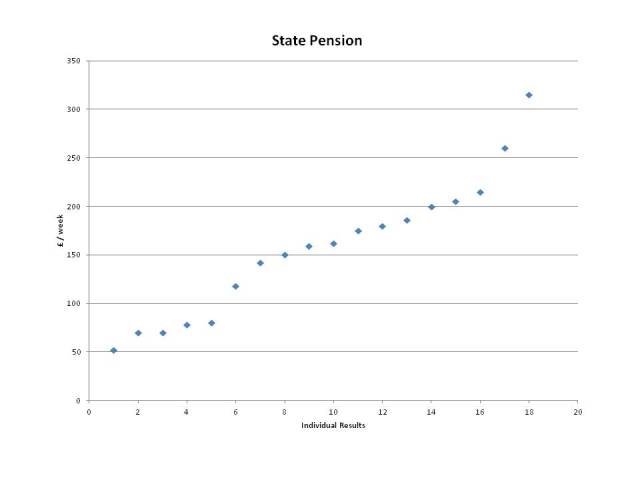
So what’s to be done ?   You can’t turn the clock back.    Politicians won’t propose things that won’t get them elected in future, so they can only cut things by stealth, e.g. by linking  State Pension increases to CPI rather than the Retail Price Index.      Or by making things so complicated that people don’t really understand the changes,  for example, the announcement of a new much more generous State Pension, which first, only applies to newly retired pensioners and then gets postponed for several years. (You can see this storey by clicking on “ The £155 Pension “ in the Tag Cloud)

Benefits reform needs to be imaginative and offfer advantages to all generations.   It needs surgery to the red tape of regulation and bold, off the wall ideas typical of the Last Laugh Looney Party.

See next weeks thrilling episode

Posted in ELDERLY UK POLICY | Tagged , | 1 Comment

Demographics of Benefits Continued

This is a follow-on from my previous blog.    It charts the changes in society since the Second World War and  the introduction of the Beveridge Report recommendations.

The ‘you-can-have-it-all’ attitudes of the Baby Boomer generation turned welfare benefits into ‘ entitlements’.    Part of the everything’s free, spend now, save later thinking encouraged by every TV advert.    Saving was out of fashion.

This was accompanied by much more subsidised public housing and much greater liberalisation of divorce laws.   The introduction of the birth control pill also changed the attitudes of young people to sex.    The family ties of the previous era were gradually loosened.   The Hippy era had arrived.

Marriage became an option not an obligation.   So from then on  marriage rates have steadily declined from close to 100% after the war down to only half that today.     Birth rates outside of marriage rose from 5% in 1960 to 40% in 2004.    Only 7% of children were living with lone parents in 1972 by 2004 that had escalated to 24%.

That significantly increased the need for more housing and also since many single parent families were relatively more impoverished, the demand for benefit support increased.    To add to this unemployment which was less than 4% just after the War rose to over 10% by 1981.

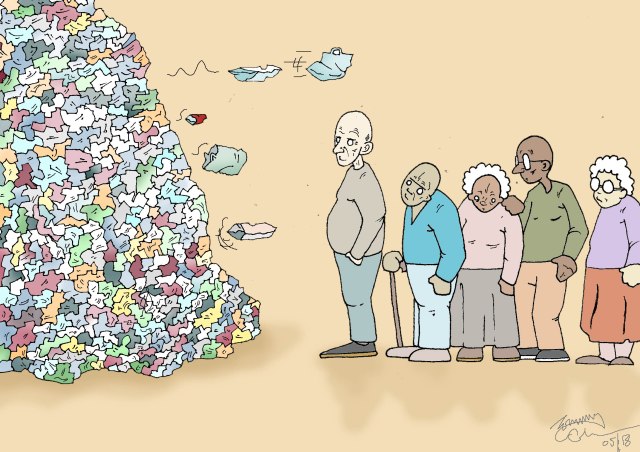
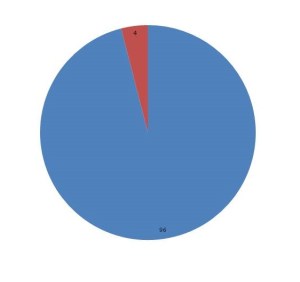
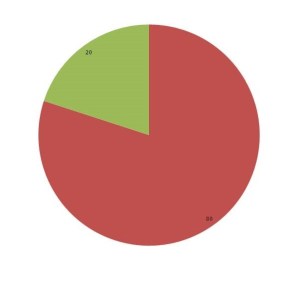
In my lifetime we have moved from a society where only 4% received benefit and were generally frowned on, to now where 24% of people of working age are entitled to State support.

How can it be when society is so much wealthier overall, that so many people still have to depend on Welfare Benefits ?

Posted in ELDERLY UK POLICY | Tagged , | 2 Comments

The Demographics of Benefits.

This post is related to my recent blogs on welfare benefits, that puts them into the broader context of the changes in the demographic profile of the UK population since the end of World War 2 when major benefits were introduced.   ( You can see all the posts on this subject by clicking on “Welfare Benefits “ in the Tag Cloud )

This spans the period of my lifetime.      A baby boomer generation of changes in society compared to the Second World Wartime generation of my parents.   They knew the deprivations before the war; the worries,dangers and deaths during the war and the post war hardships.       My generation had it lucky, but were eager to break away from that history.

The book I have been reading is “The Benefits State we are in” by James Bartholomew. His broad overall conclusion, is that the introduction and escalation of the welfare benefits system since the Second World War, has been detrimental to our society.    His arguments are well argued and supported  by facts, but he didn’t reach a happy ending.

It led me to reflect on the changes in society in my lifetime.   I grew up on a post-war council housing estate built to house ‘returning heroes’, which they continued to live in for the duration of their lives.     My parents were married and remained so all their lives, like all the other families in the street.     They both worked in relatively low paid jobs all their working lives.   Going on “the social” was something to be avoided.    They saved up for everything, buying ‘on tick’ was not an option to consider.    We had lodgers for most of my early childhood, which no doubt helped pay the rent.

In my teenage years, I was one of the few kids in the street to go to the Grammar School. That led to more saving for my school uniform and my PE kit and my rugby kit and my cricket whites.    It was an expensive business going to Grammar School and I never did get enough to go on the school trip to France.   Still I never thought we were hard up.

So what’s this got to do with Mr Bartholomew’s book about the Welfare State?  Well I didn’t know much about benefits then and I didn’t know anyone on benefits or at least as far as I knew.    You were expected to pay your way, benefits was a back stop, which carried a mark of shame.    I am not saying this was right, it is just the way it was.      It was an era and a generation where everyone was married before they had children.    They stayed married, divorce was rare.

Then came the 1960’s, the flowering of the baby boomer kids like me.  We were going to change the world and we did.   Every thing was free and easy.     Free education, free health.    No more wars and nothing to pay.    We could have it all.

Don’t think about tomorrow.

Posted in ELDERLY UK POLICY | Tagged | 2 Comments

Benefits Book

This is a continuation of my recent blogs on welfare benefits.   ( You can see all the posts on this subject by clicking on “Welfare Benefits “ in the Tag Cloud )

So now having searched around the World Wide Web  for days and not come up with any simple answers, I have put down my iPad, stepped back a century or two and bought a book on benefits.    It’s shorter than the 5772 pages of Government advice on their website.    It’s only 116 pages.    That should be easier to understand for an older person who hasn’t yet become a technology geek !     How difficult can 116 pages be ???????

The first problem is that the benefits in the book are not just for pensioners.   It has details of all benefits for all ages.     As I don’t qualify for child benefit anymore that’s a bit of a nuisance.    Nor am I sure that I’ll be able to claim for full time education at 71.       Still I wade through the book and cross out 38 pages straight away.   That only reminds me of how much I might have missed out on in the past.

Next we come to benefits that only apply exclusively to pensioners.    There seem to be a lot less of them —— only 23 pages.    They are about the State Pension, Pension Credit and Cold Weather Payments etc.    All of which I’ve talked about in my earlier blogs on this subject.    So I won’t repeat myself.

Finally, the most difficult section is the remaining pages, which are benefits that could apply to young or old people.    Some of which are means tested and some which are not.   That’s going to take more figuring out😩

You have to wonder if Governments who dream up the bewildering multitude of benefits, really want people to receive them.

I have decided I should go back to school and do an A level course in welfare benefits to begin to get my head around the subject.   Perhaps I need an education grant after all 😀

TO ENABLE ALL OLDER PEOPLE IN NEED TO GET THE BENEFITS TO WHICH THEY ARE ENTITLED, YOU NEED TO CUT THROUGH THIS  UNHELPFUL GOVERNMENT ‘so-called’ INFORMATION.     YOU NEED A MAN OR A WOMAN WITH A MISSION TO RECLAIM ALL THE YEARS OF CONTRIBUTIONS.

A RED TAPE CRUSADER

FOOTNOTE – Please note, I hasten to add that I am no expert and anyone reading this should not take my observations or figures as fact.    Hopefully before I finish this series of blogs, I will have raised awareness of some of the issues in the welfare benefits system.    If you’re intending to make a claim, you should go to one of the trusted agencies like Age UK or Citizens Advice Bureau.    

Posted in ELDERLY UK POLICY | Tagged | 1 Comment

GP Satisfaction Levels

I have written quite a bit about GP’s since I started this blog.   They are the doorway to health services in the NHS and they are gatekeepers to NHS Services.     They were once universally venerated members of the community, but that view seems to be changing.

A recent report by the British Attitude Survey showed that satisfaction with GP services had fallen from 80% in 2009 down to 65% last year.   This is a substantial drop.     What could it be about ?

  • Difficulty in getting appointments ?
  • Time taken to see the doctor ?
  • Not seeing the same doctor ?
  • Shortage of time with the doctor ?
  • Too many pills ?
  • Not enough pills ?
  • No pills ?
  • Not enough GP’s ?
  • GP’s not available at weekends ?
  • GP’s excessively using Locum doctors ?

It could be any, all or none of the above things and every GP practice is different.    My own practice is excellent, but from press coverage in the last few years, not everyone’s is a good.   This survey seems to confirm that.

In comparison with a commercial business, even 80% customer  satisfaction would be worrying, but 65% would be disastrous !


Obviously, the service they provide is not entirely in their own hands.   The endless problems of the NHS undoubtedly impact on how GP’s are perceived.    Equally the increasing numbers of older people will be placing more demands on GP’s.

Posted in HEALTH | Tagged | 2 Comments

Death Benefits ?

This is a continuation of my last blog on welfare benefits.   ( You can see all the posts on this subject by clicking on “Welfare Benefits “ in the Tag Cloud )

After a good night’s sleep and suitably admonished about my mistake over Bereavement Allowance, I return to the subject of  death benefits.   There seem to be quite a few of them, but I will start again more carefully with Bereavement Allowance.

It turns out this is one of the most puzzling groups of benefits.    At first glance there seem to be a lot :-

  • Bereavement Allowance ——- was previously called War Widows Pension, it has now been correctly extended to include widowers and civil partners.   You would think if you lost a loved one in defence of our country you would be reasonably compensated, but the award is very limited.   It does not compare well with generous divorce settlements or compensation for losing your seat in Parliament.    But hold on, it has now been replaced by Bereavement Support Payment.
  • Bereavement Payment —— replaced by Bereavement Support Payment from April 2017.
  • Widowed Parents Allowance —— also replaced by Bereavement Support Payment.
  • Obviously a tidying up exercise here, one benefit replaces three others to make things simpler 😀     So what is Bereavement Support Payment ?   

WELL, HOLD THE EXPENSIVE FUNERAL HORSES; CANCEL THE FLOWERS AND FORGET THE WHITE MARBLE HEADSTONE.    PENSIONERS DONT QUALIFY FOR ANY BEREAVEMENT BENEFITS.

At you approach the age of the Grim Reaper in you retirement years, when you or your spouse are most likely to need a death benefit, the Government is nowhere to be seen.    The classic benefit illusion.     Through all your younger days, you are entitled to death benefits, but when you come closer to your maker, the pot of gold disappears 😂

FOOTNOTE – Please note, I hasten to add that I am no expert and anyone reading this should not take my observations or figures as fact.    Hopefully before I finish this series of blogs, I will have raised awareness of some of the issues in the welfare benefits system.    If you’re intending to make a claim, you should go to one of the trusted agencies like Age UK or Citizens Advice Bureau.    

Posted in ELDERLY UK POLICY | Tagged | 1 Comment

A Growing Koan

Things grow slowly every day

Imperceptibly

Until one day

You wake up and realise it’s grown.


It happens to forms in the NHS

And to managers to fill in the forms.

But as beds shrink to pay more staff,

Only patient waiting list grow.


 Clutter grows one thing at a time

Imperceptibly until it’s there.

Then you have a devil of a job

To get rid of it !

Tagged | 1 Comment

Troubled Bereavement

This is a continuation of my last week’s blog on welfare benefits.   ( You can see all the posts on this subject by clicking on “Welfare Benefits “ in the Tag Cloud )

If ever there was a time when you need easy, crystal clear, help and asssistance, it must be when you have lost a loved one.     So I am sure I have got this advice from the Government website on benefits wrong.  But I read the information on  Bereavement Allowance and this is what I understood it to say :-

  • To qualify you have to be married before 1917.
  • By my reckoning, if you were 20 years old when you married, you would now be 122.
  • And to limit the runaway expenditure of all those deaths in World War 1,  war widows would not qualify if they remarried.
  • Although, the War Widow’s Pension in 1917 would only have been about two and sixpence a week, mind you that mounts up by the time you reach 122 😋

Oops! Now I have found my mistake it does not say 1917, it is 2017.     Apologies to the Department of Works and Pensions.

Perhaps if you hadn’t written 5772 pages of information I would not have been so tired and befuddled.

FOOTNOTE – Please note, I hasten to add that I am no expert and anyone reading this should not take my observations or figures as fact.    Hopefully before I finish this series of blogs, I will have raised awareness of some of the issues in the welfare benefits system.    If you’re intending to make a claim, you should go to one of the trusted agencies like Age UK or Citizens Advice Bureau.    

Posted in ELDERLY UK POLICY | Tagged | 2 Comments

Doctors in two minds ?

Doctors are in a dilemma.      Anti-Depressant pills …….. or social clubs ?    What to prescribe for loneliness?     Conflicting advice has emerged just in the last two days.

Listen to researchers from Oxford University and doctors should be recommending more and more anti-depressant pills to the ever increasing number of lonely older people.   There are estimated to be around 2 million people who suffer from depression in Britain.   A staggering 65 million anti-depressant prescriptions are issued every year.    That must keep the doctors busy.

Alternatively, follow the latest advice of NHS England and prescribe more social activity.     Coffee mornings,   bingo,   walking groups,  pubs,   night clubs ………. anywhere you can meet and talk to people.   So maybe not night clubs.    Actually, pubs weren’t in the original list because I don’t think NHS England likes alchohol.    But for many older people, pubs are increasingly a popular place to meet and that doesn’t imply they are drinking themselves to death.

I wonder if my GP will pay for my season ticket at Leicester Tigers, if I tell him that I’m getting depressed about Tigers’ results lately ?   They are not having a very good season this year, so perhaps the team doctor should issue anti-depressants to the 20,000 Tigers fans 😀

For this new more wholistic approach to work, GP’s would have to spend a lot more time getting to know their patients first.   This is perhaps a skill that has been lost in today’s five minute consultations.  It is doubly difficult if you see a different doctor every time you visit the group practice.     Maybe we should go back to family doctors and occasional home visits?

Not so many pills for the ill, just a bit more time and compassion.


Posted in HEALTH | Tagged , | 2 Comments

Weather or not Benefits?

This is a continuation of my last week’s blog on welfare benefits.   ( You can see all the posts on this subject by clicking on “Welfare Benefits “ in the Tag Cloud )

There seem to be quite a few weather related benefits, but all have a lot of weather conditions attached to them.  So here is what I have found out so far:-

  • Cold Weather Payments ——  First introduced in 1986, this is worth £25 for each cold period, but only if temperatures fall below zero degrees for 7 days in succession and only for periods between 1st November and 31st March.     So for six days you had better wrap up warm.   It is assessed on average temperatures at 93 weather stations around the UK.  If you put your post code into the Department of Work and Pensions website you can check.    I did and it said “ No luck so far “.   Then I tried Liverpool but got the same disappointing result.   So I tried Aviemore in Scotland and this time it said “invalid”.   I suppose the Scots are used to the cold.

I then thought I would find out how much has been paid out in total.   I found a helpful looking UK Statistics Authority website and Assessment 319, which in a 9 page letter basically said we don’t keep the data weekly on how much it costs, nor is it kept by local areas and anyway it would be too expensive to collect ……   and we are very busy   …. and we don’t have the resources.    So go away.    So it wasn’t so helpful after all.

The good news is that if you are eligible, which means you have to qualify for means tested benefits,  (Pension Credit, Income Support, Universal Credit), they will send it to you automatically.  Unless you are in hospital at the time.    In other words trust me and we will let you know.

  • Winter Fuel Allowance —— this benefit was first introduced  by Gordon Brown in the 1997 Labour Government.  It is not means tested for pensioners so even millionaires can claim it, even those who live in Switzerland, where it can get very cold in winter.  Sadly, you can’t get it on the Costa Del Sol or other parts of Spain, because it is just too hot and shady out there.   Once offered, successive Governments have not found away of taking it back, although they have tried.  It is slowly reducing as State Pension Age is increasing.   It is between £100 and £300 a year, so it is worth having, although it hasn’t been increased in value ever since it was introduced, which tells you something.  Oh and you don’t get it if your in hospital, because it is always too hot in hospitals.   Nor do you get it if your in prison, because they just don’t deserve it.
  • Warm Home Discount Scheme —— also helpfully referred to as Affordable Warmth Grant —— this provides up to £140 annually off your electricity bills providing you qualify for means tested benefits ( Pension Credit, Income Support, Universal Credit).   You have to tell your energy supplier and they knock it off your bill.  It should happen automatically.   So it is another ‘ trust me ‘ type grant.      I wonder how well this works?

No wonder older people talk about the weather all the time!

FOOTNOTE – Please note, I hasten to add that I am no expert and anyone reading this should not take my observations or figures as fact.    Hopefully before I finish this series of blogs, I will have raised awareness of some of the issues in the welfare benefits system.    If you’re intending to make a claim, you should go to one of the trusted agencies like Age UK or Citizens Advice Bureau.    

Tagged | 2 Comments