“Signs of the Times”

Two full page advertisements in The Times today aimed at older people can’t be cheap.  The fact that they are there at all is an indication of the growing importance of the elderly market.  Less surprisingly they are promoting three products which seem to define the stereotypical view of the elderly market – mobility scooters, stairlifts and walk-in showers.  This imagery all reinforces the view that as you get old you’re going to end up frail and immobile unless you purchase these essential but very expensive pieces of equipment.

The first advert is for Quingo Mobility Scooters; a very comprehensive illustration of the chair and all its features and variations.  Just two slight worry areas.  Firstly, there is no mention of the cost of the scooter, but it is obviously not cheap, since they are offering “free gifts” worth around £600 when you purchase one during October – no pressure?  Secondly, there is a small print footnote to say you cannot buy these scooters in mobility showrooms or on-line, which probably means you’re going to get a home visit from a company sales person.  No pressure??  These may well be great products but if they are, why the reticent sales information?

The second advertisement is prominently branded “Age UK”, “Age Concern” and “Help the Aged” which I am sure gives great credibility to the products for anyone considering a purchase.  Again there is no indication of the cost involved.  Understandably a survey will need to be carried out – which will guarantee you a home visit – but not from the charities whose name is plastered all over the advertisement.  Again, in the small print you find the products are provided by the Minivator Group.  Also in the small print, there is carefully worded reference to the profits being shared with Age UK.  That’s “up to” 50% of the “NETT” profits generated by “THIS ADD”.  Full details of the profit sharing arrangement can be obtained by making a written application.  I doubt many people do that – but I will and I will let you know what it says.

Given the excellent reputations of the Charity Organisations involved, I am sure this is a sincere promotion.   It would be good therefore to see a clearer view of the costs and the actual profits shared.  Surely if it’s a good fundraiser for Age UK, they would be proud to talk about it?

I am going to follow up both these advertisements and will report back on the responses I get.

Posted in ELDERLY MARKET | Tagged | 4 Comments

“Clutching at Hope”

It would be a strange world if we lived our lives from news headlines to news headlines.  The Swine Flu pandemic mobilised action all around the world and then disappeared in a sneeze rather than becoming the next Black Plague.

So what are we to make of the Daily Mail’s 9th September claim – “10p pill to beat Alzheimer’s”.  Firstly, if it turns out to be true it will be good news for millions of people, not just the sufferers and their carers but also many more older people whose first memory lapse raises the prospect of a much worse fate awaiting them in their years ahead.  Behind the headline is a research study from Oxford University which suggests that high doses of Vitamin B may significantly slow down the development of Alzheimer’s Disease.  The researchers are quite rightly saying that more studies are required and it could be five years before firm conclusions can be reached.  This caution is also echoed by Alzheimer’s organisations.

The problem with sensational news headlines is that they may raise false hopes for all the worried elderly people with slight memory loss who may not have Alzheimer’s at all.  It would indeed be a miracle if dementia can be cured or at least dramatically slowed down by a 10p vitamin pill.

Only a few weeks ago I was reading about strawberries being a potential cure for memory loss (see Fruitful Research dated 10 April 2011) and earlier reports suggested walking, brain training and even eating walnuts may help.  Such is the desperation of so many people who are worried about their future that they may try any or all of these.  I doubt much harm will come to you through getting more exercise nor by eating more fruit.  What might do more harm is over-simplified headlines which do a disservice to serious researchers and leave sufferers and their relatives clutching at hope.

Posted in Dementia | Tagged | 1 Comment

“Conker Memories”

I got up early this morning and discovered a beautiful sun-shining autumn day; perfect for a walk in the Northamptonshire countryside. A no excuses to stay in bed day.

So walking shoes – dusted off. A lightweight jacket in case of showers; check pockets filled with hankie and inhaler; apples for me and any horses I might encounter; notepad and pen to capture any passing thoughts – otherwise long forgotten by the time I get back home; and my trusty ordnance survey map to keep me on the public footpaths. Finally – the these days indispensable mobile phone to call in the rescue helicopter if I get lost.

As I am about to step out of the door my wife throws me a challenge – “if you see any conkers bring some back to put around the house, an old wives tale says they scare away spiders and it worked last year”.

It doesn’t take long to drive away from the hustle and bustle of modern life. TV and traffic noise quickly banished. I return to a rural idyll I stumbled across a few weeks ago. A country estate four miles from the nearest major road. The main house once a hall of Lordship grandeur – no civil war revolutions here – brought down to earth by the grim reaper and the taxman’s death duties. It’s now a luxury country house hotel exclusively available to guests with only a weekend-long interest in rural life. No oak trees planted by these passers by.

Still I am left to enjoy the peace and quiet and the legacy of trees planted two centuries ago – Oak, Ash, Beech, Sycamore, Walnut and Chestnut all proudly standing a hundred feet high still dressed up in their summer coats of leaves not yet yielding to autumn.

Farmers with their tractors and ploughs dance around their base but these statuesque specimens are too noble to be brought down by the ravages of more economic farming.

These are the trees of my youth. I grew up in Abergavenny with my bedroom window looking over Bailey Park, and not-so-distant views of the Brecon Beacons. Right outside the house was a giant Horse Chestnut tree, which in spring was decorated, like a belated Christmas tree, with white flower candles. Quietly throughout my childhood summers, the flowers turned to spiky fruit high up in the unreachable branches of the tree. Then the first windy day of September began a flurry of sporting activity. Who could find the biggest and best conkers? Initially fallen from the most ripe fruit. Then later, more reluctant and harder conkers had to be encouraged by an army of little boys throwing sticks into the trees; the occasional reprimand from parents when sticks fell back on cars or pedestrians. Even worse the park-keeper complete with blue uniform and whistle would chase us away and threaten us with being “reported” – to who I don’t know. By strange coincidence, given my mission today, we called him spider – though never to his face.

“Spider” went off duty at six o’clock and locked the park gates for the night. Leave it half an hour and we could climb over the railings and return to our task of filling our pockets with conkers.

The following day in the school playground your best conkers were already laced up and ready to go (no shoe laces these days!) Your spare conkers could be swapped for the cards out of packets of tea. Some of the more cunning and more experienced boys may have soaked their conkers in vinegar for days or baked them in the oven, but this was “illegal” and so nobody talked about it. These days it would probably be grounds for a no-win, no-fee court case for fraud.

The playground jousting lasted for a few weeks. Some peoples’ hopes were dashed in the very first game with bits of broken conker flying everywhere. A field day for health and safety officers who, no doubt, would ban this dangerous past-time and probably prosecute teachers and parents. Meanwhile we were too innocent to know the danger we were in so we just had fun. If you won your conker became a twoer, a threer, a fourer, a fiver and so on. If you got to ten you achieved real status in the whole school. By the end of the fortnight if you were the last man standing you became the school champion until next year. A position much more important in the playground than academic achievement.

So returning from my walk pockets full of conkers had brought back many happy memories and “old wives tales” being true will frighten spiders away for another year.


Posted in SMILES | 4 Comments

“What’s a Photo Biologist”

By now we are all well aware that being outside in too much sun causes wrinkles.  Slap on at least factor 30 sunscreen before you read any further!  Apparently some photo biologist researchers in France have shown that the sun’s rays, even through glass, can double the increase in skin ageing.  They found that office workers who sat next to windows had significantly more wrinkles on the side of their face closest to the window.  All you need to get an even tan would be a swivel chair and a second desk. 

The researchers also studied car drivers and found that they had more signs of skin damage on one side of their faces.  Perhaps the French should have two cars – one left-hand drive and one right-hand drive – then they can get an even tan.

Alternatively, at a time when the French have been contemplating banning the Burka, perhaps they should be requiring all French drivers and window-hugging office workers to wear Burka’s on grounds of health and safety.

Not to be outshone in the UK, some researchers at Lancaster University found that even on autumn days UVA radiation can lead to premature ageing of the skin.  An eminent Professor or Photobiology said 90% of visible signs of ageing are due to the sun’s rays.  It must have taken years of study in expensive beach locations in the Maldives and the Caribbean to figure that one out!  Still it makes up for a good chat up line – “excuse me, do you mind if I stare at you in your bikini, I am a Photo Biologist?”

P.s. this research is published by Boots who happen to be introducing a new line in sun protection.

2 Comments

“A pill for everything”

Since the formation of the NHS, we have become a nation of pill poppers.   We have developed an expectation that there is a tablet for every ailment.   If we visit our GP we feel shortchanged if we come away without a prescription.  Indeed, how many of us ever do?

Since working with older people, I have always been struck by how many pills and potions they take.   Elderly people’s bathroom cabinets are overflowing.   It is almost a badge of pride to be taking more pills than your friends.   Or is it a subtle cry for attention?

The medication round in nursing homes is a major event several times a day.   Trolleys are laden with a multitude of drugs which have to be carefully controlled, individually accounted for and recorded on medication charts.   Registration officers and pharmacists regularly check up on audit trails to underline the importance of these processes, and mistakes can carry severe penalties.

So how does this work for the majority of elderly people who live alone, often without any support ?   How do you cope taking several different pills a day when your sight is impaired ?   Worse still when your short-term memory is failing ?  It’s not difficult to imagine that the administration of drugs in the community done by people on their own must be much more haphazard ?

According to the Association of the British Pharmicutical Industry:- More than 912 million prescriptions were dispensed in 2007, at an average cost of £10.37 each.

–       This is a cost to the nation of 47 pence per person per day.

–       Medicines account for 10% of total NHS costs which is over £10 billion spent on all NHS medicines.

–       Prescriptions have doubled in number since 1990 and now on average we each have 15 prescriptions per person per year.

In the meantime, let’s start our own little audit:-

How many tablets and potions do we have in our house?  (This includes over the counter medication)

The answer (not including odd boxes around the house and in our cars):-

51 Packets of tablets –  around 1,200 pills in all

12 Potions (excludes cosmetics and suntan lotions)

At least 60% of these have not been used in the last 6 months

 30% are out of date!  But we are keeping them just in case

I dread to think of the wasted cost of that lot !

Maybe eventually we can start a national audit. Without breaking any clinical confidentialities.

Posted in HEALTH | Tagged , | 2 Comments

Breakfast Exercise

I am trying to lead a healthy life now I am retired.  So I start most days with Tai Chi in the back garden.  Half an hour of light stretching and gentle exercise improves breathing and balance as well as lifting your mood for the day ahead.

My next step in this virtuous new life is something healthy and today I have a new brand of luxury toasted cereal – Lizi’s Organic Granola.  The package notes are a joy to read – I am saving the world!

The ingredients are 100% organic (all certified)

Even better – Lizi Shaw used to live in West Wales and I am helping support organic farming there!

Its slow energy release food from the good carb company in Llanelli – Yacki Da!

I am told how much to eat per serving – where are those b***** scales?

The product is “blood sugar friendly” – the glycaemic load has been measured by the world’s experts at the University of Otago in New Zealand – fancy sending my cereal half the way round the world (and back presumably) just to measure GL which I have never heard of and don’t understand.  But still the Welsh always liked the All Blacks.

By now I am feeling really good about this product – great healthy food picture on the front of the packet – even a nice photo of Lizi smiling in her kitchen on the back – and such a great story too.

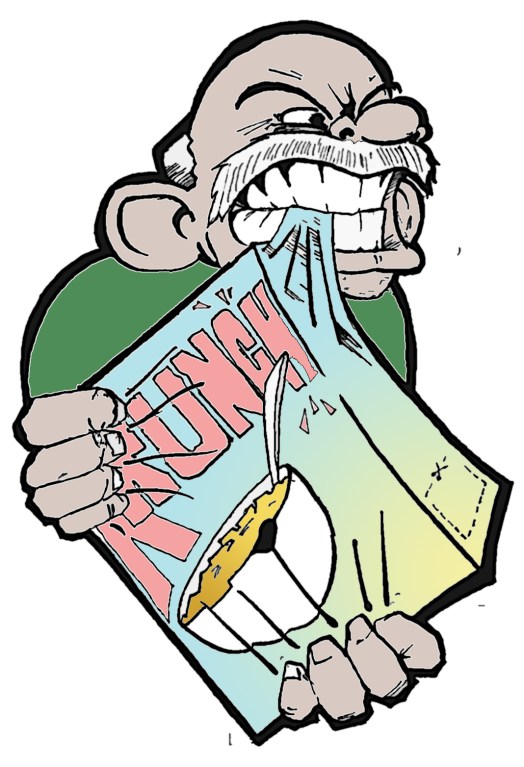
Now for the challenge – opening the packet – this must be the physical and mental exercise before breakfast.  The foil bag must have been designed for Fort Knox.  There’s no obvious point of entry, no key, no clue among all the other copious notes on the packet.  This luxury cereal must be more valuable than gold!

By now all my Tai Chi composure has disappeared and my mood has turned to one of total frustration.  Surely I can’t be incapable of opening a cereal packet.  Has retirement dragged me down so soon?

In desperation I eventually find a pair of scissors – perhaps they should include a pair with every packet – although not inside the bag!

I slice off the top corner and spill a few seeds on the floor – better get the dust pan and brush before the wife sees them.  What do I do with the re-sealable packet that I can’t re-seal?  I could try and find an elastic band – but there aren’t that many hours in the day!

At last I get to the golden goods.  Grumpy, irritable and about to spoil my lunch.

P.s. Lizi, next time you write such a wonderful story about your new organic cereal, don’t forget to put the note on the top corner of the bag in BIG ENOUGH PRINT FOR ME TO READ.  I really would like to have known in advance that it’s “easy to open and re-sealable”.

Posted in GRUMBLES | Tagged , , , | 3 Comments

“Mice on the move”

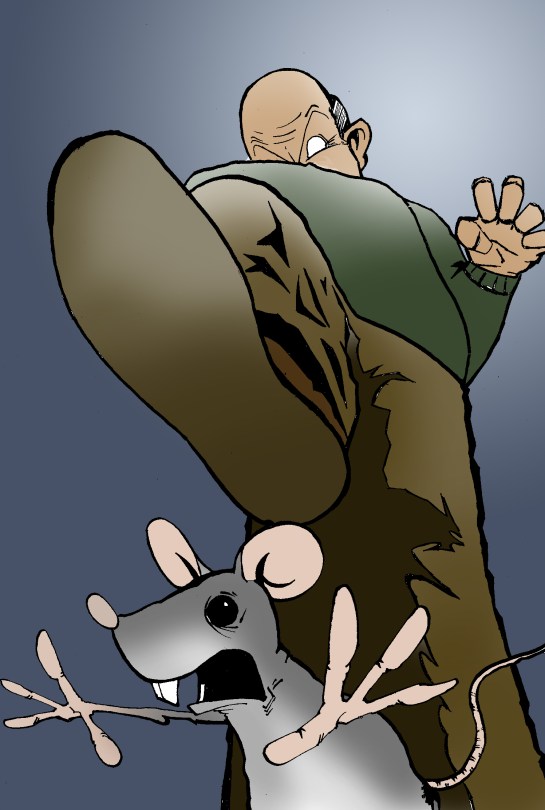
Since first writing about the problems mice are having these days – see “Mouse traps become bridges” dated 1 April 2010 – it seems that the issue is much more widespread that I thought.  Today the Daily Mail reports that another 3 mouse bridges have been built near Pontypridd at a cost of £190,000 !

That is not far from where I grew up, but I don’t remember mouse travel being such a problem when I was young.  Indeed, the traps we had were designed to stop mice traveling quite so far.  Thank goodness we now have environmental consultants who, for a small fee, can advise us about mouse rights.

Since the previous article was about mouse bridges in Somerset, it occurs to me that mice may wish to cross the Severn Bridge.  I wonder what the mouse toll should be ?  Maybe half a pound of cheddar.

If more and more mice are being killed on the roads each year, perhaps we should have a Department of Mouse Transport or a Mouse Czar.


Posted in GRUMBLES | Tagged | 3 Comments

A Confused Policy

A recent Department of Health report places the UK eleventh out of 14 developed nations in prescribing four drugs used to help alleviate the symptoms of Alzheimer’s.

It’s not easy to get a diagnosis to start with, but when you do, you may well be told that you’re not yet demented enough to be given any drugs.  According to the report, over 100,000 people in the UK are denied the drugs each year.  This would seem to be a financial decision not a medical one.  The National Institute for Health and Clinical Excellence says the drugs are not cost effective at £2.50 per day.

I have written already about the high cost of prescribed drugs and I am all for reducing costs in the NHS and not using drugs unnecessarily but surely this approach to dementia is both short sighted and distressing.

Now I’m confused.

Firstly, because I always thought that the earlier you start taking preventative drugs, the more effective they could be. 

Secondly, at £17.50 per week to reduce levels of confusion, the cost would seem to be very good value compared to the likelihood of accidents related to dementia. 

Falls are common amongst confused older people and the cost of a fractured hip to the NHS would dwarf the £17.50 a week which might prevent them happening.


Posted in HEALTH | Tagged | 2 Comments

Confusion about Confusion

I have hesitated before writing anything on the subject of dementia because it is such a complex medical area with widely different levels of knowledge among clinicians and health care professionals.  In terms of the numbers of people affected, it is probably the greatest challenge facing our ageing population, not just because of the huge scale of the issue, but also because of the lack of strategies for addressing the problem which vary from a degree of enlightenment to groping in the dark.  For the sufferer dementia brings a baffling decline into an unknown and unknowing world.  For their relatives it brings an often devastating and stressful period of bereavement before death, as a cherished personality deteriorates before their eyes.

This is not an easy subject and there are certainly no simple solutions.  The field is full of uncertainties and in some cases miss-diagnosis.  This in turn can lead to miss-information and in many cases mistreatment.  I write not at all as an expert but as someone with some experience.

In 1986 I was involved in commissioning a nursing home which specialised in dementia.  What an eye opener that was.  I had no idea how devastating dementia could be on the individual and their family.  That might sound naive but patients suffering from the later stages of this condition are either locked away in an institutional environment or left alone and isolated in the protective custody of a loving relative.

This first nursing home – Newfield House in Coventry – was held in the embrace of our early ideals of individualised support.  We had a strong, highly committed and newly enthusiastic staff team, most of whom were liberated from a much more institutional NHS mental hospital regime.  I don’t say this to be critical of the NHS; they were sponsoring partners with us in looking for new ways to care for people with memory loss.  The staff brought with them years of experience – one third of them were qualified mental health nurses.  One of the first things they did was to significantly reduce many of the drugs residents had been prescribed, particularly sedatives which were more used for containment rather than treatment.  This often made caring for residents more demanding but importantly it released people to be themselves.  It gave staff the opportunity to find out about the residents and often explained why they behaved the way they did.

To do this job, good staff have to have patience beyond belief, to constantly answer the same questions over and over and to creatively divert anxiety into a new and positive interest.  We have come a long way since those early days and idealistic ambition, and some 30 years and much experience later, at least given us insights into more hopeful ways of caring for people with memory loss.

A cure still remains elusive and positive therapies are unaffordable for the majority of sufferers.  Sadly, many people still sit in the same chair every day isolated in their own lost world.

What prompted me to write this blog was an article in the press last week that “walnuts can cure dementia”.  Then this week I learned that “stopping eating cake can beat dementia”.  No doubt behind these overly simplistic headlines lies some serious research, but newspaper sub-editors do a cruel dis-service to sufferers and their relatives by trivialising the research and by raising false hopes in this most serious of issues for older people and society as a whole.

I must thank Professor Brian Lomax, a Psycho Geriatrician from Leicester for first giving me an insight into this subject.  The heading of this blog is the lecture title he gave 30 years ago and yet it would still be appropriate today.

I will write more on my experience of this subject in the months ahead but first I would like to hear from both professionals, carers and sufferers.  Perhaps together we can build a more constructive way forward ?


Posted in Dementia | Tagged | Leave a comment

“Bus Pass bust up”

The Government budget cuts are now under discussion and in a classic piece of political toe-in-the-water “sounding out” the Department of Transport has leaked that free bus passes for the elderly may be scrapped.  The trouble with this approach is that it scares lots of pensioners and immediately polarises discussion, before any sensible consultation has taken place.

Let’s start with some free bus pass facts:-

         60 is the age men and women qualify

         11 million disabled and old people qualify

         £1 billion is the cost of the scheme

 What are the options ? :-

1.  Scrap altogether (save £1 billion) –

Strands many at home and increases social isolation.

2.  Only keep for poorest –

How do you and where is limit – £10,000; £20,000; £50,000

3.  Only keep for registered disabled –

A system exists already

4.  No change –

Leaves open argument of favourable to elderly

“Free bus passes for millionaires” – “silver bus surfers”

 Questions which need to be answered:-

? What is actual usage

? Do wealthy pensioners use bus anyway

? Gets cars off the road – greener (Green Party)

? Is it just a way of subsidising public transport

? How much would fares rise if no subsidy for elderly

? How many pensioners would stop low paid work if no free   bus pass

? How many pensioners would stop volunteering if no free bus pass

? Pensioners mainly travel off peak so is there a “real saving”


Posted in ELDERLY UK POLICY | Tagged | 1 Comment