

This is a follow up to the last post
Bodj has got himself fixated on SIX, but being a classical scholar the Last Laugh Looney Party recommends he remembers his Roman Empire history and changes the focus to TEN.
Then taking advantage of the fact that temporarily he has no quarrelsome MP’s nor pesky Lords, he should use the opportunity to do what has long been talked about and reduce the numbers in the House of Commons and the House of Lords 🤡
Bodj needs to learn from the mistakes of the last seven months of the Coronapop era. His Government has been slow to respond at every step. There have been too many advisors and too many dissenting voices. The whole process has been too centralised, but at the same time the Regional Governments have just confused the messages by adding their own spin to make themselves look more self-important.
BODJ SHOULD SET THE STRATEGY, THEN DEVOLVE THE TACTICS AND ACTION TO COUNTIES AND METROPOLITAN UNIARY AUTHORITIES, WITH MORE DELEGATED POWERS TO GET ON WITH IT.
So here are the Last Laugh Looney Party recommendations :-
BODJ’S FIRST STEPS :-
- Reduce Local Government structure to a total 100 county and metropolitan unitary authorities. This means scrapping district councils and amalgamating smaller counties so they have on average around 600,000 populations each. England currently has 48 counties and 533 MP’s representing them. Scotland has 33 counties, 59 MP’s for a population of 5.45 million people. Wales has 13 counties, 40 MP’s and 3.1 population. Northern Ireland has 6 counties, 18 MP’s for 1.8 million people.
This would strip out a mass of Local Government management staff, although the front line workers would still be required. - Each of the new Unitary Authorities would be represented in Parliament by 1 MP in a slimmed down House of Commons and 1 Senator in an elected House of Lords. Existing MP’s and Lords would be banned from standing in the new election, in fact any election ever again, because of their bad track record and the not-forgotten expenses scandal. ( Bodj has decided he will be the one exception and he will stay on until there is a very very big statue of himself erected in front of Parliament to mark his great reforming leadership.)
- Before they could stand for election all candidates must have had a real job for at least three years. Being a lawyer disqualifies you from ever standing. MP ‘s and Senators can serve a maximum of two terms in office and any blot on their character during their term of office, means deportation to the Isle of Mull with no appeal. Colonel Tom and Marcus Rashford would be given a free transfer into the Senate for outstanding service during Coronapop.
- The national Governments of Scotland, Wales and Northern Ireland would be given no powers and no money so they would soon wither on the vine. Which will conveniently resolve the Independence argument🤡
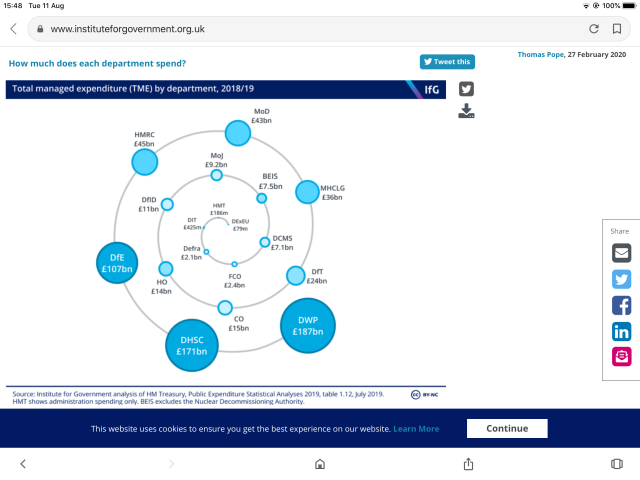
Reduce the Cabinet to TEN Ministers. The clue was on the front door all along !
- prime minister & chair
- money.
- people.
- health
- education
- housing & environment
- foreign affairs
- defence
- climate
- technology
NOW WE CAN HAVE A GENERAL ELECTION. Once Coronapop is over, which the scientists and modlers say should be by 2026 🤡🌈

 GrumbleSmiles