Deafinately not.

For quiet a while now I think my hearing has been getting worse.   I noticed it when I had to turn the sound up on the TV.    Over the month I have had to keep turning it up a notch or two —— until there were no notches left and pictures were falling off the walls in the lounge.

We have a relatively new big screen TV, but why do they put the speakers facing out the back ?   That must be part of the problem, but, if I sit behind the TV I  won’t be able to see the picture.    Then somebody told me about sound bars.   I thought that must be a new room at the pub, but apparently it is a new gadget to enhance sound quality.     So I got one and that helped for a while.

Nonetheless I still found thar some actors were mumbling or whispering a lot, usually at some critical part of the film, which ment I lost the plot and the had no idea what was going on 😩     Finally as a last desperate attempt to correct my hearing impairment I visited the GP surgery and asked the nurse to syringe my ears.

That helped enormously —- for a while.   But now again I am having to turn the sound up again   😥😥😥😥😥😥😥

Then I read a front page article in The Times about the “thousands of complaints from people unable to hear the dialogue in dramas”.   Apparently.”Questions were even asked in Parliament “, although I don’t know what on earth MP’s are doing watching TV when they should be sorting out Brexit.

Evidently it is the BBC that is responsible for me thinking I am going deaf.   Well not just the BBC, but ITV, Channel 4 and Channel 5 .  I’ll bet they are raking in a fortune from all the adverts for hearing aids that you see on TV !

Posted in SMILES | 1 Comment

Last Laugh Looney Party More Election Promises

As the Election draws closer all the political party’s are making more and more spending plans in an effort to bribe the voters.   Evidently the age of austerity is over even though the UK is in trillions of pounds of debt.

So it is an ideal time for the Last Laugh Looney Party to take a more sensible view and fully cost all its proposals by ensuring that all its policies are covered by savings.

We will start with Defence.   The Ministry of Defence spends £36 billion a year, 2 % of  the UK budget.    So why have we got new aircraft carriers with no planes ?     And why are half of our Navy ships out of commission and what are all the sailors on them doing in the meantime ?     Oh and why don’t our soldiers have enough equipment ?    It sounds like a complete mess.    Perhaps if we shed a lot of the 56,000 civilian staff at the MOD and while we are at it we could retire all the medal-dangling, over-dressed Director Generals; flightless Air Chief Marshall’s and shipless Vice Admiral’s parading around the MOD endlessly repeating that they haven’t got enough money.

Still it meets the 2% commitment to NATO, which is only met by two other countries – USA and Greece ( who I thought was bankrupt ! )   The average contribution is 1.5% and most EU countries don’t even reach that.

So the LLLP says, let’s start again and rethink how we should defend ourselves.

We have lots of kids playing computer games, why not recruit them into a new drone operations force (DOF) and withdraw all our troops from abroad.     We could also conscript all the young hoodlums caught carrying knives and send them to conflict areas  to play until they grow up.       Finally, anyone convicted of a violent offence can in future serve their sentence overseas in a soon to be established LLLP Foreign Legion.  

Meanwhile, because of rising crime back at home we need de-fences here.   We will renovate Hadrians Wall using the Brexit No-Deal budget, just in case the Scots decide to vote to stay in Europe.    In Northern Ireland we will build a wall of Guinness along the border, which should put an end to any future troubles,   —— or probably not.

With less civilian staff, less high ranking officers and only drones and kitchen knives from Poundland the Defence budget will be cut to £500 a year.   I am sure we can rely on Boris’s new best friend —- President Tramp to come hastily to our rescue with a nuclear missile or two if we really need them.

WATCH OUT FOR THE NEXT LLLP GOVERNMENT EXPENDITURE REVIEW COMING SOON TO A THEATRE NEAR YOU.

Posted in SMILES | Tagged | 3 Comments

Last Laugh Looney Party Election Manifesto

It rather looks like the whole group of current political parties have totally banjaxed the Brexit question, unless there is a last minute climb down by the European Parliament.    I am still betting they will fudge it in the end and cobble together a half in / half out solution.

 BUT, just in case I am wrong and we need to be prepared for a General Election.   So the LLLP is dispensing with all talk of coilitions and going for an outright win.    It believes the public is totally fed up with the current group of  politicians and with their hollow promises.

So here are some first thoughts :-

  • Step 1 — The  cost of the civil service to manage Government expenditure was £687 billion in 2011,  so goodness only knows what it is  now.   The LLLP will halve the civil service overnight —— no need for exit interviews just a simple enie meanie minei mo will do.    Of course there will be outrage about this, but it will blow over when everybody realises how much money will be saved.
  • Step 2 — The UK Overseas Aid budget was £14 billion in 2017, the LLLP will give everybody £2,300 to every man, woman and child from the new LLLP Over-Here Aid budget, which used to be called the Overseas Aid budget,   If individuals disagree with this they can still give their share to charity.   Then they will close down the Department of International Affairs altogether.
  • Step 3 — scrap the BBC licence fee and their Government grant,  this is an act of pure LLLP vindictiveness for taking free TV licences for older people.   The BBC costs almost £4 billion a year, the LLLP will pass the saving to all pensioners by increasing the state pension by £200 per year.    No doubt this will mean the BBC will have to cut back to endless repeats in future, so nothing much will change.
  • Step 4 — Scrap the House of Lords and replace them with a People’s Senate selected by lottery  of the whole voting population to serve for only one year.   Currently the House of Lords costs us about £65 million a year.  Cutting it down from over 800 Peers to 100 Senators will save a lot of hot air and should only cost peanuts.
  • Step 5 — halve the size of the House of Commons by the toss of a coin.  Heads your in, tails your out.   No fat pensions, no big redundancy payments, just get a proper job like everyone else.    The annual cost of around £250 million should also be halved and the savings be given to Battersea Dogs Home.   At least that is Coco’s suggestion 🐶

THIS WILL DO TO BE GOING ON WITH,  THERE WILL BE MORE IN THE DAYS AHEAD 😀 AS THE GENERAL ELECTION GETS NEARER.

Posted in SMILES | Tagged | 2 Comments

World Pangolin Day

Who would have guessed there would be,

“World Pangolin Day”,

and coincidence of coincidences ,

that is my birthday😀

I guess that is where I must have first heard the word.

And pangolin must have lodged in my head.

Just waiting there until something was said.


Now I will have to get a flag to wave.

and a tee shirt that says :-

“SAVE THE PANGOLIN”


Then I find there is a cornucopia

of Pangolin products.

Pangolin mugs, Pangolin pictures, 

Pangolin books and Pangolin poetry.


Seems like the Pangolin is not so anonymous after all.

Maybe they even have a Pangolin charity ball ?

Tagged , | 3 Comments

Return To Sender

It’s years since I have written about junk mail.   It’s six years ago that I started writing about it when there was much talk in the then Government about limiting it.   In fact, I wouldn’t be at all surprised if somewhere we haven’t either got a Minister for junk mail or at least an ombudsman type regulator.   (See the previous post by clicking on February 2013 in the archive). 

Like everyone else, I have given up trying to stem the tide of junk mail that floods in through the letter box each day.   And anyway the post lady is very nice and I don’t want to see her out of a job.   So I keep on sifting and sorting the unwanted post before I throw it in the recycle bin.   We will just have to do without the Amazon rain forest.

One of today’s letters really made me stop and think.   It was from Green Space UK with, and I quote — “ Important information about my conservatory”.   It was about changes in the planning regulations and how Green Space UK could help me to upgrade my conservatory into a room you can use.    What’s more they were even offering me a Substantial Subsidy.

Well you can always do with another room in your house, so I set about looking for my conservatory.    I looked everywhere, although it is strange that I haven’t seen it before, we have been here nearly 40 years !    It is definitely not inside, so I went and checked outside and although there were plenty of sheds, I couldn’t find a conservatory anywhere.

I wonder what Green Space UK know that I don’t.   Maybe they have a fleet of drones that fly all over the UK  searching out conservatories.   If so I wish they would tell me where mine has gone to, because I wouldn’t want to miss out on that Substantial Subsidy.

And I could do with the extra room to store all the junk mail I get !

Posted in SMILES | Tagged | 3 Comments

A Dementia Way Forward

My last two posts were prompted by the campaign launched in the Daily Mail to get the Government to address the disgraceful state of care for people with dementia in this country.   It has very successfully exposed the level of outrage and injustice felt by relatives, but the focus has been on the high cost of care and the consequent  loss of the family home to pay for the care.   This, maybe incorrectly, can be interpreted as a desire by the relatives to hang to their inheritance.

My last post illustrates that the issues with dementia are much wider than that and require a radical and comprehensive approach to all the issues, not just a political quick fix.   There are no simple or quick solutions and the answers will require financial contributions from the Government and individual sufferers.

HERE IS MY TEN POINT TEN YEAR PLAN ——————-—-it will take that long to  transform the scale of the problems, but action should start right away :-

1. FOCUS NHS HEALTH SUPPORT ON BETTER DIAGNOSIS AND PREVENTION.

Better diagnostic consideration will eliminate confused older people who are wrongly assumed to have dementia, when they may have something that is easily treated, such as a urinary infection.    The other main role for the  NHS / GP service should be on prevention through targeted advice and support regarding risk factors e.g.:- obesity / exercise / diet / smoking.    In support terms improved free Audiology services have been shown to reduce isolation.

2. TRANSFER NHS FUNDS TO SOCIAL SERVICES ON CONDITION THEY EMPTY BLOCKED BEDS IN  THE NHS.

A great many NHS hospital beds are “blocked” by elderly patients with dementia awaiting a discharge, either into residential care or to their own with domicillary care support in the community.   The cost of keeping them in hospital is far higher than sending them home or to Residential Care, but the financial responsibility is an invisible wall which creates an impasse to sensible action.

The Government needs to grasp the nettle and transfer the money to Social Services.

3. GRANT FUND A TEN YEAR PROGRAMME OF RETIREMENT HOUSING. 

There needs to be much more retirement housing to give older people a range of options to downsize and release equity to pay for better support in later life.   The options need to include shared ownership as well as outright sale and also Social rented accommodation for those who can’t afford to purchase their home.   Also there needs to be the opportunity to release more equity to pay for care as it is needed, using the mechanism of staircasing down by selling back more equity.

In almost every case this will release back onto to the market a much needed family home.  Ten million new retirement homes in ten years would be a good start !

This type of housing is only suitable for people with dementia if the  support staff are specially trained e.g. the “locksmith”in the ExtraCare Charitable Trust’s retirement villages.

4. REINVIGORATE SPECIALIST RESIDENTIAL NURSING CARE.

Most Residential Care Homes have become warehouses for people with dementia.    Staff are largely untrained and poorly paid.    Many of the residents are over medicated to make them easier to look after.  There is little by way of stimulating activity.   It has become an “out of sight, out of mind” solution.

All this needs to change, starting with a nursing managed service.   Less use of drugs and individualised care.   Properly and equitably charged for between private and public payers, by having the same charges for everyone.    But, there also needs to be greater control on the use of “vulture capital”, which is creating excessive fees.

5. MASSIVELY EXPAND HOME CARE SERVICES.

Most people who need care would prefer to remain in their own homes.   With a little support for the sufferer and their carers this is eminently possible.     The support needs to be available early in the process and offer respite to carers who are often family members.

6. LAUNCH A NEW DEMENTIA NURSING QUALIFICATION.

Training in the sector should be boosted with a new work-experience based nursing qualification for careers specialising in dementia.   It should command higher salaries and be a mandatory requirement for 80% of all staff working in Residential Homes and Domicillary Care.

7. MOBILISE THE VOLUNTARY SECTOR WITH A DEMENTIA GRANTS FUND.

There will never be enough paid staff to support informal care in the community and therefore help will be required from the voluntary sector.   Several years ago the Alzheimer’s Society called for a million volunteers, so far they say they have 350,000.  They need seed funding to achieve the target, so they can  provide befriending visits / welfare advice / social clubs and more to anyone who might benefit from them.   Combating isolation should be a priority in the fight against dementia.

8. DE-RISK THE LONG-TERM CARE INSURANCE INDUSTRY TO STIMULATE NEW PRODUCTS.

The Dilnot Commission had a core ambition of stimulating new long-term care insurance products, but its recommendations were never taken up.    These should be revisited and de-risked to make them cheaper to the consumer and  more predictable to the insurance industry.    This would probably require a tax free mandatory scheme with a “stop loss” clause underwritten by the Government.

9. LAUNCH A BETTER REGULATED AND CHEAPER EQUITY RELEASE  OFFER.

Equity release is expensive and comes with onerous conditions.    However, it may be the only way to unlock equity in your house if you wish to remain in your home and require money to pay for care.  The Government could agree to provide a “cap” on costs in exchange for lower interests charges.

10. DOUBLE THE RESEARCH PROGRAMME ON THE CAUSES OF DEMENTIA.

The overall cost of dementia to the Country is enormous and still rising rapidly.     Though all the above measures will help, they will add even more to the costs, therefore it makes sense to invest in research to try and find better treatments and hopefully in due course a cure for all dementia related conditions.


I DO NOT  PRETEND THESE RECOMMENDATIONS ARE ALL MY OWN WORK, FAR FROM IT.    THEY ARE DRAWN FROM OVER THIRTY YEARS WORKING WITH SOME EXCELLENT STAFF AND A GREAT MANY ELDERLY RESIDENTS.   MY THANKS GO TO THEM ALL.

Posted in Dementia, HEALTH, RETIREMENT HOUSING | 4 Comments

Why are we in a Dementia mess?

Following on from my last post, the Daily Mail has stirred up a real hornets nest of anger about the dire state of Dementia care.  Over a 150,000 people have signed a petition supporting the Mail’s campaign.    But, the key question is, will it change anything?

Having written a lot about Dementia over the last 9 years, I thought I’d start by looking at some of the reasons why we’re in this sad situation and why the care and support for people with Dementia is so under-resourced:-

OUT OF SIGHT, OUT OF MIND

The first thing is we all hope it will never happen to us and therefore we try not to think about it.    Equally, not everybody has direct experience of Dementia – only about a third of people have relatives who have had Dementia amd therefore can better understand the many difficulties that this disease can bring to families.

GOVERNMENTS CAN’T DECIDE

Over the last 20 years, successive Governments have recognised that there is a growing problem with the cost of providing care for the elderly.    The standard politician’s approach to solving the problem is to kick it down the road and pass it on to somebody else to solve.      There was a Royal Commission in the 1990’s, then more recently the Dilnot Commission reported in 2011 and now the Daily Mail’s campaign is arguing for a cross-party group to come up with a way forward.     Each one of these takes evidence from experts all over the country and inevitably takes a year or more before they produce a report.     The recommendations are usually well considered but they often stumble on the issue of who will pay for their proposals.      What tends to happen is that the ruling political party at the time agrees to the recommendations but then the opposition party brands them with a tag like “a death tax” or “a dementia tax”.      That in turn, then means that generally elderly people will not support the proposals and politicians shy away from recommending anything for fear of losing votes.      STALEMATE

GREATER LONGEVITY

Fundamentally, we didn’t realise that we would all live for so long.    For most of the last century people died before they became profoundly confused.    It is only now that so many people move to the age of “older age” that we are beginning to see a lot more people suffering from Dementia.   It is not at all a new phenomenon, it’s been anticipated for a long time, but nobody, neither individuals or politicians want to face up to it.

LONELINESS AND ISOLATION

One of the consequences of greater longevity is that many people now live alone in later life.   This is compounded by increased divorce rates and by the losening of other family ties.   While clinicians look for medical reasons for Dementia, I also believe that social isolation is a major factor in its development.

POOR DIAGNOSIS

The diagnosis of Dementia is not easy.   There are many reasons why people can become confused and that doesn’t necessarily mean they have Dementia.    In a 10 minute consultation, GPs can’t be expected to be certain about the issue and since there are limited treatments available and only a long term worsening prognosis, a consultation frequently ends without conclusion.

UNDER FUNDED RESEARCH

Relatively little money is spent on Dementia research.   In fact it’s about a tenth of that spent on Cancer.   (I’ve written much more in earlier blogs which I won’t repeat but can be found by clicking on “Dementia” in the TOPICS list.)     A lot of the research has focused on relatively small trials, particularly related to diet and lifestyle which although they may usefully help in slowing down the disease, don’t offer a cure in itself.

If you summed it all up the research would say —— take more exercise, —— eat more fruit, ——- eat less red meat —— and stay socially connected.

LOSS OF ROLE

Most people acquire Dementia after retirement and it seems likely to me that there is a connection.      People in work remain active and socially connected.     They also have a clear sense of purpose and established routines.    Once they retire, this often disappears.   Many older people don’t find a new role in retirement and inactivity can lead to isolation.

POORLY TRAINED AND PAID STAFF

Originally Dementia care was provided in the NHS or alternatively in Nursing Homes in the community.     It was a requirement of both that they were managed and had a significant complement of qualified Registered Mental Nurses.    These standards have now been lowered and Dementia is only now seen as a social care issue.

The care industry has largely been seen as an unskilled job which in turn implies low pay.    Although the Care Quality Commission requires a level of NVQ qualification, not all employers achieve this.  This is exacerbated by a high turnover of staff in the industry.

SAVINGS

The bottom line of financing Dementia is neither individuals or the state have set aside enough money to cover the cost of long term care.  This is particularly true in relation to Dementia because people can live for quite a long time with the disease, even though they may need help and support.   There is however a hidden source of savings for many people who own their own homes in the capital appreciation of their homes in their lifetime.   Most people see this as an inheritance to pass on to their children, hence their reluctance to use it for paying for care which in their minds should be “free”.

INSURANCE INDUSTRY

The Insurance industry has more or less deserted long term care because of the high risks involved in assessing both the health care needs and longevity.  Whilst it is possible to insure for long term care costs it comes at considerable premiums often in the region of £50,ooo to up to £100,000.     Consequently most people don’t even consider it.

AGEISM

The unspoken attitude of many younger people, and of many politicians, is that “older people don’t matter, they cost too much, they block up NHS beds”.     Older people have become a burden on the society they helped create.    That’s gratitude for you !

THE ABOVE ISSUES ARE ALL INTER-CONNECTED AND LEAD TO THE SITUATION THAT WE ARE IN  NOW WITH LONG TERM CARE OF OLDER PEOPLE AND PARTICULARLY OF PEOPLE WITH DEMENTIA.

BETTER CARE IN LATERLIFE WILL REQUIRE RADICAL CHANGES TO ALL THESE ISSUES OR IF NOT, OLDER PEOPLE AND THEIR RELATIVES, AS NOW, WILL BE LEFT TO FEND FOR THEMSELVES.

I’ve written a lot in earlier blogs which can be found by clicking on “Dementia” in the TOPICS list.  I also think the Dilnot recommendations were very good until they were altered by the Government at the time and you can find my views on that by clicking on “Dilnot Commission” in the Tag Cloud.

I’LL WRITE MY FINAL RECOMMENDATIONS IN MY NEXT POST.

Posted in Dementia | 4 Comments

Dementia in the News again

The summer is a quiet time for news and Brexit seems to be at a standstill.   So  The Daily Mail has polished up some old news and started a campaign about the injustice of people having to sell their homes to pay for dementia care in Residential Homes.

It is old news because the situation has been going on for years.   Granted it is getting worse as Care Home fees increase and to make matters worse Social Services are paying lower fees than private payers.     It made good headlines and a lot of copy for most of last week.

Loads of relatives came forward to tell their stories of how their family home had been sold.   Their inheritance was disappearing before their eyes.     Then the celebrities started to add their names to the campaign, followed swiftly by the politicians all proclaiming that something had to be done.   Even though they had failed to do anything  about the issue for years.

The Daily Mail came up with a 10 point plan, but not one that is based on a very sound analysis of the problem, nor is it likely to work.

I will reflect on what I have written in previous blogs about dementia and especially my comments in the Dilnot  Commission report way back in 2011.     It seems like both the politicians and The Daily Mail have learned very little .

So perhaps I should try once more.  I will collect my thoughts and write a new series of posts over the next few weeks.

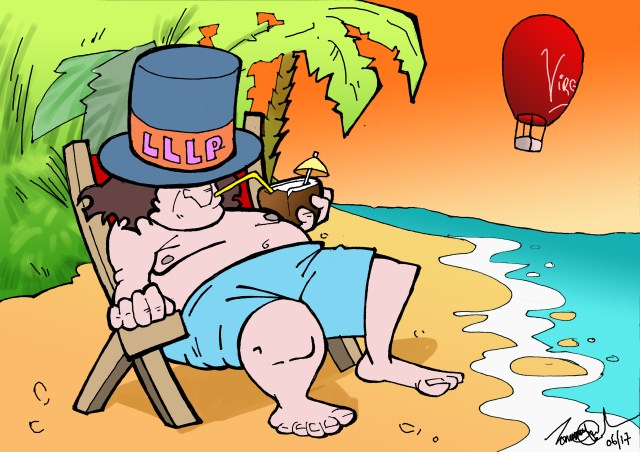
      MAYBE BORIS WITH  HIS LLLP HAT ON WILL LISTEN ?


Posted in Dementia, Residential Care | Tagged | 2 Comments

Television Benefits 😀

This is a great storey of how good can come out of a bad idea.    It is also a storey of cowardly policy, disregard of older people’s views, unintended consequences and happily a potentially a very good end result 😀

Gorden Brown introduced Free TV License’s for the over 75’s as a way of currying favour with the elderly electorate in 2003.   It is a universal benefit that every older pensioner gets, even though many are wealthy enough to pay for it.

In these more austere times Governments have been trying to figure out how to claw it back,  but no politician wants to upset elderly voters. Then some clever clogs in the Treasury in 2017, came up with the idea of passing the responsibility to the BBC and saving itself £745 million by 2020.     Job done!   All very quietly and nobody much noticed.    I will bet somebody got a bonus for that idea.

When the fat cats at the Beeb finally noticed there was going to be a big dent in their income, they needed a get out plan.  The fist step was to launch a fictitious “consultation”.    The preamble to the “consultation” was loaded with the dire consequences for the BBC if they didn’t get the answer they wanted.    But, since everybody knows that they are under-paid, under-staffed, overworked and BRILLIANT BROADCASTERS, they had high expectations of full agreement to their proposals.    (I wrote about the “consultation” in October last year)

Sadly it didn’t turn out that way,   Thousands of pensioners predictably protested.   On Twitter, on Facebook, in the press, on TV and even outside the front doors of Television Centre.     Who would have guessed????

The Beeb’s eventual compromise is to continue to offer free licences to the poorest pensioners, although this will require a means test to ensure they qualify for Pension Credit.   It is currently a very under-claimed Benefit, 40% of over75’s who are entitled, don’t claim it.  The average increase would be £65/week or a whopping £1.6 billion !

Now the Government is also spooked and trying to blame it all on the BBC.    MP’s everywhere are claiming it is all very unforeseen and not at all what they expected.

So, we get to the happy unintended consequence of all this cowardly shenanigans.    The BBC will have to raise the profile of Pension Credit in order to be seen to be helping hard up pensioners.     Already since this discussion started, 1700 more pensioners are claiming Pension Credit.     If all those who are entitled to it now claim it, it will cost the Government twice as much as they saved.    What’s more, Pension Credit is a passport to other benefits, so the cost will be even higher.

In the longer term the Government may get its own back by cutting the    BBC licence fee, but that’s for another day.

Posted in ELDERLY UK POLICY | Tagged | 4 Comments

Deaf Ears

A report published by Exeter University and Kings College London attracted a front page headline in The Times this week.

It was about a study of over 25,000 older people and it concluded that those who wore hearing aids performed better in memory tests, concentration and reaction times.

The results were presented at the Alzheimer’s Association International Conference in Los Angeles. That must have been a nice trip for some lucky researchers 😀.

The implication of this is that people with age-related hearing loss would be less likely to get dementia if they got a hearing aid .

It is certainly true from my experience that a great many older people suffer from hearing loss and gradually become more and more isolated as a result. Unfortunately the NHS audiology services seem to be under-resourced and audiology is increasingly left to the private sector. This has a reputation for expensive sales techniques, so many older people shy away from them.

If the research is correct a more accessible and inexpensive audiology service would potentially prevent more dementia cases.

Posted in Dementia, N.H.S., Pensions | 2 Comments